

Eight years in talent management inside a large industrial organisation, and I have sat on the buying side of this exact evaluation more than once.
So here is the thing nobody says out loud about this category. Almost every list of performance management software you have read was published by a company that sells performance management software, or by a publisher paid a commission when you click through to a demo.
That is not a conspiracy. It is just how the category funds itself.
The software is rarely why performance management fails. The pricing page you never saw and the manager who never logged in are.
Before you look at a single tool, look at what is at stake. Gartner’s 2026 talent management research found that about one-quarter of the workforce is at least 20% less productive than average.
1 in 4
Employees operating at least 20% below average productivity.
Source: Gartner, Four Trends Talent Management Leaders Should Prepare For in 2026 (October 2025)
Translation: in a 500-person organisation, that is roughly 125 people working well below the line. No review template fixes that by itself. But a process your managers abandon in week three guarantees it stays exactly where it is.
Here’s what this guide contains:
- Sixteen platforms with real pricing, taken from the vendor’s own page where one exists, verified August 2026
- The annual contract minimums that decide whether a tool is even available to a team your size
- One honest limitation per platform, sourced, never softened
- A 9-point scorecard with the exact questions to read aloud on the demo call, and what a bad answer sounds like
- What to instrument before you sign, so you can answer Finance at renewal with something other than a vendor dashboard
HR Insights Lab approach: the list comes first, because you did not arrive here for a definition. Everything else, what the category is, what it costs, how to evaluate it, and where rollouts stall, sits below the list where it belongs.
The 16 Best Performance Management Platforms at a Glance
Here’s how the list was built:
- The vendor’s own pricing page first, every single time
- A named third-party fallback, linked without passing authority, where the vendor publishes nothing
- One sourced limitation per platform, drawn from verified user reviews or category subscores
HR Insights Lab sells no software, holds no affiliate relationship with any vendor here, and took no payment for placement.
| Platform | Category | Entry price | Annual minimum | Best fit | Review score | The honest limitation |
|---|---|---|---|---|---|---|
| Lattice | Dedicated | $10 / seat / mo (Performance) | $4,000 / year | 200 to 2,000 people wanting performance, goals and engagement in one system | G2 4.6/5 (3,954) | Dashboards and historical data sit at or below category average |
| Leapsome | Dedicated | from ~$8 / user / mo for a working module combination | $6,000 / year to receive implementation and CS support | Teams wanting configurability with a named system owner | G2 4.8/5 (2,478) | Real admin learning curve; thinner native integrations than peers |
| 15Five | Dedicated | $11 / user / mo (Perform) | Not published | Organisations whose actual problem is manager capability | Verify current G2 score | Add-ons push the real bill toward $22 / user / mo |
| PerformYard | Dedicated | $5 to $10 per employee / mo (not published by vendor) | Not published | Lean HR teams that want review cycles and nothing else | G2 4.7/5 (1,248) | Narrow by design, and every evaluation starts with a sales call |
| Culture Amp | Dedicated (engagement-led) | Custom quote only | Not published | Organisations whose real question is ‘how do we compare’ | G2 4.5/5 (1,587) | Performance-module analytics subscores fall below the category average |
| Workleap Performance | Dedicated | $5 / user / mo | 10-seat floor | 60 to 300 people running two review cycles a year | Verify current G2 score | Little depth on calibration, succession or compensation linkage |
| Small Improvements | Dedicated | $3 / user / mo (Launch) | Not published | 40 to 200 people moving off spreadsheets this quarter | Smallest independent review base in this set | Objectives are basic; will not carry a multi-geography programme |
| Teamflect | Microsoft-native | Free to 10 users, then $7 / user / mo | Not published | Microsoft-first organisations whose managers live in Teams | Gartner Peer Insights 5.0 (1 rating) | Hard-tied to Microsoft, and one rating is not a signal |
| Betterworks | Enterprise / OKR | Custom only (~$77,000 average contract value, estimated) | Not published | 1,000+ headcount running a goal cascade across regions | Listed in Gartner’s EPM market with no ratings | Steep learning curve; verified reviewers describe training support as weak |
| SAP SuccessFactors Performance & Goals | Enterprise HCM module | Enterprise licensing, no published rate | Not published | Organisations already running SuccessFactors as the HCM of record | Gartner Peer Insights 4.4/5 (10 ratings) | Configuration is a project, not a setting |
| Profit.co | Enterprise / OKR | Free Launch plan, Growth ~$7 to $9 / user / mo | Not published | Teams that want to pilot properly before opening procurement | Gartner Peer Insights 4.5/5 (12 ratings) | Assumes you genuinely run OKRs, and will expose it if you do not |
| Engagedly | Enterprise / all-in-one | Quote-based, not published | Not published | 50 to 5,000 people who need learning attached to the review | Verify current review data | Breadth at this price means adequate modules, not best-in-class ones |
| BambooHR | HRIS module | Paid add-on to a core plan, per employee on quote | Not published | 20 to 500 people already running BambooHR | G2 4.4/5 (5,428) | Continuous feedback 8.2 and dashboards 8.4, both below category average |
| Rippling | HCM module | Quote-based, from ~$8 / user / mo for the platform | Not published | Organisations consolidating HR, IT and Finance in one system | G2 4.8/5 (11,596) | Nobody buys Rippling to solve performance management |
| Deel Engage | HCM module | $22 per employee / mo (Develop). Deel’s own blog states $20 for Engage | Not published | Distributed teams linking performance to pay across many jurisdictions | Deel documents no public recognition or continuous feedback features | Feature depth sits behind longer-established tools |
| ADP Workforce Now | HCM module | Custom enterprise quote | Not published | Organisations already running ADP as the payroll and HCM system | Ranked in G2’s top 15 for Performance Management | No published rate at all, at any tier |
Fallback sources where vendors do not publish rates: G2 Performance Management category, Gartner Peer Insights, Employee Performance Management Systems, and SelectSoftware Reviews.
The list is grouped by buyer situation, not ranked one to sixteen. Rank order is meaningless when a 40-person team and a 4,000-person team are reading the same number one, and it matters far more that you are building an HR tech stack that does not fight itself than that you buy whichever tool a publisher put at the top.
The old way
- Read a ranked list where number one is whoever paid or whoever owns the publisher
- Compare headline per-seat prices that describe completely different scopes
- Book five demos and get led through five feature tours
- Discover the annual minimum in the contract
The Lab Way
- Locate yourself in one of four buyer categories first
- Eliminate on entry price and annual minimum before anything else
- Score the survivors against nine criteria you wrote before the first call
- Ask for the minimum in writing on the first call
◆ PRO TIP
The catch: every price on this page has a shelf life. Pricing pages in this category change quarterly, and that includes the numbers above. Open the vendor’s own pricing page the morning of your call, and treat any figure in any article, including this one, as a starting anchor rather than a quote.
Best Dedicated Performance Management Platforms (You Already Have an HRIS)
These are the tools bought by a Head of People who already has payroll, benefits and core HR solved, and needs the performance management process to work. Payroll is not the problem. The review cycle is.
Most listicles fail this section by describing features. Fourteen of the sixteen platforms here offer 360-degree feedback and goal tracking, so listing them again tells you nothing about which one to buy. What follows names the buyer instead.
1. Lattice: The Category Default, Now with a price you can check
Lattice is a dedicated performance management platform that runs review cycles, goals and engagement surveys in one system, bought most often by companies between 200 and 2,000 employees. It is the option most HR leaders name first, and the one they are least able to price.
The capability that separates it is unbundling, which no competing listicle mentions. Performance and Goals & OKRs can be purchased separately at $10 and $8 per seat per month rather than as a bundle. If your organisation only needs review cycles this year, that changes your annual number materially, and it is the first question worth asking on the call.
Pricing, in full, from Lattice’s own page: Performance $10 per seat per month, Goals & OKRs $8, Engagement $4, the Foundations bundle $13, Grow adds $4, Compensation adds $6. Billed annually, USD only, no implementation fee, with a $4,000 annual minimum.
Source: Lattice pricing page, verified August 2026. Review data: G2, 4.6/5 across 3,954 reviews.
◆ PRO TIP
The catch: that $4,000 annual minimum prices out teams under roughly 30 seats on the Foundations bundle. And on G2’s own subscores, Lattice’s dashboards and historical data land at 8.6 and 8.5 against a category average of 8.6, while continuous feedback runs at 9.3 against 8.8. Read that shape honestly. It is a feedback product first and an analytics product second.
Choose it if you are over 30 seats, want one system your managers will recognise from their last company, and care more about feedback quality than about reporting depth. Pair it with a clear view of what to ask in a performance review, because the platform will not write that for you.
2. Leapsome: The Most Configurable of The Mid-Market Platforms
Leapsome is a modular performance and enablement platform that lets an organisation buy only the modules it will run, rather than a fixed bundle. It carries the highest G2 rating in this set at 4.8 out of 5 across 2,478 reviews.
The modularity is genuine, not marketing. Modules run at roughly $3 to $7 per user per month each, so a company that needs reviews and goals but has no appetite for engagement surveys this year simply does not pay for them. Competing lists describe this as ‘pricing based on module selection’, which tells a buyer nothing at all.
A working combination starts around $8 per user per month billed annually, with a 14-day free trial and no card required. The number that matters more: implementation and Customer Success support require an annual contract of $6,000 or above. Leapsome also carries a 9.5 out of 10 partner score, the highest in this category set.
Sources: Leapsome pricing page (quote-based) and G2, verified August 2026.
⚠ WATCH OUT
Warning: configurability is a liability without a named owner. I apply the same rule to Avature, which is extremely powerful and equally punishing for a lean team with nobody accountable for the configuration. Breadth here creates a real admin learning curve, and native integrations are thinner than several peers. If you cannot name the person who owns this system on the day it goes live, Leapsome will underperform a simpler tool. Decide who owns the system after go-live before you sign, not after.
Choose it if you have an HR admin with configuration authority and a process that genuinely differs from the default.
3. 15Five: Built Around The Manager, not the review cycle
15Five is a performance platform built around the weekly manager check-in rather than the annual review, sold to organisations that have concluded their managers, not their process, are the constraint. It is the only platform in this set that sells manager coaching as a priced product line.
That structure is the differentiator, and it is worth understanding literally. Alongside the software you can buy Kona Coach at $19 per manager, manager content at $49 per manager per month, and live coaching at $399 per credit. This is a product built on the premise that software alone does not change a manager’s behaviour.
Published pricing, updated February 2026: Engage $4 per user per month, Perform $11, Total Platform $16, all billed annually. Add-ons sit outside that: Compensation $9, or $11 with Mercer benchmarking, and Kona Meeting Assistant at $2 per employee.
Source: 15Five pricing page, page updated February 2026.
◆ PRO TIP
Real talk: the headline $11 rarely survives contact with a real configuration. A 300-person organisation buying Perform, plus Compensation, plus Kona lands near $22 per user per month before a single coaching credit. Do that arithmetic once, for one tool, and you will do it automatically for the rest of your shortlist. Verified reviewers also flag limited customisation on complex workflows and inconsistent support experiences.
My position on why this category exists at all: retention problems are mostly systems failures, not compensation failures, and the largest system variable is manager capability. Pay matters up to a threshold. Past it, people leave unclear career paths, weak managers and badly designed roles. That is why manager capability is the retention lever nobody budgets for, and it is the honest reason a platform like this one has a market.
Choose it if your exit interviews keep pointing at managers rather than at money.
4. PerformYard: Performance Management with Nothing Else Attached
PerformYard is a dedicated performance management system with a deliberately narrow scope: review cycles, goals and feedback, with no engagement, learning or compensation modules bolted alongside. It is bought by lean HR teams who want the review process to work and nothing more.
Its most concrete differentiator is unusual for the category: unlimited human phone support at no extra cost. That is reflected in a 9.5 out of 10 partner score on G2 alongside 4.7 out of 5 across 1,248 reviews, matching Leapsome at the top of this set for how customers describe the relationship rather than the feature list.
PerformYard does not publish its rates. Third-party sources place the Professional tier between $5 and $10 per employee per month depending on headcount, with a custom Enterprise tier above it. Treat that as a range, not a quote.
Pricing range from third-party aggregators, G2 for review data. Not published by the vendor.
⚠ WATCH OUT
Watch out: hidden pricing is not neutral, it is a cost. A mandatory sales call before you can see a number adds roughly three weeks to an evaluation timeline, and when you are running a software evaluation on a deadline that is a legitimate reason to deprioritise a vendor. Narrow scope is the other constraint. If you want surveys, learning or compensation in the same system, this is the wrong tool and it does not pretend otherwise.
Choose it if the review cycle is your only broken process and you value being able to phone a human when it breaks.
5. Culture Amp: An Engagement Platform That Grew into Performance
Culture Amp is an employee engagement and people analytics platform that extended into performance management, rather than a performance product that added surveys. That order of events explains both its strengths and its gaps, and no competing list mentions it.
Benchmarking depth is the reason to buy it. Fifteen years of people science research and a very large comparative dataset sit behind the surveys, and if your executive team’s question is genuinely ‘how do we compare to companies like us’, nothing else in this list is close.
Pricing is custom quote only, with no published rates at any tier. Verified reviewers consistently place it above peers on cost, which is worth budgeting for before the first call rather than after it.
Source: Culture Amp plans and pricing (quote only). Subscores: G2, 4.5/5 across 1,587 reviews.
Now the part that matters, and it deserves room. G2’s subscores put Culture Amp’s dashboards and historical data at 8.0 out of 10 against a category average of 8.6, and continuous feedback at 8.7 against 8.8. For a platform sold on analytics, its performance-module analytics score below the category average.
My rule when a vendor’s reputation and its category subscores disagree: trust the subscores. Reputation is built across a whole product. Subscores are built on the module you are about to buy.
Buy Culture Amp for engagement measurement, not as a performance system. If you need both done properly, you are probably buying two tools.
Verified reviewers also describe annual review cycles as time-consuming to maintain and development planning as underbuilt. Choose it if your priority is engagement surveys that change something, and treat the performance module as a bonus rather than the reason to sign.
6. Workleap Performance: The Price-Performance Outlier
Workleap Performance, formerly Officevibe, is a dedicated review and feedback platform priced at $5 per user per month with a 10-user minimum. It is the cheapest credible dedicated platform in this list, and that fact is a useful anchor for reading every other price on the page.
At that price it undercuts Lattice by half for the core review-cycle use case. Its review builder and AI-assisted cycle generation are well regarded by evaluators who have run both, which is a more useful signal than a star rating.
Source: Workleap pricing, cross-checked against SelectSoftware Reviews. Confirm the current G2 score before relying on it.
The old way
- Assume price correlates with capability
- Buy the platform you might need in three years
- Pay for calibration and succession modules nobody runs
The Lab Way
- Define the scope you will run this year
- Check whether the cheaper tool covers that scope
- Spend the difference on manager enablement instead
I have watched the same logic play out in recruitment budgets. Cost per hire for senior engineering roles fell by 45 to 55% in one programme I ran, and almost none of that came from negotiating harder. It came from removing spend that was never buying an outcome. Paying for succession and calibration modules you will not touch this year is the identical mistake, and it is the HR budget line nobody audits.
◆ PRO TIP
Real talk: this is narrower than Lattice or Leapsome, particularly on calibration, succession and compensation linkage. It runs review cycles well. It does not run a talent management programme, and if that is where you are heading in eighteen months you will migrate.
Choose it if you run two cycles a year, have no formal calibration requirement, and your budget will not survive a $13 per seat bundle.
7. Small Improvements: Published Tiers, No Sales Call
Small Improvements is a lightweight performance platform aimed at growing teams, and one of only three products in this list that publishes complete tier pricing with no sales call required. For an evaluation running to a deadline, that is a practical advantage rather than a nicety.
The tiers are legible in a way most of this category is not. Launch at $3 per user per month covers reviews, praise and HRIS integrations. Grow at $6 adds 1:1s, objectives, 360 feedback, and Slack and calendar integrations. Elevate at $9 adds advanced customisation, weighted objectives, insights and early feature access.
Source: Small Improvements pricing, verified August 2026.
◆ PRO TIP
The catch: it is lightweight by design. Objectives are basic next to a dedicated OKR tool, and it will not carry a complex multi-cycle, multi-geography programme. It also has the smallest independent review base in this set, which means less external validation to lean on when you present it internally.
My experience with tool adoption, drawn from three years of putting AI tools in front of recruiters, is that a product earns its place by being used in the flow of work rather than by winning a feature comparison. The same test applies here. Buy the platform that will get 90% manager completion in the next cycle, not the one you will need in three years, because adoption compounds and unused capability does not. Everything about getting managers to complete the cycle follows from that choice.
Choose it if you are moving off spreadsheets this quarter and need a defensible number for a budget conversation this week.
Best Enterprise and OKR-Led Performance Management Platforms
Above roughly 1,000 employees the evaluation stops being an HR decision. Security review, data residency, SSO and SCIM provisioning, works council consultation and multi-entity org structures start deciding the outcome, and none of those constraints appear in any competing list.
The practical effect is that your shortlist gets shorter for reasons that have nothing to do with the review workflow. Plan for that before you fall in love with a demo.
1. Betterworks: The OKR-Native Enterprise Platform
Betterworks is an enterprise performance platform built around OKRs, sold to organisations running a goal-cascade operating model across multiple regions and management layers. Goal alignment and calibration at scale are the product, and performance reviews ride on top of them.
Pricing is custom only, which is where most buyers walk into a procurement process with no anchor at all. One procurement benchmarking source estimates average contract value near $77,000. That figure is an estimate drawn from aggregated deal data rather than a published rate, and it should be used as a negotiating reference point, nothing more.
Sources: Betterworks plans (quote-based) and procurement benchmarking data via Vendr, Gartner Peer Insights for market listing.
◆ FROM THE LAB
The Sofia lens: my verdict on Avature transfers to this entire class of tool, almost word for word. Extremely powerful, deeply customisable, and a platform rather than a plug-and-play product. Recommend it for enterprise teams with process maturity and named administrators. Avoid it for lean teams without change management discipline.
Betterworks fits that shape exactly. Verified reviewers describe training support as weak and customisation gaps that force workarounds, with feedback workflows named specifically. It is also listed in Gartner’s Employee Performance Management Systems market with no ratings at all, so there is no independent enterprise signal to lean on. Everything therefore rests on your own change management discipline in HR system rollouts.
Choose it if OKRs are already how your executive team runs the business, and you have the administrative capacity to configure a system rather than switch one on.
2. SAP SuccessFactors Performance & Goals: The Module You Already Own
SAP SuccessFactors Performance & Goals is the performance module inside SAP’s HCM suite. If your organisation already runs SuccessFactors as its system of record, this is the incumbent, and the burden of proof sits with any challenger rather than with it.
Its advantage is structural rather than functional. Performance data lands next to compensation, succession and org data with no integration to build, no field mapping to maintain, and nothing to break when someone changes manager mid-cycle. That is worth more at 5,000 employees than any feature on a comparison grid.
There is no published rate, and licensing is almost always negotiated inside a wider SAP agreement. The consequence rarely appears in any comparison: the marginal cost of switching on Performance & Goals is often far below the cost of a standalone tool, because you are extending a contract rather than starting one.
Review data: Gartner Peer Insights, 4.4/5 across 10 ratings, the second-most-rated product in Gartner’s entire EPM category.
◆ FROM THE LAB
My experience: I spent eight years inside a global industrial organisation where the HCM was the system of record and every tool decision travelled through IT, security and, in several countries, a works council. In that environment the enterprise module is not the boring option. It is the only option that clears the process inside a single financial year.
The old way
- Exclude the incumbent HCM module because it is not exciting
- Compare four vendors, none of them the one you already pay
- Explain the new line item to Finance afterwards
The Lab Way
- Price the incumbent module honestly as the default
- Make every challenger justify the delta, in writing
- Have that conversation before Finance forces it
⚠ WATCH OUT
Common mistake: configuration here is a project, not a setting. Where the interface has not been actively invested in, adoption suffers, and the predictable counter-pattern follows. HR quietly buys Lattice or 15Five to sit on top of the module the company already pays for, and now two systems hold half a performance record each. Name that risk in the business case rather than discovering it in year two, and decide when the incumbent system is the right answer using explicit criteria.
Choose it if SuccessFactors is your HCM and your performance process is standard enough to configure rather than reinvent.
3. Profit.co: OKR-First, With a Genuine Free Pilot
Profit.co is an OKR-first platform with performance management layered on top, and the highest-rated product in Gartner’s Employee Performance Management Systems category. OKR mechanics are the core product here rather than a module bolted onto a review tool.
The free Launch plan is the differentiator worth acting on. It makes a real pilot possible without opening procurement, which in most enterprises is the difference between testing an assumption this month and testing it next quarter.
Paid pricing runs to a Growth plan at roughly $7 to $9 per user per month, with a custom Enterprise tier adding SAML 2.0 SSO, SCIM provisioning, custom data residency, unlimited API access, a dedicated customer success manager and a 99.9% uptime SLA. There is a 30-day free trial and no card required.
Source: Profit.co pricing. Review data: Gartner Peer Insights, 4.5/5 across 12 ratings, the most-rated and highest-rated product in that market.
◆ PRO TIP
Pro tip: 12 ratings is a thin sample, and being top-rated in a market with 13 listed products is a weaker claim than it sounds. Treat the Gartner position as taxonomy, not selection. The free tier is also not the paid product, so before you present it internally, write down exactly what it excludes.
One honest limitation deserves stating plainly: OKR-native tools assume you run OKRs. If goal-setting in your organisation is aspirational rather than operational, this platform will surface that within a fortnight. Useful, but not what most buyers think they are purchasing.
My own discipline here comes from Talent Market Pre-Alignment, where you validate demand before committing resource rather than after. Software procurement deserves the same treatment. Running a two-week pilot that tells you something costs a fortnight and saves a three-year contract.
Choose it if you want evidence before signature, and your goal process is real enough to survive being made visible.
4. Engagedly: Performance with Learning Attached Natively
Engagedly is an AI-enhanced performance and talent platform for organisations between 50 and 5,000 employees, bundling continuous feedback, 360s, goals, engagement, recognition and learning in a single system. Pricing is quote-based and not published.
Learning is native here rather than integrated, and that is the distinction that matters. If your real problem is that development plans get written in the review and then go nowhere, a native pairing removes the handoff where they currently die.
Source: Engagedly, quote only. Confirm current independent review data before publication.
◆ FROM THE LAB
The Sofia test: I have three measured Quality of Hire improvements on record. Competition analysis produced a 12% gain. Talent landscape mapping across similar industries produced 14%. A skill-based talent pipeline built after market analysis produced 30%.
Not one of those came from buying a tool. Every one came from changing the method. Hold that against the all-in-one promise before you sign, because a platform that covers six processes badly will not fix a process you have not redesigned.
The honest downside: breadth at this price point usually means each module is adequate rather than best in class. That is a genuine trade-off rather than a flaw. One system your managers will learn frequently beats four systems that are each better in isolation and connected by integrations nobody maintains.
Choose it if the review-to-development handoff is your named failure point, and you would rather have development plans that survive the review than the deepest feedback module on the market.
Best HRIS and HCM Platforms with Performance Management Built In
An HRIS performance module is cheaper, already integrated, and populated with real org data from day one. It is also, almost always, shallower than a dedicated platform.
Both of those statements are true at the same time, which is why the decision paralyses so many teams. Here is the test that resolves it.
The HRIS versus Dedicated Platform Decision, In Three Questions
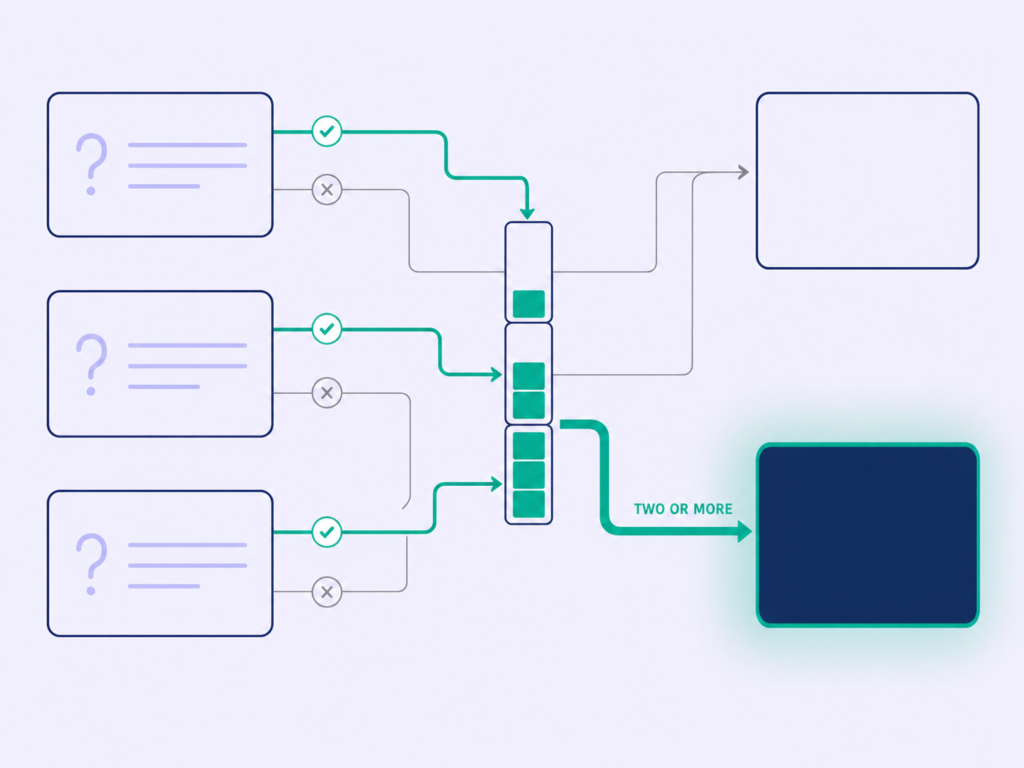
Answer these before you look at another vendor page:
- Do you run more than two review cycles a year?
- Do you need calibration across managers who have never met?
- Does performance data need to drive compensation decisions inside the same system?
Two or more yes answers point to a dedicated platform. Zero or one, and your HRIS module is very likely sufficient. That takes a minute and settles an argument most evaluations carry for six weeks.
⚠ WATCH OUT
Anti-pattern: buying both and running neither properly. It happens when the HRIS module gets switched on to satisfy IT while HR quietly runs the real cycle somewhere else. Two systems, two half-complete performance records, and a data set nobody trusts at promotion time. This is the most expensive outcome available to you, and it is entirely avoidable.
The evidence for the trade-off sits in the subscores rather than the feature lists. BambooHR’s continuous feedback score on G2 is 8.2 out of 10 against a category average of 8.8. Lattice’s is 9.3. That gap, in one comparison, is the shape of what you give up.
Notice what the question is not, though. Every conversation in this category assumes the software decides the outcome. The evidence says otherwise.
Gartner’s 2026 research found that only 39% of employees agree their manager is effective at providing clear developmental feedback, and just 41% feel their manager helps them prioritise their work. Translation: in most organisations the binding constraint is manager behaviour, not software capability. Buying the more expensive tool does not buy the better outcome.
◆ FROM THE LAB
My experience: earlier in my career I inherited a hiring function with two problems that looked unrelated. External hiring was expensive, and new joiners took over two months to become productive. The obvious answer was tooling. Better sourcing platforms, better assessments, more spend.
We changed a policy instead. Every role was posted internally for 48 hours before it went to the external market, and recruiters were expected to proactively tap internal candidates inside that window rather than wait for applications.
That single rule moved 23% of our hires to internal moves within a year. Time-to-Productivity for those hires ran at 28 days against 67 days for external ones, because they already understood the systems, the stakeholders and the politics. Nobody bought anything.
The transferable lesson is the one I would apply to this entire article. Your best candidates are sometimes already on payroll, and your best performance process improvement is usually a decision you have not made yet rather than a product you have not bought yet. Decide the process. Then buy the tool that runs it. Anyone treating internal mobility as a talent strategy already knows how much cheaper the policy route is.
The old way
- Compare feature checklists where everything looks similar
- Let the HRIS vendor tell you performance is already included
- Decide on price, then discover the depth gap in cycle two
The Lab Way
- Answer three questions about how you operate
- Check the module subscore, not the product reputation
- Settle the process on paper before anything is configured
1. BambooHR Performance Management: The Default If You Already Run BambooHR
BambooHR Performance Management is a paid add-on to a BambooHR core plan, priced per employee on quote, and it requires an active BambooHR HRIS subscription. That dependency is the deciding fact for anyone who is not already a customer.
Its most underrated advantage is that there is no integration work and no data migration. The system already knows your org chart, your managers and your start dates, which removes the single most common cause of stalled rollouts before the rollout begins.
Source: BambooHR pricing (quote only). Review data: G2, 4.4/5 across 5,428 reviews.
Pros
- Zero integration work, instantly populated with real org data
- One of the largest review bases in the category, at 5,428
- Manager adoption is easier where the HRIS is already daily furniture
Cons
- Continuous feedback 8.2 against a category average of 8.8
- Dashboards 8.4 against a category average of 8.6
- Limited customisation of complex workflows, per verified reviewers
The honest downside: verified reviewers describe it as adequate for straightforward reviews and goal setting while lacking the depth of specialist tools. Read the subscores as a shape rather than a verdict. Strong on adoption and data integrity, thin on continuous feedback and analytics depth, and your job is to match that shape to your actual requirement.
Choose it if you already pay for BambooHR, run one or two straightforward cycles a year, and are focused on choosing an HRIS you will not outgrow in eighteen months rather than on buying a specialist performance product.
2. Rippling: HR, IT and Finance in One System
Rippling is a unified HR, IT and Finance platform in which performance management is one module among many. Pricing is quote-based, starting around $8 per user per month for the platform itself.
It carries the strongest review profile of any product in this comparison: 4.8 out of 5 on G2 across 11,596 reviews, with dashboards, historical data and continuous feedback all at 9.1 out of 10 against category averages of 8.6, 8.6 and 8.8. It is also rated 5.0 on Gartner Peer Insights, though across only 2 ratings.
Sources: Rippling pricing (quote) and G2, verified August 2026.
⚠ WATCH OUT
Common mistake: reading an aggregate score and assuming it describes the module you are evaluating. Those 11,596 reviews were overwhelmingly written by people buying payroll, benefits and device management. Check the module-level subscores, check the volume behind them, then ask what the reviewers were reviewing. That habit is most of what reading review sites without being played by them amounts to.
The real limitation is not a feature gap, it is a fit question. Nobody buys Rippling to solve performance management. If you are not consolidating payroll, benefits, device provisioning and access control, you are buying a great deal of platform to solve one problem.
Choose it if the back-office consolidation is the actual project and performance is a welcome consequence of it.
3. Deel Engage: Performance and Pay Across Many Jurisdictions
Deel Engage is the performance and development layer inside Deel’s global employment platform, sold to organisations running distributed teams across multiple countries. Performance outcomes connect directly to compensation cycles across currencies and jurisdictions.
That connection is a genuinely hard problem solved. For an organisation with people employed in fifteen jurisdictions, linking a rating to a pay decision usually lives in a spreadsheet and a series of increasingly anxious emails. Having it inside the employment system of record removes an entire class of error.
Documented module pricing runs at $22 per employee per month for Develop, $30 for Recruit & Develop, and $56 for the Full HR Solution.
Source: Deel pricing page, verified August 2026, cross-checked against SelectSoftware Reviews.
⚠ WATCH OUT
Red flag on the number itself: Deel’s own blog quotes Engage at $20 per worker per month, while its documented module pricing lists Develop at $22. Both figures are published by the same company. Take both into the call and ask which one applies to your configuration, in writing.
The limitation is material and Deel documents it itself: Engage currently has no public recognition or continuous feedback features, and verified users describe the feature depth as behind longer-established tools. For a platform positioned around continuous performance, that gap should shape your expectations.
Global mobility is the environment I know best, and this is the class of tool I would evaluate for multi-country performance and pay alignment. Choose it if you are already running Deel for employment and need a route to linking performance to pay without creating internal inequity across countries.
4. ADP Workforce Now: The Incumbent Nobody Puts on The Shortlist
ADP Workforce Now is a full HCM suite with a performance module, sold on custom enterprise quote with no published rate at any tier. It is ranked within G2’s top 15 for the Performance Management category and cited in Google’s AI Overview on all five of the search terms that lead to this page.
The argument for it is the same structural argument that applies to SAP. Performance data sitting inside the payroll system of record removes an integration you would otherwise build and maintain, and the marginal cost of activating a module inside an existing agreement is frequently lower than a standalone contract.
Source: ADP (quote only). Category ranking: G2 Performance Management.
◆ PRO TIP
The catch: there is no published rate at all, at any tier, which means every comparison you run against it is a comparison against an unknown. Ask your existing account manager for the module price before you brief a single external vendor. It is the cheapest quote you will get all quarter, and it sets the floor for everything else.
Choose it if ADP is already your payroll and HCM system and your performance requirement is standard rather than specialised.
Best for Microsoft-First Organisations, and Six More Worth a Demo
Most manufacturing, engineering, healthcare and public-sector employers run on Microsoft. Their managers live in Teams and Outlook and have no intention of adopting a seventeenth browser tab. That single fact changes the answer.
Teamflect: Performance Management Inside Microsoft Teams

Teamflect is a performance management platform that runs entirely inside Microsoft Teams and Outlook, with no separate login and no separate application to adopt. Reviews, goals, 1:1s and feedback happen where the manager already spends the working day.
Adoption is the differentiator, and it is a bigger one than it sounds. Every other platform in this list spends money solving the problem of getting managers to log in. This one removes the problem rather than solving it.
Pricing: a free Starter plan for up to 10 users, Essential at $7 per user per month adding analytics and premium support, and Professional at $11 adding talent management and advanced integrations. Nonprofits receive up to 60% off annual contracts, and both paid tiers carry 30-day free trials.
Sources: Teamflect pricing and SelectSoftware Reviews. Review data: Gartner Peer Insights, 5.0 across a single rating.
◆ FROM THE LAB
The Sofia lens: my stated principle on AI tools in recruitment applies here without modification. Tools work when they sit in the flow of work and fail when they demand a detour. I have watched genuinely superior products lose to inferior ones for no reason other than where the button was.
Buying the best-reviewed platform and then funding a change programme to make people use it is the expensive route. Buying the tool that requires no behaviour change, and spending the change budget on conversation quality instead, is the cheap one. That is most of what separates HR tools that survive contact with managers from the ones quietly abandoned by cycle three.
Watch out for the other side of that trade. It is hard-tied to the Microsoft ecosystem, so any Google Workspace or Slack-first organisation should stop reading at this entry. Review volume is also thin, and a 5.0 rating across a single rating is not a signal of anything.
Choose it if your managers will not open another tool and IT will not let you work around the Microsoft estate.
Also worth a demo
Six more, with the specific situation that would put each on a shortlist. These did not make the main sixteen, and you should be able to tell.
- Trakstar bundles performance with recruiting and learning for the mid-market. Pricing is entirely quote-based, which will slow your evaluation.
- ClearCompany pairs performance with recruiting and onboarding for 50 to 1,000 employees, reported to start around $7 per employee per month, unconfirmed by the vendor.
- ThriveSparrow offers AI-enabled performance and engagement, with the performance module at $5 per employee per month billed annually, aimed at 200 to 10,000 employees.
- Quantum Workplace comes from a survey heritage and leads with engagement. Listed in Gartner’s EPM market with no ratings yet.
- Peoplebox.ai runs OKRs and review automation natively inside Slack and Teams, and is the genuine alternative to Teamflect for Slack-first organisations.
- Bonusly is recognition-led with lightweight 1:1s, free for up to 8 users and $3 per user per month on the Team plan. Recognition tool first, performance tool second.
⚠ WATCH OUT
What these lists still get wrong. Three checkable observations, offered without smugness, because this article is subject to the same failure modes.
First, at least one widely-ranked 2026 list still presents Reflektive as a current best-in-class platform. Reflektive was acquired by Learning Technologies Group in January 2021 and is no longer sold as a standalone product.
Second, several of the most visible ranking pages in this category are published by vendors who sell competing products, and place their own product first or second. That is the mechanic, not an accusation.
Third, prices across these pages go stale quickly. One widely-cited list quotes Lattice at ‘from $11 per user per month’ when Lattice’s own page lists Performance at $10 and unbundled Performance or Goals at $8.
So check the vendor’s own pricing page before every call. The number in any listicle, including this one, has a shelf life.
What Performance Management Software is, and the Four Categories That Get Conflated
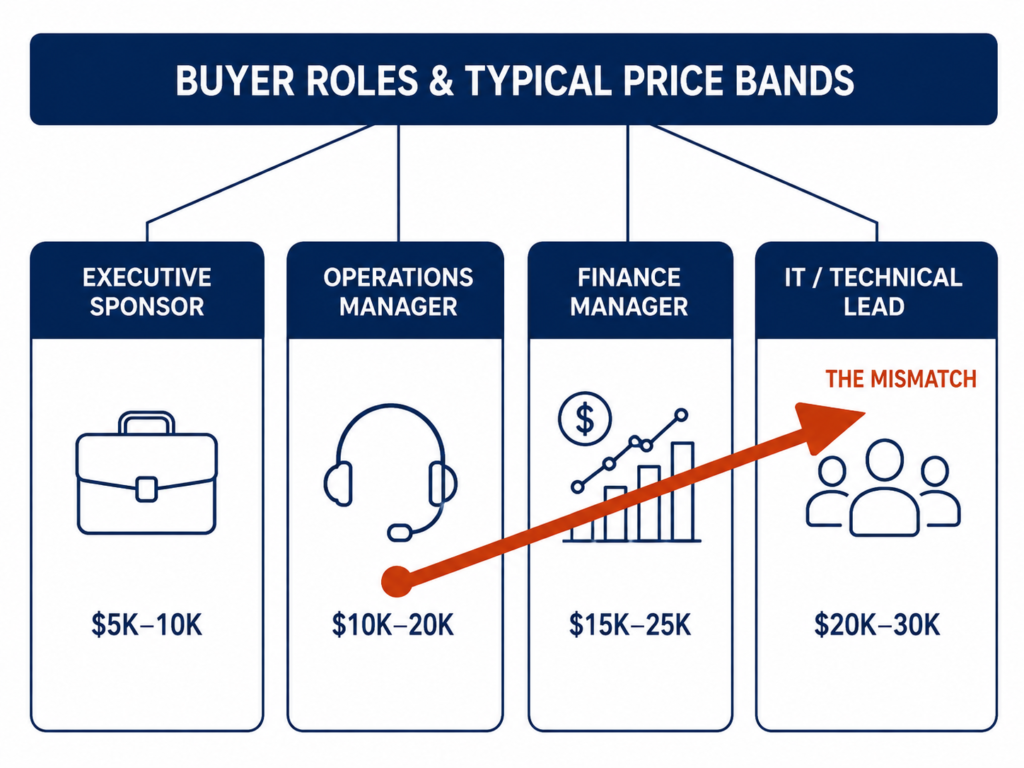
Performance management software is a system that runs an organisation’s review, goal-setting and feedback processes by replacing spreadsheets and email with structured cycles, shared objectives and a permanent record of ratings and conversations. It exists so that performance decisions are consistent across managers and reviewable afterwards.
That definition covers four genuinely different product types sold under one search term. They have different buyers, different budgets and different failure modes, and every list you have read presents them in a single ranked column as though they were interchangeable.
1. Dedicated performance platforms
Review cycles, goals, feedback and calibration are the whole product. Bought by HR, usually by a Head of People who already has an HRIS. Typical range: $5 to $13 per user per month.
2. OKR and goal-alignment platforms
The goal cascade is the product, and performance rides on top of it. Frequently bought by the COO or a Chief of Staff rather than by HR, which is why HR often inherits one it did not choose.
3. Engagement platforms with performance modules
Measurement first, reviews second. Bought by HR, frequently to answer a board question about engagement rather than a manager question about ratings. The performance module reflects that origin.
4. HCM and HRIS suites with a performance module
The module you already own. Bought by IT and Finance as part of a larger system, and switched on later by HR. Cheapest to activate, shallowest in depth.
Most bad purchases in this category are a buyer from one row buying a product from another.
◆ PRO TIP
Common mistake: locating the product before locating yourself. I apply the Talent Supply Chain principle to this, which says you architect the system before you buy components for it. Write down which of the four rows you sit in, and what the system has to do, before you open a comparison page. The shortlist writes itself after that, and it is the same discipline as thinking properly about the architecture of an HR tech stack rather than accumulating one.
‘Enterprise Performance Management’ Means Two Completely Different Things
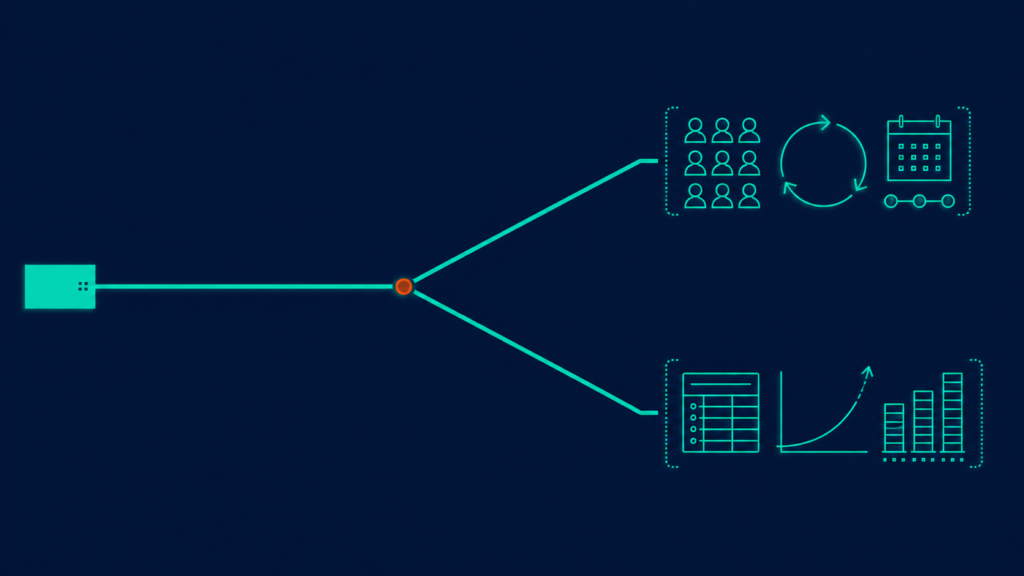
Search that phrase and you get two categories back, which is why an HR leader briefing procurement can end up in a demo for financial consolidation software. This is not hypothetical. It is what the search results do.
In HR:
Managing employee performance at scale. Review cycles, goals, calibration and feedback across thousands of people and multiple entities.
In finance:
Enterprise Performance Management. Budgeting, forecasting, consolidation and financial close, occupied by Oracle EPM Cloud, Anaplan, OneStream and Workday Adaptive Planning. Different buyer, different budget, entirely different product.
◆ PRO TIP
Lab Note: in any RFP or procurement brief, write ’employee performance management system’ or ‘performance review and goal management platform’. Gartner’s own market name is Employee Performance Management Systems, and that is the term vendors are indexed against. Using it routes your request to the right category on the first attempt.
What changes at enterprise scale in the HR sense has nothing to do with the review workflow. Multi-entity org structures, works council consultation, data residency, SSO and SCIM provisioning, and a security review that will add six to twelve weeks to your timeline.
In a global industrial organisation, the works council timeline, not the software evaluation, is usually the critical path. Nobody warns you about that, and no competitor’s enterprise section mentions it, which is why anyone planning HR compliance in multi-country deployments should start the consultation conversation the same week they start the shortlist.
What Performance Management Software Costs in 2026
You have to put a number in a budget line before you are allowed to book a single demo. Every article in this category answers that with ‘pricing varies, contact the vendor.’
Here’s the deal:
The Three Price Bands
Entry, at roughly $3 to $5 per user per month: Small Improvements Launch, Workleap Performance and ThriveSparrow. These run review cycles competently and stop there.
Mid, at roughly $7 to $13: Teamflect, Lattice, 15Five, Leapsome and PerformYard. This is where most 100 to 1,000-person organisations land, and where the add-on arithmetic starts to matter more than the headline.
Enterprise and quote-only: Betterworks, SAP SuccessFactors, Culture Amp, Engagedly and ADP. No published rate at any tier, and evaluation begins with a sales call by design.
Annual minimums, the number nobody publishes
Lattice enforces a $4,000 annual minimum. Leapsome gates implementation and Customer Success support behind an annual contract of $6,000 or more. Workleap requires 10 seats.
$4,000
Lattice’s annual minimum. A 25-person company on the $13 Foundations bundle is buying roughly $3,900 of value against a $4,000 floor, which means paying for headcount it does not have.
Source: Lattice pricing page, verified August 2026.
Run that arithmetic on every tool on your shortlist before you take a call. It eliminates options faster than any feature comparison, and it is the single most useful thing on this page for a team under 60 people.
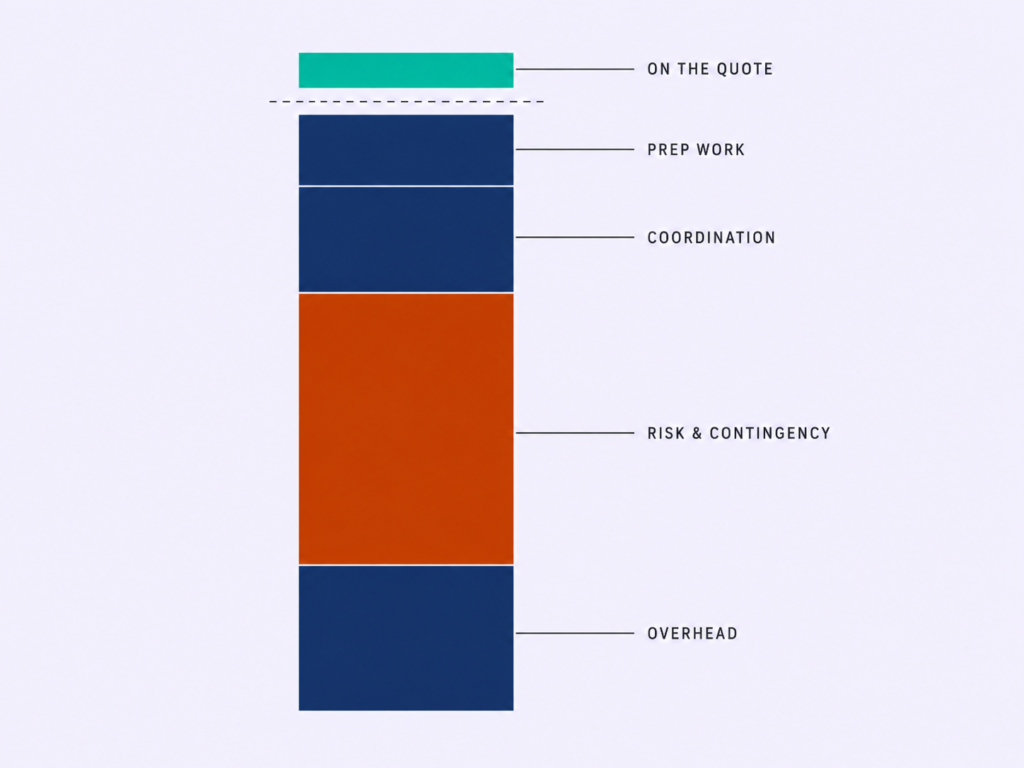
The Four Costs That Never Appear in the Quote
Implementation and configuration time, counted in HR hours rather than vendor invoices. The integration build, where your HRIS is not natively supported and somebody has to own a data sync.
Manager training, which is the largest of the four and the least budgeted. And the annual re-configuration, because your review process will change and somebody has to rebuild the templates when it does.
◆ PRO TIP
Real talk: I have never seen manager training costed properly in a performance software business case. Not once. It is the line that decides whether the platform gets used, and it is the line that gets cut when Finance asks for a smaller number.
How to run the Pricing Conversation
1
Ask for the annual minimum in writing
Not the per-seat rate. The floor. Most vendors will give it on the first call if you ask directly, and it is the number that determines whether the tool is available to you at all.
2
Ask for the price at headcount plus 30%
Get the quote at today’s headcount and at planned headcount. The delta between them is the real negotiation, and asking for both signals that you intend to be a customer for more than one renewal.
3
Ask what happens to the rate at renewal
Introductory pricing that resets in year two is common and rarely volunteered. Ask for the uplift cap in the contract. A vendor unwilling to commit to one has told you something useful.
◆ FROM THE LAB
The Sofia test: in one programme I ran, cost per hire for senior engineering roles fell from ₹6.5 to 7.5 lakh down to ₹3 to 3.8 lakh, a 45 to 55% reduction, while time to fill dropped from 70 to 80 days to 45 to 50. Agency reliance fell by 60 to 70%, and four of six senior roles closed without an agency at all.
None of that came from negotiating harder. It came from removing spend that was never buying an outcome. The biggest saving in a software purchase works the same way. It is almost always scope, not discount. Anyone building an HR business case a CFO will sign should lead with what they removed, not with what they negotiated.
All pricing on this page was verified in August 2026. Re-check every figure on the vendor’s own page before you use it in a business case.
The 9-Point Scorecard for Evaluating Performance Management Software
You are about to run four demos. Without a framework you will be led through four different feature tours and finish with four impressions and no comparison.
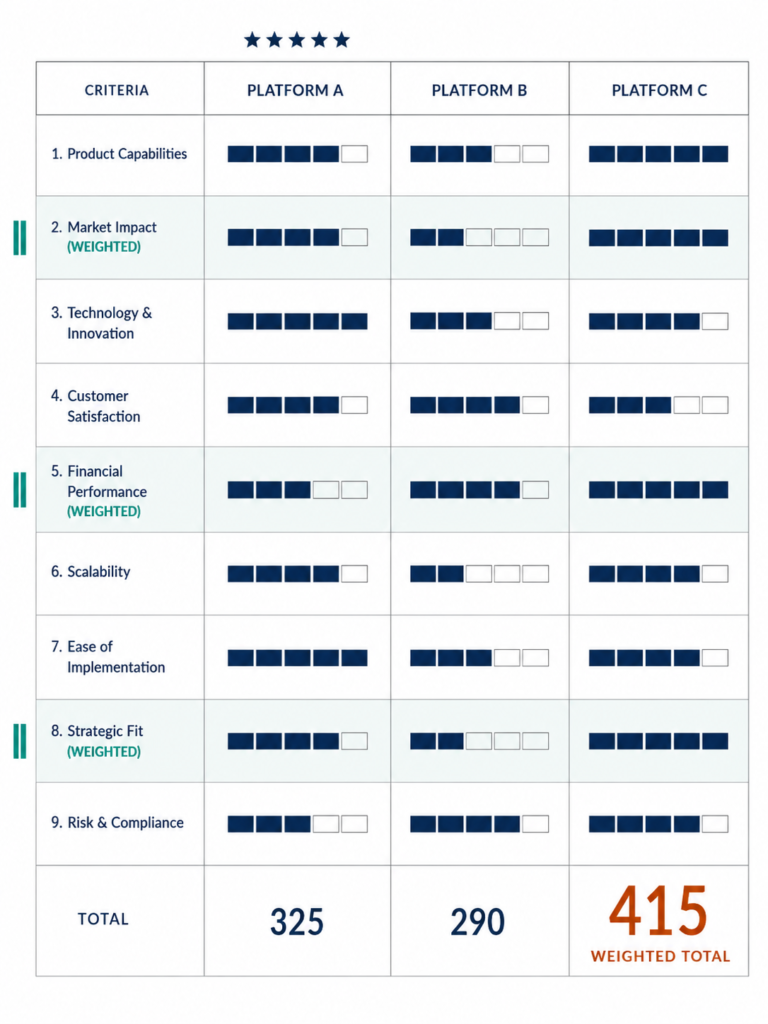
My discipline here comes from Intelligence-Led Sourcing, where the market mapping happens before the vacancy exists rather than after it. Same principle: write the criteria before the first demo, not after the third.
Here’s how to build it:
1
Manager completion rate, not feature count
The only metric that predicts whether the system survives its second cycle. A platform nobody finishes is worth less than the spreadsheet it replaced, because at least the spreadsheet was honest about being manual.
Ask: what is your median manager completion rate across customers of our size? A bad answer is a case study about one enthusiastic customer.
2
Configurability without professional services
Your review process will change within eighteen months. If every change costs a support ticket and a two-week turnaround, the system will slowly stop matching how you work.
Ask: can our HR admin change the rating scale and the review template without raising a ticket? Show me, now, in the demo environment. A bad answer is ‘our team can handle that for you.’
3
Calibration design
Calibration is where consistency is created or lost, and it is the weakest area across this entire category. Most platforms treat it as a reporting problem rather than a facilitation problem.
Ask: how does the tool support calibration across managers who have never met? Most answers turn out to be a spreadsheet export.
4
HRIS integration depth
A logo on an integrations page tells you nothing about what the connection carries or what happens when your data changes mid-cycle.
Ask: is this a native integration or a flat-file sync, and what breaks when someone changes manager mid-cycle? A bad answer contains the word ‘roadmap’.
5
The AI question, asked properly
Fourteen of the sixteen platforms in this list claim AI capability. Counting the claim is worthless. Interrogating it is not.
Ask: what was the model trained on, does it write or only summarise, is output logged, and how is bias tested? A bad answer is a demo of a summary button.
There is a reason to be sceptical here beyond principle. Gartner’s survey of HR leaders found that 88% say their organisations have not realised significant business value from AI tools. Translation: nearly every organisation that bought the AI feature is still waiting for the return.
◆ FROM THE LAB
The Sofia lens: my verdict on ChatGPT and Copilot in HR has not changed. A genuine productivity multiplier, and not a recruiter. Best used to augment thinking, never to replace judgment.
Recommend it for drafting, for role research, for language checks. Avoid it for candidate evaluation, for compliance-sensitive documentation, and for anything requiring full business context. The same boundary belongs in your performance software evaluation, and it is worth being precise about where AI belongs in an HR workflow before a vendor defines it for you.
One legal note that is not optional. Where performance data feeds pay, promotion or termination decisions, algorithmic bias exposure is live. NYC Local Law 144 and the EU AI Act both apply in this territory. Route this past legal counsel rather than treating it as an IT question.
6
Total cost at headcount plus 30%
Growth is the most predictable variable in your business case and the one most often left out of the quote you compare against.
Ask: what is the quote at current headcount and at planned headcount? A bad answer is ‘we can revisit that closer to the time.’
7
Data portability and exit
Performance history is legally relevant and operationally irreplaceable. Verified users of at least one major platform report being unable to export data from several modules.
Ask: on the day we leave, what do we get, and in what format? A bad answer is a promise rather than a documented export specification.
8
Compliance and data residency
For organisations with EU operations, where performance data physically sits is a works council question long before it is an IT question. Cross-border processing needs a documented basis.
Ask: where does the data sit, and can it stay in-region? A bad answer treats this as a checkbox rather than an architecture.
9
Support model and who answers
You will need support most during your first cycle, which is also when a slow response does the most damage to manager confidence in the system.
Ask: is support included, is it human, and what is the response SLA? One platform in this list makes unlimited human phone support its primary differentiator, which tells you exactly what the category norm is.
How to score it:
- Score each criterion 1 to 5 immediately after each demo, not at the end of the week
- Double-weight the three criteria that map to your own named failure point
- Sum, then compare. The highest-scoring tool is rarely the highest-rated one
⚠ WATCH OUT
Anti-pattern: scoring features the vendor will happily tick. Ease of use, scalability and customisation appear on every competitor’s evaluation checklist and none of them is answerable on a demo call. Every criterion above comes with a question you can read aloud, which is the whole point.
If this scorecard is useful, the next Lab framework lands in the newsletter before it goes anywhere else. Subscribing is how you get it first.
Implementation: Where Performance Management Rollouts Stall

Every competing article ends at ‘how to choose’. That is precisely where your real problems begin.
You are not buying a tool. You are buying a process you have not written down yet, and the four failure points below are where that becomes obvious.
1
The first cycle is a test, not a rollout
Run one department through one full cycle before you launch org-wide. Measure three things while it runs: completion rate, median time to complete a review, and the number of support questions per manager.
Anything above two questions per manager is a configuration problem, not a training problem. Fix the configuration while the blast radius is one team.
2
Nobody owns the system
This is the most common failure and the most expensive one. A performance platform needs a named administrator with configuration authority and time allocated, not an HR Business Partner who inherited it alongside a full workload.
The specific ask: 0.2 FTE, named, agreed before go-live. Put it in the business case where Finance can see it rather than discovering it in month four.
⚠ WATCH OUT
Warning: an unowned system does not fail loudly. It degrades. Templates stop matching the process, integrations quietly break, and eighteen months later somebody proposes replacing a platform that was never configured properly. The replacement will fail the same way.
3
Managers were trained on the tool, not the conversation
Tool training takes forty minutes. Conversation capability takes a programme, and one of those two things is what your employees experience.
Budget for both, separately, and stop pretending the first substitutes for the second.
The gap here is wider than most business cases assume. Organisations are buying AI-assisted review tools for managers who have had no training in using AI at all, and Gartner’s research puts a number on it: only 8% of HR leaders believe their managers have the skills to effectively use AI. Translation: the manager, not the software, is the binding constraint, and you just bought a feature 92% of your leaders doubt anyone can use.
4
The process was not decided before the software was configured
Rating scale, cycle cadence, calibration rules and visibility permissions must be settled on paper first. Deciding them inside the configuration screen is how organisations end up with a system that encodes a process nobody ever agreed to.
Write the process document. Get it signed off. Then open the tool.
The old way
- Buy the tool
- Announce the launch
- Run a training session
- Hope
The Lab Way
- Decide and document the process, 2 to 3 weeks
- Configure against the document, 2 weeks
- Pilot one department through one full cycle, 4 to 6 weeks
- Fix configuration, then enable managers, 3 weeks
- Launch org-wide, then run first calibration
The Lab Way is slower for six weeks and faster for two years.
◆ FROM THE LAB
Real implementation: the hardest programme I have run was a bulk hiring ramp-up. Between 350 and 500 roles across customer support, operations analysts, junior engineers and sales support, against an eight to twelve week window set by a business launch date nobody was going to move.
The constraints will sound familiar to anyone rolling out software. Limited interviewer capacity. High drop-off risk. Quality expectations that did not soften just because the volume tripled.
What made it work was operating discipline rather than clever sourcing. We mapped weekly targets backward from the business start date instead of forward from the kickoff. We forecast recruiter bandwidth and interviewer availability as hard constraints, not aspirations. Daily recruiter stand-ups and a real-time tracker dashboard meant problems surfaced within twenty-four hours. A weekly war-room call with hiring managers kept decisions moving, and SLA-based vendor tracking meant nobody had to guess who was underperforming.
We delivered 420 hires in 10 weeks. Turnaround Time fell from 32 days to between 18 and 20. Offer-to-join held above 90%, 90-day retention landed between 85 and 88%, and recruiter productivity improved by roughly 35%.
Now transfer it. A software rollout has the same shape: a fixed date, constrained capacity, a drop-off risk called manager non-completion, and a quality bar you cannot lower. Map backward from go-live. Instrument completion daily rather than reviewing it monthly. Hold a weekly call where blockers get decided, not discussed. The discipline is what lands the rollout, exactly as it is what lands running a high-volume programme without losing quality.
Measuring ROI: What to Instrument Before You Sign
You will be asked to justify this spend at renewal. If you capture nothing before go-live, there is no counterfactual and the conversation becomes an argument about impressions.
Capture these in the cycle before the tool goes live:
- Manager review completion rate and median days to complete. Proves whether the process runs at all
- Rating distribution by manager. Your calibration baseline, and the only way to show consistency improving
- Voluntary regretted attrition among top-rated employees at 6 and 12 months. Proves whether ratings mean anything
- Internal mobility rate. Proves whether performance data is being used for anything beyond pay
- Time from review close to compensation decision. Proves the cycle connects to a business outcome
- HR hours spent administering the cycle. The only one of the six that produces a hard-dollar saving
Say that last part out loud when you present it. Five of these are leading indicators and one is a cost saving, and being straight about which is which is what makes the whole set credible to a CFO.
◆ FROM THE LAB
The Sofia test: my best 12-month cohort retention figure sits at 89%, and my offer acceptance high-water mark at 90%. Quality of Hire improved by 12% after competition analysis, 14% after mapping the talent landscape in similar industries, and 30% after building a skill-based pipeline off the back of market analysis.
Every one of those numbers is attributable to a specific methodology change for one reason only. A baseline existed before the change. Without it I would have three anecdotes and no argument, which is exactly the position most HR teams are in at renewal.
Performance management software does not produce a clean ROI number, and any vendor who offers you one has built it from assumptions you cannot audit.
The honest downside is worth stating to Finance directly rather than dressing up. What this software produces is a defensible process, faster cycles, and data that makes pay and promotion decisions reviewable. Argue for it on those grounds.
That position survives scrutiny. A fabricated multiple does not, and it costs you credibility the first time somebody asks how the number was built. Anyone who has sat through the HR metrics that survive a CFO conversation knows which of those two positions ends better.
One last connection. The three metrics you choose to instrument should be the same three criteria you double-weighted in the scorecard. If they are not, one of the two decisions was made carelessly.
Frequently Asked Questions
How much does performance management software cost?
Most dedicated platforms run $5 to $13 per user per month billed annually, with enterprise and HCM-embedded options quoted individually. The number that catches buyers out is the annual minimum. Lattice enforces $4,000 a year and Leapsome gates implementation support behind a $6,000 contract, which changes the arithmetic entirely for teams under about 40 people. Add-ons matter too: a 15Five configuration with Compensation and Kona lands near $22 per user per month against an $11 headline.
What is the difference between an HRIS and performance management software?
An HRIS is the system of record for employee data, payroll and org structure. Performance management software runs the review, goal and feedback process. Many HRIS platforms include a performance module, usually adequate for one or two straightforward cycles a year and usually shallower on calibration, continuous feedback and analytics. The subscores show the shape of that gap: BambooHR’s continuous feedback score is 8.2 out of 10 against a category average of 8.8, while Lattice’s is 9.3.
Is enterprise performance management software the same as employee performance management?
No. In HR, enterprise performance management means managing employee performance at scale. In finance, EPM means budgeting, forecasting and financial consolidation, the category occupied by Oracle EPM Cloud, Anaplan and OneStream. Use Gartner’s term, Employee Performance Management Systems, in any RFP to avoid routing your request to the wrong vendor category entirely.
Do small companies need performance management software?
Below roughly 40 employees, usually not. A structured template and a calendar reminder will do the job. The threshold is not headcount, it is manager count. Once more than five or six managers are running reviews independently, consistency and calibration stop happening by themselves and a system starts paying for itself. Annual minimums are the other constraint at this size, since a $4,000 floor makes several platforms unavailable to a 25-person company regardless of fit.
Which performance management software has the best reviews?
On G2, Rippling and Leapsome both hold 4.8 out of 5, across 11,596 and 2,478 reviews respectively. On Gartner Peer Insights, Profit.co leads at 4.5 but across only 12 ratings. Read those carefully. The G2 category average is 4.46 across 368 products and 116,000 reviews, so a 4.4 rating is below average rather than good. Gartner’s Employee Performance Management Systems market lists only 13 products, which means enterprise buyers defaulting to it are working from almost no data.
Category data: G2 Performance Management and Gartner Peer Insights, July 2026.
The shortlist matters less than you think
Sixteen platforms, and the one that works is the one your managers finish.
What separates organisations that get value from this purchase from those that renew resentfully for three years has almost nothing to do with which logo they picked. It is whether the process was decided before the software was configured, and whether one named person owned the system after go-live.
And the constraint is tightening. Gartner found that 47% of managers say they are working harder than they were a year ago. Every platform on this list adds work to a manager’s week before it removes any. That is the real adoption problem heading into 2027, and it is the strongest argument for choosing the tool that demands the least behaviour change rather than the one with the deepest feature set.
So do this next. Take the nine-point scorecard, double-weight the three criteria that match your named failure point, and score your shortlist against it before you book a single demo. Then instrument those same three metrics in the cycle you are running right now, while you still have a baseline to capture.
The next framework goes out through the Lab newsletter before it appears anywhere else, so subscribe if you want it first. And if you are running this evaluation in your own organisation, connect with me on LinkedIn and tell me which way you went. I am genuinely curious which of the four categories most teams land in once they stop reading ranked lists.
