

Eight years inside large engineering talent functions, and the widest performance gap I ever measured was not between two companies. It was between two teams in the same building.
Same roles. Same pay bands, same tooling, same market, same delivery deadlines. One team held attrition in single digits and shipped on time; the other lost close to a quarter of its people in a year and missed every date that mattered.
Everyone involved knew the difference was the manager. Nobody had a system for fixing it.
So the organisation did what most organisations do. It bought something: a training programme, an engagement platform, another survey cycle. None of it touched the variance, because none of it was aimed at the right layer.
Skills are what a manager has. A system is what an organisation runs. Most companies bought the first and never built the second.
That distinction has a price tag, and it is easier to calculate than most HR functions assume. An unfilled senior engineering role drains roughly $500 a day in lost output. Weak people management is a vacancy factory: it produces the resignation, the slow backfill, and the second resignation that follows the first.
$30,000
Lost productivity from a single senior engineering role sitting vacant for 60 days, at a $500-a-day operational drain.
Run that across a 200-person function carrying one struggling manager per four teams and it stops being an HR concern. It becomes a line item your CFO can see from across the room.
Here's what this guide contains:
- The definition that separates people management from HR management, with five scope boundaries instead of five adjectives
- The eight people management skills that move measurable outcomes, each with the metric it shifts and a diagnostic question
- The four-layer people management operating system: clarity, cadence, capability, and consequence
- A six-step build sequence you can run without buying anything
- An honest read on people management software, including what it cannot fix
- The manager scorecard, and how to translate it into the currency your finance team already budgets in
HR Insights Lab approach:
This guide will not sell you software and will not hand you ten tips. We give you the architecture first, the tooling decision second, and the honest limits of both, because that is the order the work happens in.
What is People Management? (And what it isn't)
People management is the day-to-day practice of directing, developing and supporting the people who do the work: setting expectations, giving feedback, resolving conflict, allocating workload, and building capability. It sits with line managers, not with the HR function. HR management is the separate discipline that owns the policies, systems and compliance making that practice possible.
Here's the difference:
Every competing definition of people management describes it with synonyms. Leading, motivating, inspiring, supporting. Those are adjectives dressed as a definition, and they are useless to anyone who has to scope the work, staff it, measure it, or defend a budget line for it.
A definition earns its place when it draws a boundary. People management covers five domains and nothing else. Everything else filed under the label is either HR administration or leadership theory wearing the wrong badge.
How to run the diagnostic:
Each domain ships with a test you can run on your own organisation this week. A named framework without a test is decoration, so treat these as diagnostics rather than tips.
- Clarity. Can every person state their top three priorities and the standard for each without opening a document?
- Capability. Does the manager know what good looks like for every role they supervise, specifically enough to write it down?
- Cadence. Is there a fixed rhythm of one-to-ones, or does it happen when there is time?
- Conflict. Are disagreements named within a week, or do they sit until they calcify?
- Consequence. Does sustained under-performance or sustained excellence change anything at all?
Answer those five honestly and you will already know which domain is broken and who owns fixing it. That is more diagnostic value than an annual engagement survey delivers, and it costs an afternoon. If you want the execution layer underneath each domain, we break down the day-to-day mechanics of how to manage people in a separate guide.
◆ FROM THE LAB
My experience: I have spent 8 years running Talent Acquisition inside large engineering and mobility organisations, hiring at a rate of 250-plus roles a year. The most expensive thing I watched break in that time was not a pipeline. It was a competency framework, built on a definition of people management so vague that three business units interpreted it three different ways and none of them could be assessed against it.
⚠ WATCH OUT
Common mistake: treating people management as a personality type. The moment it becomes a trait rather than a bounded discipline, it also becomes unteachable, unhireable and unmeasurable. Retention problems are mostly systems failures rather than compensation failures, and these five domains are where those systems live, which is exactly why we run the retention audit before touching salary bands.
People Management vs. HR Management vs. People Operations
Three terms, used interchangeably in most organisations, describing three different jobs. The confusion is not academic. It produces a specific and expensive accountability gap, which we will price in a moment.
| People management | HR management | People Operations | |
|---|---|---|---|
| Who owns it | Line managers | The HR function | A hybrid ops team |
| What it produces | Team performance | Policy and compliance infrastructure | Process and tooling efficiency |
| Time horizon | Daily and weekly | Quarterly and annual | Continuous |
| Failure mode | Disengagement and attrition | Legal and compliance exposure | Process drag and tool sprawl |
| Metric that exposes it | Team-level regretted attrition | Case volume and audit findings | Cycle time per people process |
Here's the difference:
People management is what line managers do with their teams every day. HR management is the function that builds the policies, systems and compliance infrastructure making that possible. People Operations is the layer that makes both run efficiently at scale, and treating the three as synonyms is what creates the accountability gap below.
The relationship between the first two is a supply relationship, not a service one. HR builds and maintains the Talent Supply Chain; managers operate it. That is the same distinction separating a Talent Acquisition function that maps its market from one that posts jobs and waits, and it shows up again in the HRBP operating model we mapped for a multi-site function.
Get this wrong and three things happen in sequence. Managers start treating people problems as escalations rather than as their own work. HR absorbs a case load it was never staffed to carry.
Then the third thing happens, and it is the one that quietly ruins the function. The engagement survey becomes HR's scorecard for a variable HR does not control.

You have sat in the meeting. Quarterly review, HR presents engagement scores for teams it does not manage, to leaders who nod, note the dip in two business units, and change nothing before the next cycle. The artefact gets produced, the ownership stays unassigned, and the number moves for reasons nobody in the room influenced.
◆ FROM THE LAB
The Sofia lens: I have presented that quarterly deck more times than I want to count, standing in front of engagement scores for teams I had no authority over, taking questions I had no mechanism to answer.
The year it changed was the year we stopped presenting the score and started presenting the capability gap behind it, manager by manager, with those managers in the room rather than reading about it afterwards. Nothing about the survey instrument changed. What changed was who had to answer for the number, and how quickly the two weakest business units found time to work on it.
⚠ WATCH OUT
Common mistake: HR owning a metric it does not control. Change one thing and the meeting changes character. The manager owns the score, HR owns the capability and the cadence that produce it, and the quarterly review converts from a report-out into a capability review with named actions against named managers.
None of this is a soft problem, and the scale of it is now measured. Global employee engagement fell to 20% in 2025, its lowest level since 2020, at an estimated cost of $10 trillion in lost productivity to the world economy.
20%
Global employee engagement in 2025, the lowest reading since 2020. Translation: four in five people on your org chart are showing up without discretionary effort.
What Weak People Management Costs You
Go back to the two teams from the opening. Same function, same roles, same pay bands, same tooling, same market conditions, same quarter. One holds attrition in single digits and hits its dates; the other runs at roughly a quarter and misses them.
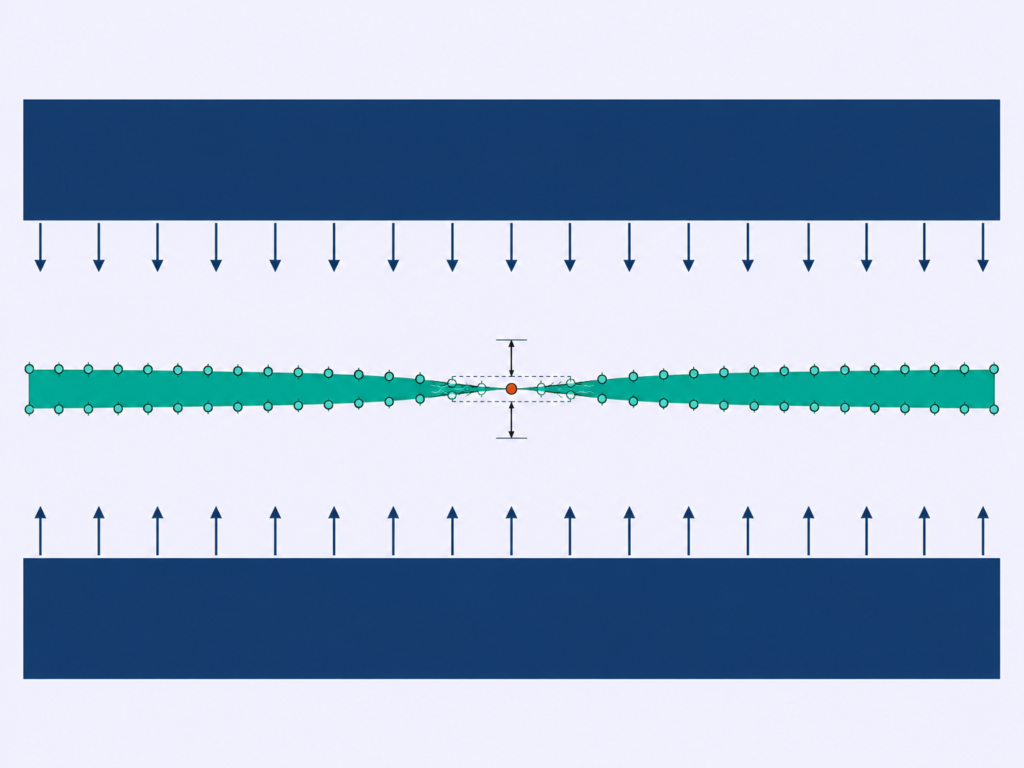
Nothing structural separates them except who runs them. Every organisation has this pair. Most have several.
Why does this matter?
Because the gap is calculable, and once it is calculable it can be defended in a budget meeting. Take a 200-person function with 25 people in the weaker team. A 16-point attrition difference is four extra departures a year from that team alone.
Each of those carries three costs, and only the first one ever reaches a spreadsheet. There is the replacement cost, which in my own senior engineering hiring ran between ₹6.5L and ₹7.5L per hire before we rebuilt the sourcing model, and between ₹3L and ₹3.8L after, a reduction of roughly 45% to 55%.
Then there is the vacancy itself, at that $500-a-day operational drain, running 45 to 50 days on a good process and 70 to 80 on a bad one. Then there is ramp: the new joiner is not productive on day one, and the manager who caused the departure is now spending their week on backfill interviews instead of the team that is still there.
That last cost compounds. The weakest manager in your function consumes the most recruiter capacity, which is a pattern worth watching for in the TA metrics CFOs respond to.
None of this is anecdotal. Gallup's manager research puts at least 70% of the variance in team engagement at the manager's feet.
70%
The share of variance in employee engagement across business units attributable to the manager. Translation: manager selection and manager capability are the highest-leverage people investments available to you, ahead of engagement platforms, perks, and comp adjustments.
Most articles stop at that statistic and pivot to encouragement. The implication is sharper than that: if the manager owns most of the variance, then every rupee or dollar spent on a people initiative that does not change manager capability is being spent on the wrong layer.
Which brings us to the part of the cost nobody puts on a balance sheet.
Spans of control widened after successive restructures. Executive reporting demands grew. Employee expectations grew faster still, and the manager layer absorbed the entire difference without anyone formally deciding it should.
The data confirms what your own managers are telling you sideways. Manager engagement fell nine points between 2022 and 2025, the steepest decline of any worker category.
9 points
The fall in manager engagement between 2022 and 2025, steeper than any other worker category. Translation: the layer you are relying on to fix people management is the layer degrading fastest.
That number gives you permission to stop blaming individual managers and start looking at the system they are operating inside. It also explains why the standard response fails so reliably.
◆ PRO TIP
The honest downside: adding a manager training programme to an overloaded manager layer makes things measurably worse. You cannot add people management capability to a manager who has no capacity. Capacity comes first, capability second, and that sequence is not negotiable.
◆ FROM THE LAB
The Sofia test: on a high-volume campaign I ran earlier in my career, recruiter productivity improved by roughly 35% and interviewer load dropped, and neither came from working harder. Both came from removing work: batch interviews, standardised pre-assessment, and structured scorecards that replaced the freeform debrief. Load first, then capability. It is the same sequence whether you are running a hiring campaign or a manager layer, and it interacts directly with span of control and what it changes about a manager's actual capacity.
The People Management Operating System: A 4-layer Architecture
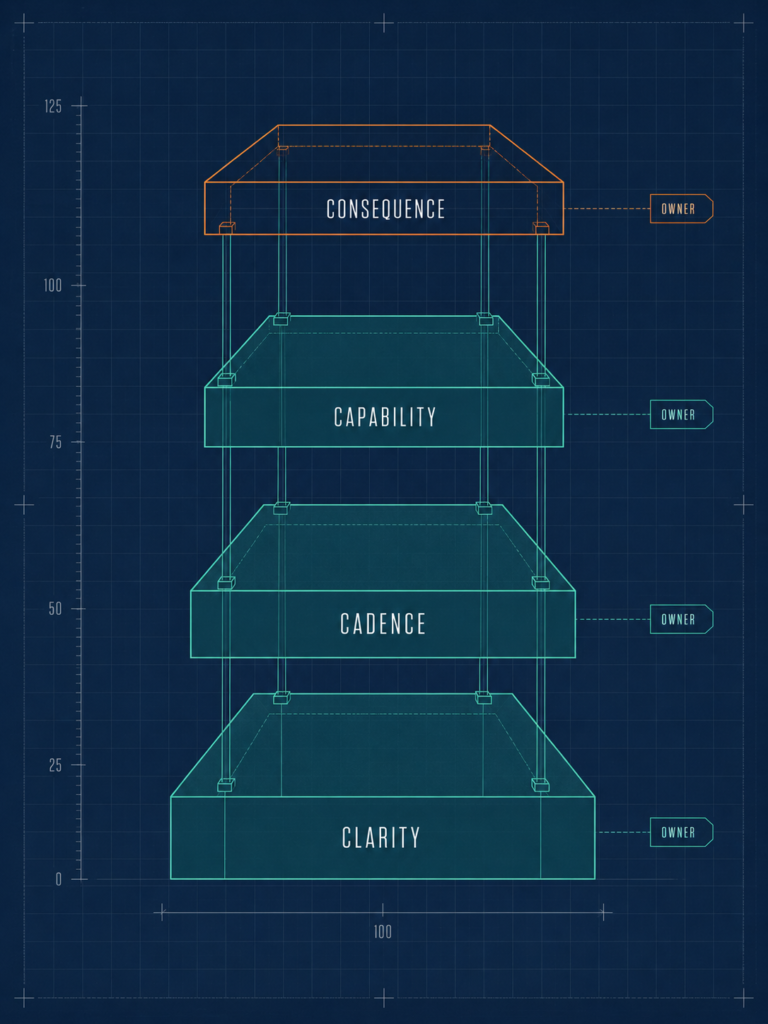
A list of skills is not deployable across a function. If you are responsible for manager quality across forty teams, you cannot hand out eight behaviours and hope; you need a structure that says what sits where and who owns each part of it.
Here is the architecture we use. Four layers, built in order, each with a named owner and a defined failure mode, and it sits underneath every one of the people management strategies and frameworks that hold up under pressure.
The old way
- Hire good managers
- Train them once a year
- Survey the team
- Build an action plan from the results
- Repeat when the scores do not move
The Lab Way
- Define the manager job as outcomes
- Fix the cadence to measured capacity
- Build capability continuously, not annually
- Attach consequence to team outcomes
- Read the signals quarterly at team level
The layer names echo the five domains from the definition section deliberately. The domains tell you what people management covers; the layers tell you where each one is built and who is accountable for building it.
1
Layer 1, Clarity: what gets defined
The foundation. This layer holds role outcomes rather than responsibilities, the top-three priority discipline, decision rights that say who decides what at which level, and a written definition of good for every role.
Owner: the manager, with HR owning the template and the quality bar. This is where Talent Market Pre-Alignment lives on the hiring side, because pre-aligning capability, interest, and availability before a requisition opens is impossible until somebody has defined what capability means.
What breaks without it:
Everything downstream. Feedback has no standard to reference, performance management has no basis to argue from, and internal mobility has no target profile to move people toward. Clarity is not parallel to the other layers and it is not optional. It is first.
◆ FROM THE LAB
Real implementation: earlier in my career I was asked to scale an automation engineering team on a timeline that made conventional posting useless. The instinct in the room was to publish the requisitions faster.
We did the opposite. Before a single job description existed, we mapped the talent across twelve competitor organisations in the industrial IoT space, which forced us to define what we were looking for at a level of precision nobody had committed to writing before. Not "senior automation engineer." The specific capability signals, the adjacent domains that transfer, and the profile of person who leaves a comparable role.
That mapping pre-identified 37 qualified candidates before the requisition opened. Time-to-Offer fell from 68 days to 34.
The lesson transfers directly to people management. The speed came from the definition, not the search. Every downstream outcome you want, faster hiring, cleaner feedback, credible performance conversations, is gated by whether somebody did the unglamorous work of writing down what good looks like first.
2
Layer 2, Cadence: what happens on a schedule
The rhythm layer, and the one that fails most quietly. It holds weekly or fortnightly one-to-ones with a fixed agenda, monthly priority resets, quarterly career conversations, and a defined escalation window for conflict.
Owner: the manager operates it, HR designs and audits it. Without it, people management becomes reactive, which means it only ever happens once something is already wrong.
The removal rule:
Before adding a ritual, remove one. A cadence that exceeds measured manager capacity will be abandoned inside a quarter, and an abandoned cadence is worse than none at all because it teaches the team that the system is theatre.
⚠ WATCH OUT
Common mistake: measuring cadence completion instead of cadence quality. A 94% one-to-one completion rate in the HRIS tells you meetings were logged. It tells you nothing about whether a single one of them was worth the hour, and it is the metric most likely to make a broken system look healthy on a slide.
A cadence holds under pressure only when load has been engineered out elsewhere. On a campaign that delivered 420-plus hires in ten weeks, we sustained daily recruiter stand-ups, real-time tracker dashboards, and weekly war-room calls with hiring managers precisely because batch interviews, standardised pre-assessment, and a single point of contact per batch had taken work off the same people first.
3
Layer 3, Capability: how managers get better
The development layer, and the one most organisations mistake for the entire system. It holds manager selection criteria applied before promotion rather than after, a defined first 90 days, peer forums where managers work live cases, and targeted intervention when a scorecard signal fires.
Owner: HR designs it, senior leaders sponsor it, managers participate in it. Without this layer, capability becomes accidental and correlates almost entirely with whoever the manager's own manager happened to be.
Why it is third, not first:
Training a manager who has no clarity and no cadence produces a well-trained person operating a broken system. The training is not wasted so much as unattached, and the scores do not move.
- Days 1 to 30. Decision rights handed over explicitly, one-to-ones running, the team's top three priorities documented and verified by asking the team
- Days 31 to 60. First feedback cycle completed with a two-week check-back on every instance, first delegation levels assigned
- Days 61 to 90. First quarterly career conversation held with every report, first peer forum case brought, capacity log reviewed with their own manager
That structure is what we hand new managers instead of a welcome deck, and it is expanded step by step in the first-time manager playbook we give people in week one.
◆ FROM THE LAB
The Sofia test: at one point I inherited a function with an expensive external hiring habit and a slow ramp problem that everyone treated as separate issues. They were the same issue.
We introduced a First Look policy: a 48-hour internal posting window before anything went external, with recruiters actively tapping internal candidates rather than waiting for applications. The mechanic was trivial. The resistance was not, because every manager understood immediately that it meant losing people they had spent two years developing.
Within a year, 23% of hires were internal moves. Those people reached full productivity in 28 days against 67 for external hires, a ramp that was 40% to 50% faster on every comparable role.
Alongside it, methodology changes produced Quality of Hire improvements we could attribute: 12% from competition analysis, 14% from talent landscape mapping, and 30% from building skill-based pipelines after market analysis. The transferable lesson is uncomfortable for anyone running a manager development budget. Capability you build internally arrives faster and sticks longer than capability you buy, and the only thing standing between you and it is usually a manager's incentive to hold on.
4
Layer 4, Consequence: what changes
The layer almost every organisation skips, and the reason the other three decay. It holds manager effectiveness as a weighted input to the manager's own rating, calibration that examines team outcomes alongside individual delivery, promotion criteria that require demonstrated people management, and a defined path off the manager track for people who do not want it.
Owner: senior leadership, with HR holding the calibration process. Without it the whole system becomes voluntary, and voluntary systems get run only by the managers who needed them least.
The uncomfortable part:
If a manager can produce consistently poor team outcomes and still be promoted on individual delivery, the organisation has already decided people management is optional. The values statement is not the decision. The promotion is.
Your promotion decisions are your real values statement. Everything on the wall is commentary.
⚠ WATCH OUT
Red flag: a manager promoted on individual delivery despite visibly poor team outcomes. Retention problems are systems failures far more often than compensation failures, and this is the clearest example in the article of a system failing while individuals absorb the blame. Fix it with four mechanisms rather than a slogan: rating weight, calibration visibility, a promotion gate, and a technical track people genuinely want.
That architecture is the most useful thing in this guide, and it is the part we keep building on. If you want the next blueprint before it is public, the Lab newsletter is where it lands first.
How to Build a People Management System in 6 steps
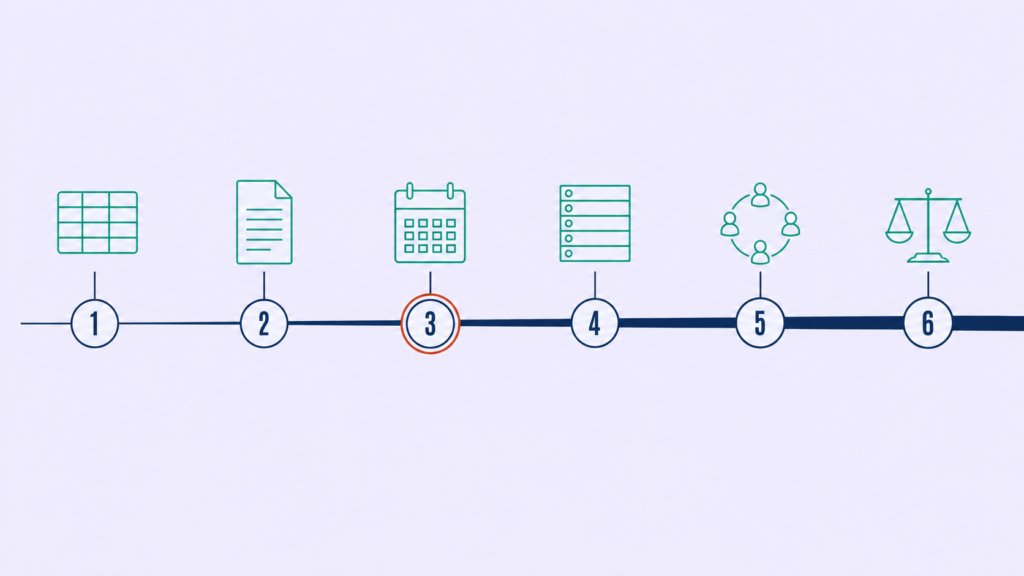
Six steps, in this order, none of which require you to buy anything. Every vendor-published version of this sequence starts at step four, because step four is where their product lives.
1
Step 1: Audit what managers do
Before you design anything, measure. Take a sample of managers and have them log where their time goes for two full weeks across four buckets: people work, individual delivery, administration, and escalation handling.
How to execute:
Do not ask them to estimate. Estimates flatter people work by a wide margin, because managers remember the difficult conversation and forget the four hours of approvals around it. What you get from a real log is the capacity number that constrains every subsequent design decision, plus the political ammunition you will need in step three.
Expect two findings. Actual people work usually lands well under a quarter of the week, and administration is always larger than anyone predicted.
◆ PRO TIP
Pro tip: run the log on a normal fortnight, never at quarter-end. A quarter-end log produces a picture of your worst two weeks and a design built to survive them, which is how organisations end up with a cadence nobody can sustain in a normal month.
2
Step 2: Write the manager job description, properly
Most organisations have never written down what a manager is accountable for. That is why the role quietly defaults to senior individual contributor with extra meetings, and why managers behave exactly as their evaluation tells them to.
Write it as outcomes, not activities. Then state the split explicitly: what percentage of this role is people work versus individual delivery.
- Team capability, measured as demonstrable skill growth in named people
- Team retention, weighted to regretted departures only
- Delivery through others, distinct from personal output
- Decision quality, including the decisions correctly pushed down
Get it signed off by whoever controls promotion criteria, because an unsigned split is a wish. This artefact is what makes Layer 4 possible at all.
3
Step 3: Set the cadence calendar, and remove something
Publish a single calendar showing every recurring people management commitment: one-to-ones, monthly priority resets, quarterly career conversations, calibration, and the conflict escalation window. One page, visible to everyone.
Then apply the removal rule. For every ritual you add, name what comes off, and take the removal from the administration bucket your step one audit exposed rather than from the people work you are trying to protect.
What you get is a cadence that survives a busy quarter. That is the entire difference between a system and a launch.
◆ FROM THE LAB
Real implementation: the hardest cadence I have ever had to hold was a bulk hiring campaign covering customer support, operations analysts, junior engineers, and sales support. The ask was somewhere between 350 and 500 hires inside an eight to twelve week window, against a business ramp date that was not moving.
Every instinct in the room said add more recruiters and work longer hours. We planned capacity backward from the business start date instead, forecasting recruiter bandwidth, interviewer availability, and sourcing throughput explicitly rather than assuming any of them.
Then we removed work before adding any. Standardised pre-assessment criteria replaced individual screening judgement. Batch interviews replaced individually scheduled slots. Structured scorecards replaced the freeform debrief, and a single point of contact per batch replaced four people answering the same candidate question differently.
Only then did we add cadence: daily recruiter stand-ups, real-time tracker dashboards, weekly war-room calls with hiring managers, and SLA-based vendor tracking on submissions, shortlist ratio, and offer-to-join.
The campaign delivered 420-plus hires in ten weeks. Turnaround Time fell from 32 days to between 18 and 20, offer-to-join held above 90%, 90-day retention landed at 85% to 88%, and recruiter productivity improved by roughly 35%.
None of that came from effort. It came from subtraction, and the same arithmetic governs a manager layer, as we break down in the 420-hire campaign and how the cadence held for ten weeks.
⚠ WATCH OUT
Common mistake: adding a cadence without removing anything. This is the single most common reason a people management rollout shows strong compliance in month one and near-zero compliance by month five. Name the removal, name who has the authority to approve it, and publish both alongside the new calendar.
4
Step 4: Instrument it, five signals not fifty
Pick the small set of signals that will tell you whether the system works, and commit to them before the first review cycle so nobody can move the goalposts once the numbers arrive.
- Team-level regretted attrition
- Internal fill rate
- Time-to-Productivity for new joiners
- Cadence quality, sampled rather than self-reported
- One business outcome measure the team owns
Five is the right number because the discipline here is subtraction, and defending the exclusions is where the value sits. Instrument before you intervene: the Quality of Hire improvements I have been able to attribute, 12%, 14% and 30% from three different methodology changes, were only attributable because each was measured against a baseline fixed in advance.
5
Step 5: Build the capability engine
Stand up Layer 3 as an operating process rather than an event. Three components, all continuous: selection criteria applied before promotion into management, a structured first 90 days for every new manager, and a monthly peer forum where managers bring live cases instead of case studies.
Add signal-triggered intervention on top. When the scorecard flags a manager, the response is targeted coaching inside the month, not a place on next year's programme.
Remember what the training data said: fewer than half of managers worldwide have received any management training. The gap is not motivation, and it will not close through curriculum alone, which is the lens to apply when deciding which people management training and certifications are worth the budget.
6
Step 6: Attach consequence and calibrate
Close the loop or watch the previous five steps decay. Weight manager effectiveness explicitly in the manager's own rating, bring team outcomes into calibration alongside individual delivery, gate promotion into and within management on demonstrated people management, and build a non-manager track with genuine parity so nobody is trapped in a role they never wanted.
Run the first calibration with the scorecard visible in the room. Not summarised afterwards. Visible, while the decisions are being made.
◆ PRO TIP
Real talk: the first cycle produces one or two genuinely uncomfortable conversations, usually involving a high-performing individual contributor who has been a poor manager for years and knows nobody has ever said it. That discomfort is not a sign the process is failing. It is the only reliable signal the organisation now means it.
What is a People Management System? (The software definition)
A people management system is the software layer supporting the day-to-day practice of managing people: goals, one-to-ones, feedback, performance reviews, career development, and recognition. It differs from an HRIS, which is the system of record for employee data, payroll, and compliance. Most people management systems read that data rather than owning it.

Here's the difference:
The category boundary is soft, and it is soft on purpose. HRIS vendors add a performance module and start calling themselves people management platforms; performance vendors add a directory and start calling themselves an HRIS.
The Lab has no product to sell, no affiliate arrangement, and no reseller agreement, which is the only reason this paragraph can be written plainly. Here is the question that cuts through the marketing: what is this system's system of record, and what does it merely read?
◆ PRO TIP
Pro tip: ask what the system of record is before you look at a single feature. It is the only property that determines your integration cost and your data ownership, and it is the one question no demo agenda ever opens with.
| Category | Distinguishing property | System of record? |
|---|---|---|
| HRIS | Employee data, administration, compliance, payroll | Yes, for employee data |
| HRMS | HRIS plus process management across the employee lifecycle | Yes |
| HCM | HRMS plus strategic workforce planning and talent | Yes |
| People management system | Sits closest to the manager: goals, one-to-ones, feedback, reviews, development | Usually no, reads employee data |
| Point solution | Does one of the above well and integrates for the rest | No, for its single domain only |
Why this matters:
Most mid-market organisations already own more of this capability inside their existing HRIS than they realise. The honest first step is not a market scan. It is an audit of what is already licensed and never configured, which regularly turns a platform purchase into a configuration project, and we cover the method in HR tech stack audits and what you already own.
◆ FROM THE LAB
My experience: the most capable platform I have implemented was also the one that punished the organisation hardest for buying it too early.
Avature is genuinely powerful and deeply customisable, and it is a platform rather than a plug-and-play product. It rewards teams that already have admin capability, process maturity, and change management discipline, and it exposes teams that have none of those with a precision no sales cycle prepares you for.
The transferable rule governs this whole category. Software inherits your operating maturity; it does not grant it. A people management platform bought by an organisation without a working cadence will produce exactly the cadence it was given, rendered in a nicer interface.
Now the part no vendor page will write. Software can make a cadence visible, store the record, prompt the manager, and surface the signal.
It cannot create clarity where the role was never defined. It cannot manufacture capacity inside an overloaded manager layer, and it cannot supply consequence where leadership has quietly decided not to enforce any.
Map it onto the four layers and the boundary is obvious. A people management system supports Layer 2 well, supports Layer 4 partially by making outcomes visible, and does almost nothing for Layers 1 and 3.
Buy the platform to skip the architecture and you get a well-instrumented version of the same problem, then conclude the software failed.
⚠ WATCH OUT
Warning: buying the platform to skip the architecture is the most expensive sequencing error in this category. It is also the most defensible one politically, which is exactly why it keeps happening. Build Layers 1 and 3 first, then buy the tool that fits the cadence you already run.
That said, the genuine value is real once sequencing is right. A good system removes the administrative weight of running a cadence at scale, and for a function with forty managers that weight is not trivial. Our full breakdown of people management software, evaluated without a vendor in the room, goes category by category.
How to Choose a People Management System: The Buyer's filter
Feature-led evaluation produces a system that does everything and fits nothing. Every product looks adequate on a weighted matrix, which is precisely what the matrix is designed to achieve.
Here's the deal:
Write down the cadence you run, or intend to run after step three, and evaluate every candidate against that single document. If you run fortnightly one-to-ones with a rolling agenda and quarterly career conversations separated from reviews, that is your specification. A platform that forces a different rhythm gets reconfigured expensively or abandoned quietly.
The old way
- Build a weighted feature matrix
- Score eleven vendors against it
- Sit through eleven demos
- Pick on functionality and price
The Lab Way
- Write your cadence document first
- Eliminate on rhythm mismatch in an afternoon
- Demo two or three, not eleven
- Pick on system of record and load delta
Five questions do the rest of the work. Each one has a bad answer that tells you more than any reference call will.
- What is the system of record, and does this tool own it or read it? A vague answer means integration cost you have not budgeted.
- What happens to manager workload in week one of rollout? If it net adds, you are funding a compliance problem.
- Can a manager complete their weekly loop in under fifteen minutes? Anything longer will be done badly or not at all by month three.
- What does the data export look like on the day you leave? Hesitation here is the clearest signal of lock-in you will ever get.
- Who administers this after go-live, by name and with what time allocation? This question kills more implementations than the other four combined.
⚠ WATCH OUT
Red flag: no named administrator with allocated time. "The HR team will pick it up" is not an answer, it is a deferral, and the deferral resolves itself in month four when the configuration drifts and nobody owns fixing it.
◆ FROM THE LAB
The Sofia lens: I do not hold a verdict on any specific people management platform, so I am not going to invent one. What I do hold are verdicts on adjacent tools I have used at scale, and the avoid conditions transfer cleanly.
LinkedIn Recruiter remains the most powerful professional sourcing platform available, and increasingly expensive and noisy with it. It does not replace sourcing skill. Avoid it for high-volume hiring and for cost-sensitive environments where somebody expects instant candidates without sourcing effort.
ChatGPT and Copilot are genuine productivity multipliers for drafting and synthesis, and neither is a decision-maker. Avoid both for candidate evaluation and compliance-sensitive documentation.
The pattern across every verdict I hold is the same. The tool amplifies the quality of what you bring to it and amplifies nothing when you bring nothing, which is why the avoid conditions carry more weight than the recommendations. Every verdict we publish, including the ones we do not recommend, sits in our tool reviews.
◆ PRO TIP
The honest downside: implementation effort is the number nobody puts in the business case. Licence cost is visible; configuration time, manager onboarding, the two-quarter adoption dip, and the administrator from question five are not. Budget implementation at a meaningful multiple of the first-year licence and plan for adoption to look worse before it looks better.
One mitigation matters more than the rest. Pilot with a function that already runs a decent cadence, not the most troubled one.
Piloting in a broken function tests the platform against a problem the platform cannot solve, and it produces a false negative that kills a perfectly good tool. Implementations survive on governance rhythm rather than software quality, which is the same lesson the war-room calls, SLA tracking, and single point of contact taught on the hiring side.
People Management Metrics: What to Measure, What to Ignore
You will be asked within two quarters whether this is working. An annual engagement score is not an answer to that question; it is a lagging average that arrives too late to change anything and hides the exact variance you were trying to find.
Five signals, at team level, reported quarterly. Here is what each one is telling you.
- Team-level regretted attrition. The only attrition number that means anything, because total attrition includes the departures you wanted.
- Internal fill rate. Whether this manager develops people who go on to other roles. A high number is good even though it costs the manager their best people, and that counterintuitive read is the whole point.
- Time-to-Productivity for new joiners. How quickly this manager makes someone useful. My own benchmark sits at 28 days for internal moves against 67 for external hires.
- Cadence quality. Sampled through two short pulse questions to the team, never taken from system completion data.
- One business outcome the team owns. Chosen by the business, not by HR, so the scorecard cannot be dismissed as an HR artefact.
| Signal | Frequency | Leading or lagging |
|---|---|---|
| Team-level regretted attrition | Quarterly | Lagging |
| Internal fill rate | Quarterly | Lagging |
| Time-to-Productivity | Per hire, rolled up quarterly | Leading |
| Cadence quality (sampled) | Monthly | Leading |
| Team business outcome | Per business cycle | Mixed |
Engagement stays on the dashboard as lagging confirmation, not as the primary instrument. It confirms what the leading signals told you two quarters earlier, and the depth on the mobility side sits in the internal mobility metrics worth reporting upward.
Here's the difference:
Four metrics deserve to be retired, and retiring them is as valuable as adding the five above. One-to-one completion rate measures whether a meeting was logged, not whether it was useful; replace it with sampled cadence quality.
Training hours delivered is an input measure that correlates with nothing you care about; replace it with observed behaviour change from the feedback diagnostic. Manager satisfaction scores collected annually from direct reports measure likeability more reliably than effectiveness; replace them with regretted attrition and internal fill rate.
⚠ WATCH OUT
Common mistake: reporting an org-wide engagement average. It averages away the exact manager-to-manager variance this entire article exists to find, and it produces a number that moves for reasons nobody in the room can attribute. Break it to team level or stop reporting it.
My own discipline here comes from measurement rather than instinct. The Quality of Hire improvements I can attribute, 12% from competition analysis, 14% from talent landscape mapping, and 30% from skill-based pipelines built after market analysis, are attributable only because each was measured against a baseline set before the change, not against whichever dashboard number was convenient afterwards.
Then comes the part that decides whether any of it survives a budget round. You will lose the argument with the right data if you present it in HR language to an audience that budgets in currency.
| Signal | Finance translation | Source of the number |
|---|---|---|
| Regretted attrition | Replacement cost plus ramp time per departure | Cost per senior engineering hire: ₹6.5L to ₹7.5L before initiative, ₹3L to ₹3.8L after |
| Time-to-Productivity | Days of output recovered per hire | 28 days internal vs 67 external |
| Open vacancy days | Operational drain per day held open | $500 per day, $30,000 over a 60-day vacancy |
| Internal fill rate | Agency fee avoidance | Agency fee 18% to 22% of CTC; agency reliance cut 60% to 70% |
| Cadence quality | Leading indicator on the four above | Sampled pulse, no direct currency conversion |
◆ FROM THE LAB
The Sofia test: the number that changed the conversation with finance was never engagement. It was agency fee avoidance.
Agency fees ran between 18% and 22% of CTC. On senior roles that is somewhere between ₹8L and ₹10L per hire. After we moved to direct sourcing, internal referrals, and targeted talent pools, agency reliance dropped by 60% to 70%, and on one set of six senior roles we avoided agency involvement on four of them entirely.
That is the same argument as the manager scorecard, expressed in the only unit that travels. Build your one-page upward report the same way: signal, movement, currency conversion, and the specific decision you are asking for, which is the structure we use in the TA business case that survives a CFO review.
One caution before you publish any of this. Team-level and manager-level people data is personal data under GDPR and equivalent regimes, so set a minimum group size for reporting, usually five or more, to avoid re-identifying individuals inside a small team.
Where AI Fits in People Management (and where it doesn't)

The prevailing story is that AI frees managers from administration so they can focus on their people. Sit with a manager layer that has just deployed three AI tools and ask them whether that is what happened.
47% of managers report working harder than they were a year ago. That is not the number you would expect from a category promising capacity back.
47%
Managers who say they are working harder than one year ago. Translation: whatever AI has removed from the manager's week, something larger has been added back.
Source: Gartner HR Survey (April 2026)
What has happened is that AI created a new category of work. Reviewing outputs, verifying summaries, and supervising tools that produce plausible content requiring human judgement to validate.
Without an explicit retirement decision, every tool is additive. AI removes load only when something leaves the calendar at the same moment it arrives.
That is the Layer 2 removal rule applied to tooling. Pair every deployment with a named retirement, and measure the manager load delta rather than tool adoption, because adoption tells you people logged in and nothing else.
Where the line sits:
Be generous where it is warranted. There are four categories where AI earns its place in a people management stack.
- Drafting. One-to-one agendas, development plans, feedback framing, inclusive language checks on written communication
- Synthesis. Pulling themes from open-text survey responses and exit interviews at a volume no human reads properly
- Prompting. Nudging a manager who has not held a career conversation in two quarters
- Preparation. Briefing a manager before a difficult conversation with structure and likely objections
None of those four is a decision. My working rule has not changed since the first pilot: AI is a co-pilot, not a decision-maker, with human-led validation at every decision point. The same prompt frameworks we built for role clarity, skill translation, inclusive job description drafting, structured interview questions, and market insights synthesis are documented in the prompt frameworks we use in recruitment.
◆ FROM THE LAB
Real implementation: the work I have been closest to has moved past assisted screening into what is genuinely a pilot phase for agentic systems. The difference matters. These tools no longer hand you an input to act on; they execute the workflow.
Four patterns emerged. Sourcing co-pilots running semantic search across the existing database, surfacing people already in the system that keyword search had buried for years. Agentic interview orchestration handling the full lifecycle rather than scheduling alone. Skills-first matching against verified competencies, which measurably reduced the unconscious bias that credential filters smuggle in. And predictive analytics answering not only what to hire but who is likely to leave, which turns retention from a post-mortem into a pre-emptive conversation.
The strategic shift underneath all four is from automation to human-AI teaming. AI takes the high-volume logistics; recruiters and managers take the high-touch relationship work they were hired for and rarely had time to do.
Three risks came with it, and I would name them in any board paper. An automation arms race, where dependency grows until the organisation can no longer run the process manually when a tool fails or a vendor changes terms. Loss of personal touch, where the relationship work that is the entire point of people management gets automated into something hollow. And algorithmic bias, where flawed training data reproduces historical hiring prejudice at scale.
⚠ WATCH OUT
Warning: a biased system carrying the appearance of objectivity is far harder to challenge than a biased human. A hiring manager with a pattern can be confronted with the pattern. A model with the same pattern gets defended as neutral by people who have never seen its training data.
- Keep a human decision point on every determination about a person, with that human named
- Audit outputs for disparate impact on a fixed schedule, not on complaint
- Retain the ability to run the process manually, and test that ability at least annually
One compliance note, briefly. Automated decision-making about individuals is regulated across multiple jurisdictions, including GDPR Article 22 in the EU, the EU AI Act's high-risk classification for employment and worker-management systems, NYC Local Law 144 bias audit requirements for automated employment decision tools, and EEOC guidance on adverse impact in the US. Confirm your position with counsel before deploying any automated determination about a person.
The People Management Anti-Pattern Library
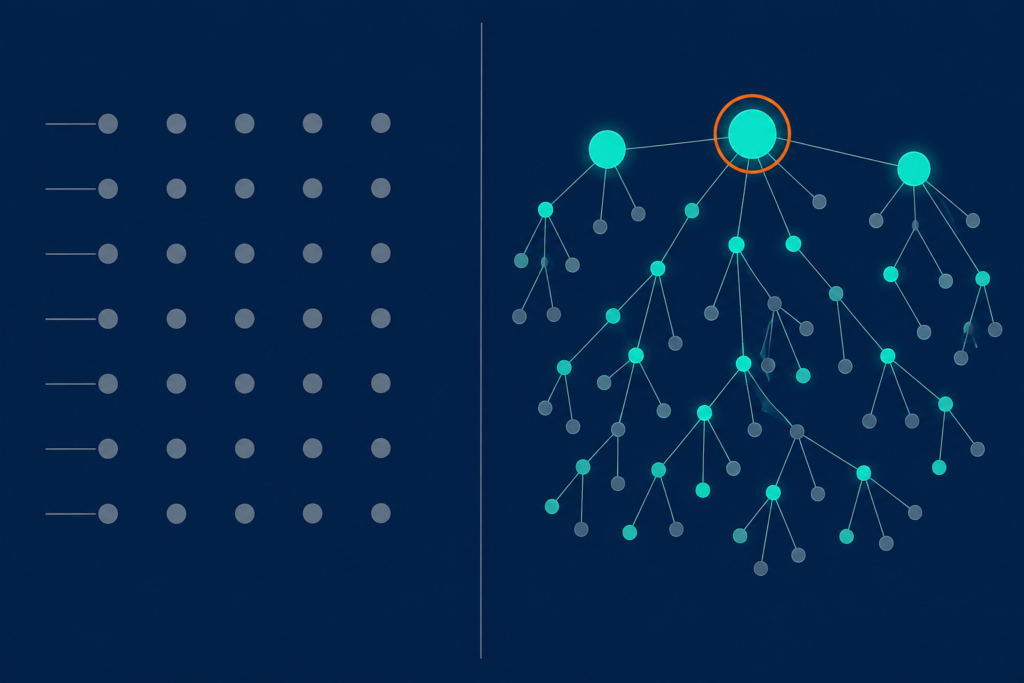
Most guidance in this category is written in the affirmative. Do this, try that, consider the other. Almost nobody writes down what actively fails, which is a shame, because the failures are more transferable than the successes.
But here is the catch: each of these four is appealing for a reason, and the reason is usually that it avoids a conversation somebody senior does not want to have.
Anti-pattern 1: Promoting the best individual contributor
Why it is appealing: it rewards performance visibly, it is easy to justify to everyone watching, and the alternative requires an explicit aptitude assessment nobody wants to run.
What it produces: a weakened individual contributor bench, a manager operating without aptitude or interest in the role, and a team quietly absorbing the cost for years.
The old way
- Promote the top performer
- Assume aptitude arrives with the title
- Offer management as the only route up
- Blame the individual when the team suffers
The Lab Way
- Separate the reward from the role
- Assess management aptitude before promotion
- Build a technical track with real pay and status parity
- Make declining the manager path socially acceptable
This is the clearest example in the article of an individual absorbing blame for a structural decision made at promotion. One caveat on execution: selection and promotion instruments carry adverse-impact exposure, so validate any pre-promotion assessment before you deploy it at scale.
Anti-pattern 2: Democratic programmes that dilute
This one applies to recognition, referrals, mentoring, and development budgets alike. Why it is appealing: even distribution feels fair, it is defensible in any review, and it avoids every difficult conversation about differentiation.
What it produces: participation metrics that look healthy and outcome metrics that will not move, because resource spread evenly is resource spread thin.
◆ FROM THE LAB
Real implementation: we had a referral programme that everyone participated in and nobody benefited from. Healthy submission numbers, respectable participation rate, and a conversion figure that would not move no matter how the incentive was restructured.
So we stopped treating it as a programme for everyone. We identified the top 5% to 10% of referrers, the people who consistently sent candidates who converted, and gave them something the cash bonus never delivered: Talent Scout status, VIP access to the recruiting team, and a standing quarterly meeting where they heard about roles before anyone else did.
One senior engineer produced 11 referrals. Nine were hired. Eight were still with the company when I last checked, an 82% conversion rate against a company average of 31%, and roughly ₹40 lakhs in agency fees avoided from that one relationship.
The lesson is not about referrals. Fairness is equal access, not equal investment, and every people programme that confuses the two will produce excellent participation data and no outcome at all. The full mechanism sits in the referral power-user programme.
82% vs 31%
Referral conversion from one activated power user against the company-wide average. Translation: the difference between a targeted programme and a democratic one is not marginal, it is a multiple.
Anti-pattern 3: Reaching for salary as the retention lever
Why it is appealing: it is fast, it is visible to the person leaving, and it converts an uncomfortable diagnostic conversation into a transaction that can be approved in an afternoon.
What it produces: inflated fixed cost, internal pay inequity that surfaces six months later when somebody compares notes, and the departure happening anyway once the novelty of the increase wears off.
Pay matters up to a threshold. Past that threshold, attrition is driven by four things, and none of them appear on a payslip.
- Unclear career paths
- Poor manager capability
- Lack of role clarity or meaningful work
- Weak internal mobility
◆ PRO TIP
Real talk: if you would not have paid it before the resignation, the problem was never the pay. Run the four-domain diagnostic first and reserve pay corrections for genuine market misalignment, which is the sequence behind the retention diagnostic we run before touching compensation.
Anti-pattern 4: Running people management on an annual cycle
Why it is appealing: it fits the calendar, it fits the HRIS, and it produces a clean artefact for the board pack at a predictable time each year.
What it produces: feedback delivered months after the behaviour it describes, career conversations disconnected from the roles open, and a system that only detects problems once they have already cost something.
The old way
- Annual review as the primary people event
- Feedback batched to the cycle
- Career discussed once a year
- Problems detected at review time
The Lab Way
- Weekly one-to-ones as the operating rhythm
- Feedback inside 48 hours, checked at two weeks
- Career conversations quarterly and separate
- Annual reserved for calibration and compensation
⚠ WATCH OUT
Common mistake: assuming the annual cycle is the problem. Calibration and compensation genuinely belong there, and moving them creates chaos without benefit. The test to apply is narrower than the debate usually allows: how long is the average gap between a behaviour occurring and the conversation about it? A ten-week hiring campaign holding daily stand-ups and weekly governance calls would have collapsed on an annual rhythm, and so does people management.
Frequently Asked Questions
What is people management?
People management is the day-to-day practice of directing, developing and supporting the people who do the work: setting expectations, giving feedback, resolving conflict, allocating workload and building capability. It sits with line managers rather than the HR function, and it covers five domains: clarity, capability, cadence, conflict, and consequence.
What is the difference between people management and HR management?
People management is what line managers do daily with their teams; HR management is the function that builds the policies, systems and compliance infrastructure making it possible. The distinction matters because when HR is assumed to own people management, managers start treating people problems as escalations rather than as their own work.
What are the most important people management skills?
The eight that move measurable outcomes: setting expectations people can repeat, feedback that changes behaviour, coaching instead of answering, resolving conflict before it calcifies, delegating decisions rather than tasks, targeted recognition, quarterly career conversations, and explaining the reasoning behind decisions. Each is a behaviour you can observe and measure, not a personality trait.
What is a people management system?
A people management system is the software layer supporting the daily practice of managing people: goals, one-to-ones, feedback, reviews, development and recognition. It differs from an HRIS, which is the system of record for employee data, payroll and compliance. Most people management systems read that data rather than owning it.
How do you measure whether people management is working?
Track five signals at team level: regretted attrition, internal fill rate, Time-to-Productivity for new joiners, sampled cadence quality, and one business outcome the team owns. Engagement scores are lagging confirmation rather than a primary instrument, and an org-wide average hides the exact manager-to-manager variance you are trying to find.
Start with one layer
People management is not a quality some managers have and others lack. It is a system an organisation either runs or leaves to chance, and the two teams from the opening of this article were never a story about two people. They were a story about an architecture that existed in one place and not the other.
The organisations that get this right are not the ones with better people. They are the ones with better architecture.
Here is what separates the ones that execute from the ones that produce a deck. Almost anyone can build clarity, cadence, and capability, because all three are additive and none of them require anyone to be told something unwelcome.
Very few attach consequence. That is the entire difference between a people management system and a people management initiative, and it is why most of the second category quietly stops being mentioned by the following spring.
This is not a fringe concern any more. Gartner's 2026 CHRO priorities, drawn from 426 CHROs across 23 industries and four global regions, centre on realising AI value, workforce redesign for the human-machine era, leadership readiness amid uncertainty, and embedding culture to drive performance. Your own leadership is already being asked these questions, whether or not the answers have reached you yet.
So do not build all four layers. Pick one.
Run the two-week manager time log this month. Pick the single layer your log says is weakest, build only that one over the next 90 days, and measure the delta on two signals rather than five. One layer built properly beats four layers announced.
The Lab newsletter is where the next blueprint lands first, usually a few weeks before it becomes a public guide. And if you are rebuilding this inside your own organisation, connect with me on LinkedIn and tell me which layer you started with. I want to know what breaks, because that is usually the more useful half of the story.
