
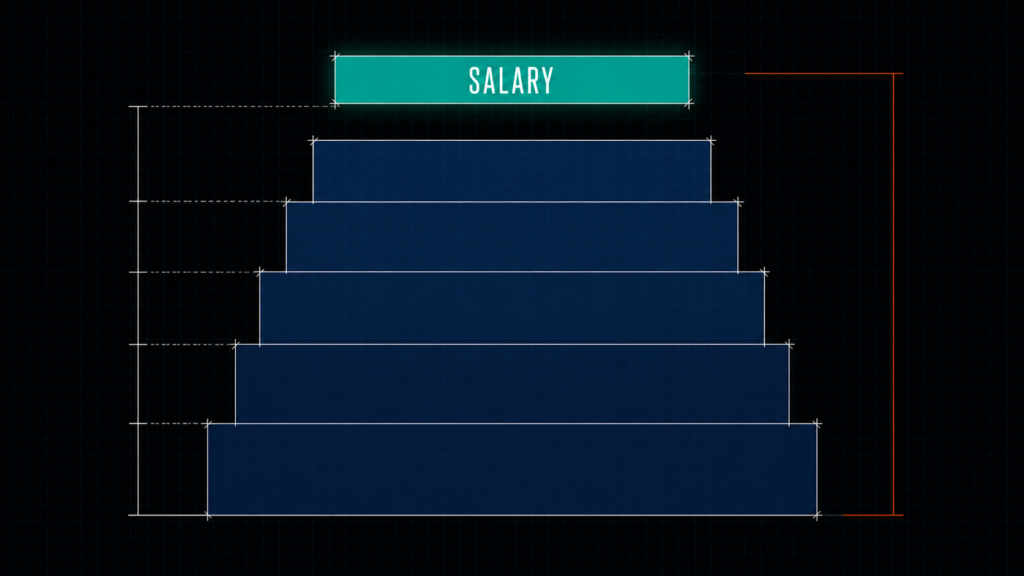
I have defended pay decisions on 250+ offers a year, and most of those conversations started with the same confusion. Employees, and plenty of managers, use “compensation” and “salary” as if they were synonyms. They are not.
That one confusion distorts everything downstream. Budgets get built on the wrong number. Offers get pitched on the wrong number, and counteroffers get lost on the wrong number.
Salary is the headline. Compensation is the whole story.
Compensation is not what you pay someone. It is the total value you exchange for their work, and the difference is not academic. Manage only the number on the offer letter and you ignore roughly a third of what you spend on every employee.
By the end of this guide, you will have:
- A 60-word definition of compensation you can use verbatim in your next leadership deck
- The three meanings of “compensation”, and the one that matters in HR
- The salary-is-a-subset correction, with the government number that proves it
- All three types of compensation, annotated with when each lever works
- The six building blocks of an employee package, ranked by decision leverage
The Lab approach: dictionaries define compensation, and vendors list its types. We break the concept down the way a practitioner uses it: definition first, then the corrections, then the levers, ranked by what they change in a real offer conversation.
What is Compensation?

Compensation is the total value, monetary and non-monetary, that an employer provides to an employee in exchange for their work. It includes direct pay such as salary, wages, and bonuses; indirect pay such as benefits, insurance, and retirement contributions; and non-financial rewards such as flexibility, development, and recognition.
Get that definition right and every pay conversation you run becomes easier to win.
Here’s the difference:
The old definition, “the salary and wages paid to employees”, treats compensation as a line item. The Lab treats it as a value system: cash at the centre, a ring of levers around it. That wider frame is what the rest of this guide builds on.
◆ PRO TIP
The catch: a clean definition is where most organisations stop. They can recite it, but their budgets, offers, and retention plans still run on base salary alone.
Before the types and components make sense, one ambiguity needs clearing. “Compensation” carries three different meanings depending on who is searching for it, and two of them have nothing to do with HR. Here’s the reality:
What Compensation Means: HR vs. Other uses
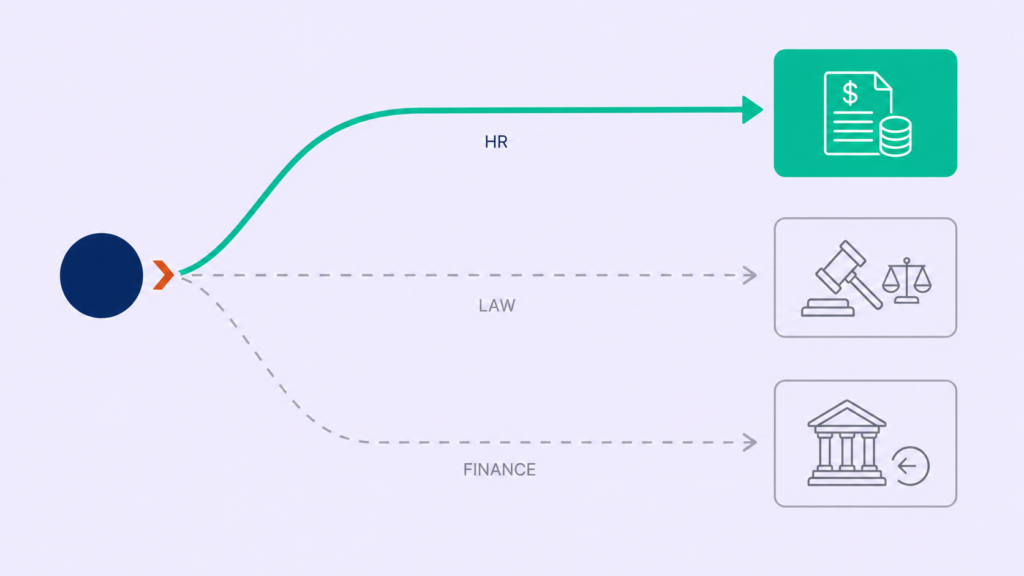
In HR, compensation means pay for work, and that is the meaning this guide covers. In law, compensation means damages or restitution: the money paid to make up for loss or harm, as in a personal-injury or workers’ compensation claim. In finance, a compensation scheme reimburses customers when an institution fails.
One quick clarification:
For the rest of this guide, compensation means how employers pay people for their work. If you came here for the legal or banking meaning, you are in the wrong article, and now you know which one to search for.
⚠ WATCH OUT
Common mistake: treating this ambiguity as trivia. Recruiters who pitch “total compensation” to candidates without framing the term first watch it get misheard as insurance or legal language, especially with candidates moving between countries.
With the term settled, the real correction begins. It is the most consequential mistake in this entire topic, and nearly every organisation makes it daily. Here’s the deal:
Compensation vs. Salary vs. Benefits: What’s Included
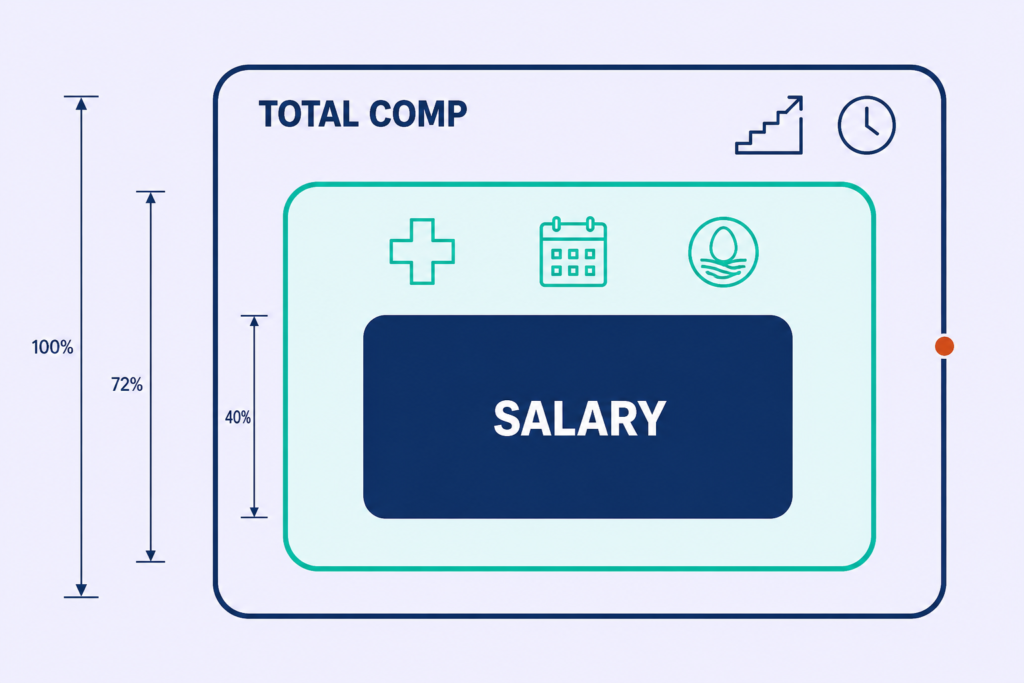
Salary is one line inside compensation. Benefits are another line. Treating the first line as the whole is how organisations misjudge both the cost of their people and the value of their offers.
| Term | What it covers |
|---|---|
| Salary | Fixed cash paid for a role and time, agreed in advance. One number. |
| Benefits | Insurance, retirement contributions, paid leave, and statutory protections. Financial value, but not immediate cash. |
| Total Compensation | Salary plus variable pay, equity, benefits, and non-financial rewards. The full exchange. |
Every dollar of benefits is invisible in a salary-only conversation. And it is not a small pile of dollars.
29.9%
The share of employer compensation costs that benefits consumed for US private-industry workers in December 2025, on a total cost of $46.15 per hour worked. Wages and salaries covered the remaining 70.1%.
Source: U.S. Bureau of Labor Statistics, Employer Costs for Employee Compensation
Translation: manage only base salary and you are steering about 70% of what you spend, while explaining even less of what employees receive. The missing third is where trust in pay quietly erodes.
My experience: candidates undervalue that non-salary third until someone itemises it. I have watched offers survive a higher competing base purely because we walked through the full package, line by line.
◆ PRO TIP
Real talk: most failed comp conversations are two people arguing about the headline while the story sits unread. Fix the frame before you fix the number.
Once you accept that compensation is bigger than salary, the next question is obvious: what exactly is inside it? Every package in the world is built from three types, and knowing which one to pull is a career skill. Here’s the difference:
The Types of Compensation: Direct, Indirect, and Non-Financial
Every compensation package is assembled from three types. Competitors list them. Almost nobody tells you when each one works.
Direct financial compensation
Direct financial compensation is cash paid straight to the employee: base salary, hourly wages, overtime, commissions, bonuses, and short-term incentives. The split that matters is fixed versus variable. Base salary is fixed and buys stability; bonuses and commissions are variable and buy performance.
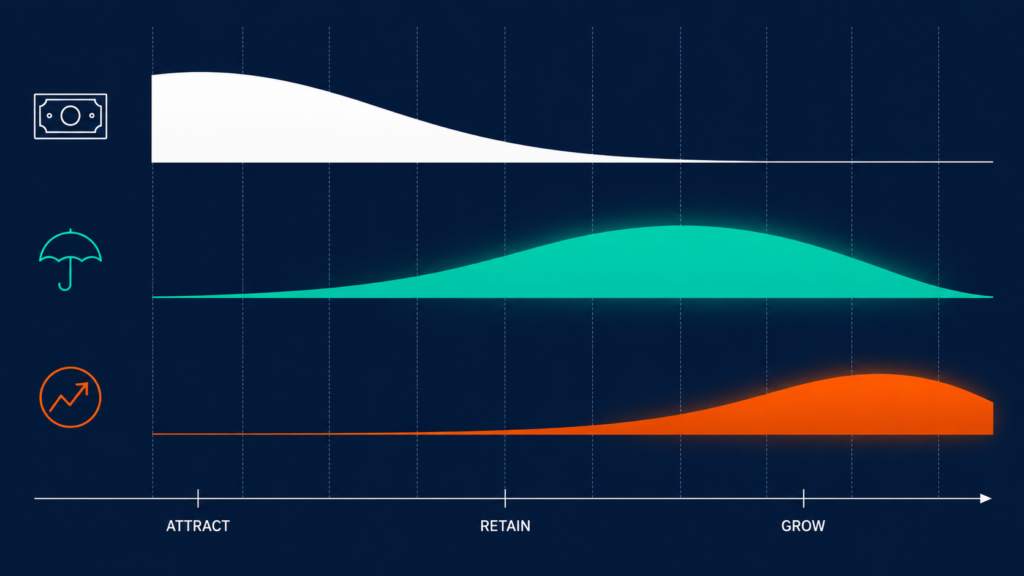
This lever matters most at the attraction stage, when a candidate is comparing concrete numbers across competing offers.
Indirect financial compensation
Indirect financial compensation is financial value the employee never sees as immediate cash: health insurance, retirement contributions, paid leave, life and disability cover, and statutory benefits. It is the quiet third of the package, the roughly 30% that salary-only conversations ignore.
It matters most for retention and for security-driven deciders, and its perceived value compounds with tenure.
Non-financial compensation
Non-financial compensation carries no direct dollar figure: flexibility, remote options, career development, meaningful work, recognition, and growth. It is the type most comp models under-weight, because it is the hardest to put in a spreadsheet.
I have seen non-financial levers beat cash counter-offers. In one organisation I worked with, internal moves reached Time-to-Productivity in 28 days against 67 days for external hires. A growth path is not a soft perk; it is operational value you can measure.
| Type | Examples | Best used for |
|---|---|---|
| Direct financial | Base salary, bonuses, commissions | Winning the attraction stage and rewarding measurable performance |
| Indirect financial | Insurance, retirement, paid leave | Retention, security-driven deciders, long-tenure value |
| Non-financial | Flexibility, development, recognition | Senior talent, counter-offer defence, sustained engagement |
Why does this matter?
The three types do not carry equal weight for every person. Early-career employees weight cash, because they are still building a financial base. Senior employees weight equity, flexibility, and development, because their base needs are already met.
◆ PRO TIP
The catch: the right lever depends on who is across the table. Pull the cash lever on someone who wants growth and you overpay for loyalty you still will not get.
These types get organised into a formal compensation structure with grades, bands, and progression logic. That structure is its own discipline, and we cover it separately.
Types are categories. What HR assembles day to day are components, the building blocks inside a single employee’s package, and they are not created equal. Here’s how the Lab ranks them:
The Components of Employee Compensation

Types tell you what compensation is. Components are what you assemble. This is where packages get designed, and where money gets wasted.
The old way
- List every component as equal
- Copy last year’s package forward
- Spend where approval is easiest
- Let base pay carry the whole offer
The Lab Way
- Rank components by decision leverage
- Fund the blocks that change outcomes
- Treat statutory items as table stakes
- Itemise the full package at offer stage
Here’s how to build it:
Six blocks make up an employee compensation package:
- Base pay, the fixed cash foundation the rest of the package builds on
- Variable and incentive pay, cash tied to performance or outcomes
- Equity and long-term incentives, ownership value that vests over time
- Statutory and core benefits, the legally required and universally expected protections
- Supplemental benefits and perks, the differentiators layered on top
- Non-financial rewards: flexibility, development, and recognition
Two of those blocks are table stakes. Statutory benefits and base pay do not win offers; they qualify you to make one. The blocks that change decisions are equity, development, and a variable plan the employee believes they can hit.
Each block carries a design caution. Variable pay motivates only when targets are credible, and equity only counts when the employee understands vesting. Perks only matter when someone uses them.
◆ FROM THE LAB

The Sofia test: at the offer stage, I stopped presenting a salary and started presenting an itemised total compensation statement, every block priced and explained. At its best, my offer-acceptance rate ran around 90%. The package did not get bigger. It got visible.
⚠ WATCH OUT
Common mistake: over-indexing on base pay. It is the most expensive block to move, the fastest to be taken for granted, and the only one a competitor can trivially match.
The total compensation statement deserves to be standard practice: one page that shows an employee everything they receive, not just the line they negotiated. Once you know the components, the next step is to design a compensation plan that assembles them deliberately. Administering all of this at scale usually runs on compensation management software; see our comparison of the leading platforms before you shortlist.
Knowing the blocks is mechanics. The harder question is why any of this matters, and on that question the industry consensus is mostly wrong.
Why Compensation Matters, and the Fairness Question

Compensation must be fair and competitive to a threshold. Below that threshold, you lose people. On this much, everyone agrees.
But here is the catch:
Above the threshold, more money buys surprisingly little loyalty. Attrition past that point is driven by manager quality, career paths, role clarity, and internal mobility.
Most pay problems are systems problems in a pay costume.
◆ FROM THE LAB
The Sofia lens: I no longer believe higher salaries solve retention, because I have watched the counterevidence for eight years. Organisations that reached for the pay lever first inflated fixed cost, created internal inequities, and lost the person anyway once the novelty of the raise wore off.
The people who stayed, stayed for different reasons. They had managers who could manage, they could see their next role from their current one, and moving internally was easier than interviewing externally. Pay kept them from leaving angry; the system kept them from leaving at all.
My rule now: use compensation to stay competitive, and spend the retention effort on the operating model around it.
The old way
- Counter-offer when the resignation lands
- Raise salaries across the board and hope
- Treat every exit as a pay problem
- Revisit pay only at the annual cycle
The Lab Way
- Fix manager capability and role clarity first
- Make internal mobility easier than external interviews
- Use pay to clear the competitiveness threshold
- Diagnose exits before pricing them
The fairness data points the same direction. Only 32% of employees say they are fairly compensated, and just 40% agree their organisation is transparent about the total value of their pay. Translation: the gap is perception and trust, not just pay levels, and you cannot close a trust gap with a raise.
Source: Gartner HR Research, 2025
◆ FROM THE LAB
Real implementation: at one point in my career, external hiring cost and slow ramp time were straining every plan I owned. We instituted a “First Look” policy: every open role was posted internally for 48 hours before going external, and recruiters proactively tapped internal candidates instead of waiting for applications.
The sceptics predicted a token gesture. The numbers said otherwise. Internal moves grew to 23% of all hires, and Time-to-Productivity for those hires averaged 28 days against 67 days for comparable external hires, because they arrived knowing the systems, the stakeholders, and the culture.
The retention effect was the part nobody had priced. People stopped treating an external offer as the only way to grow, and mobility retained people a raise would not have, because it fixed the reason they were looking. The lesson: your best retention lever is sometimes already on payroll.
⚠ WATCH OUT
Warning: throwing money at retention inflates fixed cost, creates internal inequity, and still loses the people you most need to keep. Diagnose before you spend.
Here’s what changed everything:
Fair pay is built, not announced. Fairness comes from explainable structure: documented ranges, consistent logic, and pay decisions that survive being read aloud. Which is why every pay decision should follow a documented compensation philosophy, not a manager’s instinct.
Transparency raises the bar further. Pay-transparency laws now cover a large and growing share of workers, so pay must be defensible and explainable at the same time. The discipline that gets you there is a scheduled compensation analysis to test pay equity and market position before anyone complains, not after.
The trust payoff is measurable. Among employees who believe their organisation is transparent about how pay decisions are made, 91% also trust that it pays people equally for equal work, and Gartner finds that educating employees on how pay is set raises pay-equity perception by about 11%.
Source: SHRM Research; Gartner HR Research, 2024–2025
◆ PRO TIP
Lab Note: transparency readiness is jurisdiction-specific. US state laws and the EU Pay Transparency Directive impose different disclosure duties, and equity or non-financial rewards carry tax and reporting implications. Check your locations before you publish ranges; this guide is not legal or tax advice.
If this reframed how you think about pay, the Join the Lab newsletter sends you the next framework before everyone else gets it. One email, no noise.
Frequently Asked Questions
What is compensation in simple terms?
Compensation is the total value, cash and non-cash, an employer gives an employee for their work. That covers salary or wages, bonuses, benefits such as health insurance and retirement, and non-financial rewards such as flexibility and development. Salary is only one part of it.
What are the main types of compensation?
There are three main types: direct financial, indirect financial, and non-financial compensation. Direct financial covers salary, wages, bonuses, and commissions. Indirect financial covers health insurance, retirement, paid leave, and other benefits. Non-financial covers flexibility, career development, and recognition. Together they form total compensation.
What is the difference between compensation and salary?
Salary is fixed cash paid for a role; compensation is everything of value the employer provides. That includes salary plus variable pay, equity, benefits, and non-financial rewards. Benefits alone are roughly 30% of total compensation, so salary always understates what an employee really receives.
What is included in employee compensation?
Employee compensation includes base pay, variable pay, equity, statutory and supplemental benefits, and non-financial rewards. Many employers summarise all of it in a total compensation statement, so employees see the full value of their package rather than just the base salary they negotiated.
What does compensation mean outside of HR?
Outside HR, compensation usually means money paid to make up for loss or harm. That includes damages in a personal-injury or workers’ compensation claim, or a scheme that reimburses customers when a financial institution fails. In HR, it simply means pay for work.
Eight years ago, I would have told you compensation was the number I negotiated hardest. I spent years watching that number win offers and still lose people.
The results were predictable: counteroffers that bought six months, budgets inflated by panic raises, exits nobody diagnosed.
Here’s what changed everything: treating compensation as a system of value, not a line item. Definition, types, components, threshold. Structure it, explain it, stand behind it.
Knowing what compensation includes is step one. Building it deliberately, through philosophy, structure, and analysis, is the work that separates organisations that keep people from organisations that keep paying more.
The direction of travel is already set. SHRM’s 2025 compensation outlook points to expanding pay-transparency laws and slowing merit budgets, which means how you structure and explain pay is becoming as decisive as the amount.
Source: SHRM, 2025 Compensation Trends
This isn’t theoretical. Start this quarter, and start small. Pick one move: itemise a total compensation statement for your next offer, or put your existing packages through a proper analysis. Implement it, then measure what changes in 90 days.
Subscribe to the Lab newsletter for the next blueprint. And if you are rebuilding your comp model this year, connect with me on LinkedIn. Let’s compare notes.
