
I have spent eight years in HR running 250-plus hires a year, and every one of them ended as a row in a system somebody else configured years earlier.
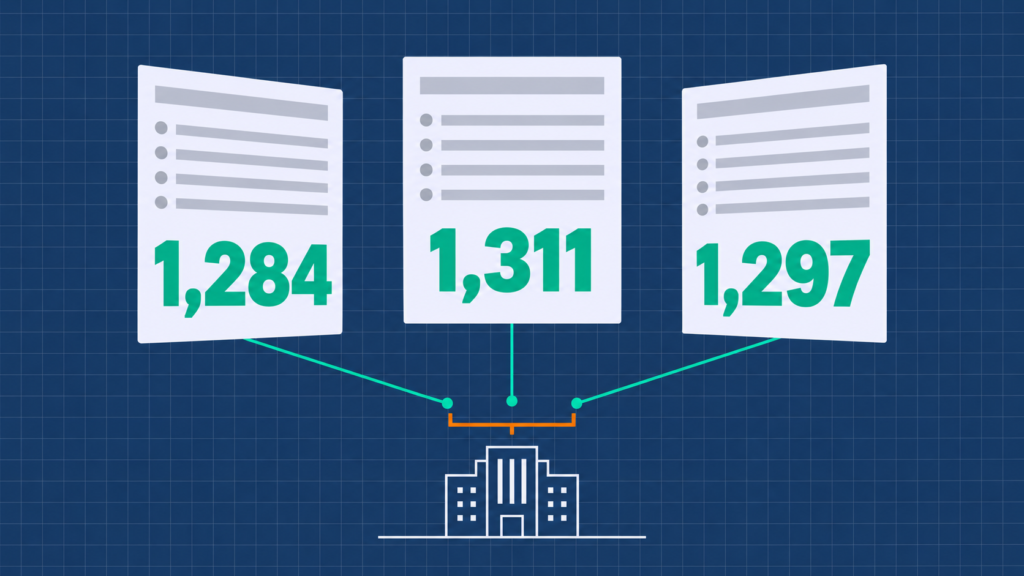
You have sat in the meeting. Three headcount numbers, three systems, three people who can each defend their figure, and a budget decision that gets made anyway.
Most organizations buy an HRIS as software. It is not software. It is the one place your company agrees on who works here, and everything downstream inherits that agreement, including the numbers you carry into the board pack.
Every HR technology conversation right now starts one layer too high. Teams argue about AI features and analytics dashboards while the record underneath them cannot answer a headcount question the same way twice. An agent cannot settle a contradiction the system of record never resolved.
Gartner found that 88% of HR leaders say their organizations have not realized significant business value from AI tools. Translation: the bottleneck is not the tool layer. It is the record layer underneath it.
Source: Gartner, Top Future of Work Trends for CHROs in 2026
The working number I used on senior engineering roles was roughly $500 a day of drained operational output for every requisition sitting open. Across a 60-day vacancy, that is $30,000 on a single role.
You cannot manage a vacancy your system cannot show you. In a large share of HRIS configurations, an approved but unfilled role does not exist as a record at all, so the $30,000 never appears anywhere a finance team would look for it.
By the end of this, you will have:
- The data model decision that determines whether the system works at all, and how to make it before a vendor makes it for you
- A vendor-neutral scoring rubric you can run against any shortlist, weighted by what cannot be retrofitted later
- The nine-step implementation sequence built around data migration, which is where projects actually fail
- The US reporting obligations your HRIS carries as system of record, and what each one requires the system to hold
- The integration failures that cost the most to unwind, starting with the one that quietly duplicates a quarter of your hires
HR Insights Lab approach: no vendor is named, ranked, or recommended anywhere in this guide. We have no HRIS product, no affiliate relationship, and no partnership to protect, which is why this article can weight architecture above features and tell you what breaks.
What Is an HRIS? HRIS Meaning, Full Form and Scope
HRIS, in plain terms:
A human resources information system (HRIS) is the software system of record for employee data. It stores, maintains, and processes the core record of every person an organization employs, and it serves that record to every downstream process that depends on knowing who works here.
HRIS stands for Human Resources Information System. The acronym gets used loosely across vendor marketing to cover products at three very different capability tiers, which is why two systems both described as an HRIS can behave nothing alike.
What defines an HRIS is not its feature list. It is what the system is authoritative for. Ask which record wins when two systems disagree, and you have found the HRIS, whatever the vendor calls it on the pricing page.
An HRIS is whichever system wins when two systems disagree.
Most comparisons of hris systems open with modules: payroll, benefits, time, reporting. That approach is why nobody can tell an HRIS from an HRMS by the end of the article. Modules are what a system does. Authority is what it is.
◆ FROM THE LAB
The Sofia lens: With 250-plus hires a year moving through the stack, the question that ever mattered to me was not which module had a feature. It was which system won when the org chart and the payroll file disagreed about who reported to whom. Nobody ever put that question on an evaluation scorecard, and it decided everything.
What an HRIS Is Not: Three Scope Boundaries
Not a payroll engine:
The HRIS holds the data payroll consumes. Compensation, deductions, tax jurisdiction, and cost centre assignment live in the record; the payroll engine calculates, files, and pays against them. Some platforms bundle an engine, which is a packaging decision and not a definitional one.
Not an applicant tracking system:
The ATS owns candidates. The HRIS owns employees. The boundary is the accepted offer, and teams that blur it end up with two identifiers for every internal hire, which breaks source-of-hire reporting permanently.
Take a platform like Avature. It is genuinely powerful and deeply configurable, and it is a platform, not a plug-and-play product. It is the right call for enterprise or global TA teams with dedicated ATS administrators and real process maturity, and the wrong call for a lean team that wants simplicity over flexibility. It sits firmly on the candidate side of the boundary, and it gets mistaken for the employee side constantly.
Not a BI tool:
An HRIS produces operational reports. Workforce analytics normally lives one layer above it and reads from it. Treating the HRIS as your analytics platform buys you dashboards built on a record you have not verified.
◆ PRO TIP
Pro tip: You are about to sit in a demo where every product claims to be everything. One question sorts them. Ask which system is authoritative for the employee record after an internal move, and whether that record keeps a single identifier across the move. The answer tells you what the product actually is, regardless of the category name on the website.
Why the HRIS Question Reaches the Leadership Table
A weak system of record does not announce itself as a technology problem. It shows up as three specific failures, all of which land on an HR leader and not on IT.
Headcount numbers that differ by system, so no figure survives a budget review. Compliance reporting assembled by hand from spreadsheets, because no single system can produce it. Workforce planning that runs on last quarter’s data, because current data requires a reconciliation exercise nobody has time for.
Here’s the difference:
The old case for an HRIS is hours saved on data entry and fewer manual forms. Finance has learned to discount that case to roughly zero. The Lab Way builds it on decision quality and reporting defensibility, because the HRIS is what makes every workforce number you present auditable. That is a finance argument, and it wins.
Once the record layer was reliable in one of the organizations I worked with, cost per hire on senior engineering roles moved from roughly $7,800 to $9,000 down to $3,600 to $4,600, and time to fill came down from 70 to 80 days to 45 to 50.
45-55%
Reduction in cost per hire on senior engineering roles once requisition and headcount data became trustworthy enough to measure against.
◆ FROM THE LAB
My experience: The record layer did not produce those savings. The sourcing work did. What the record layer produced was the ability to prove them, because the requisition and headcount data underneath finally reconciled. An initiative you cannot measure is an initiative you cannot defend in next year’s budget, which is the real reason this reaches the leadership table.
Reframe the purchase and the conversation changes. An HRIS is not an HR purchase. It is your company’s employee data infrastructure, and it is owned jointly with Finance and IT whether anyone has said so out loud.
HRIS vs. HRMS vs. HCM: Where Each System Category Starts and Stops
Here’s the difference:
| Category | What It Is Authoritative For | What It Adds Over the Previous Tier | When You Actually Need It |
|---|---|---|---|
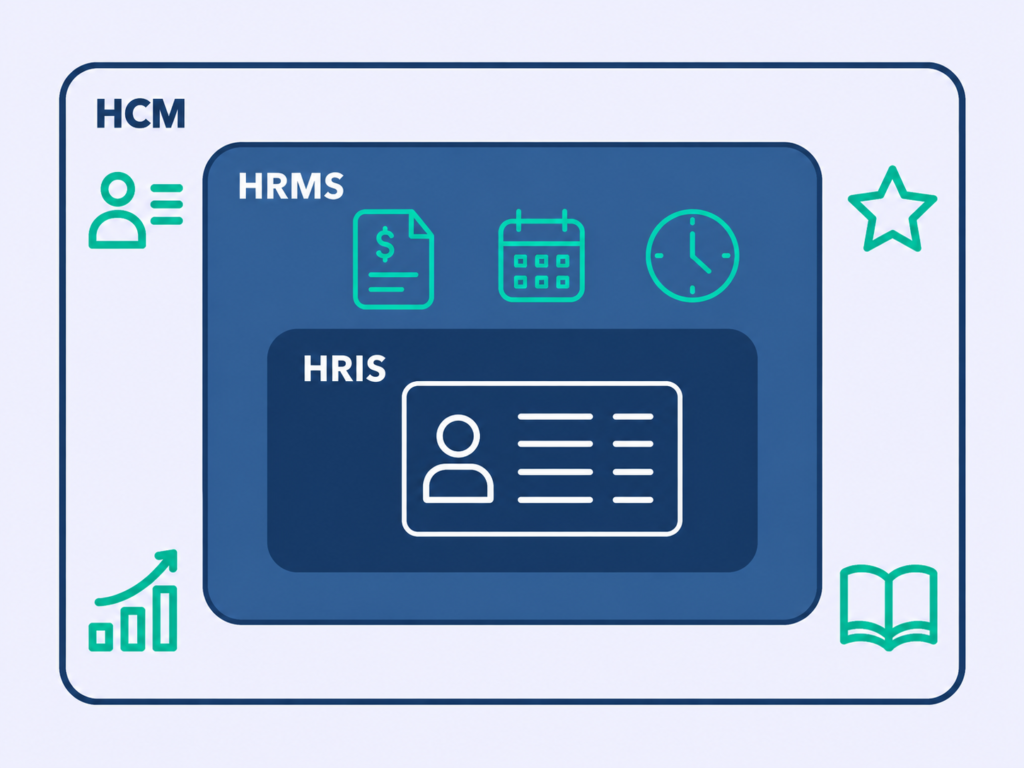
| HRIS | The core employee record, org structure, benefits data, and time data | The foundation layer. Everything else reads from it | Every organization with employees, without exception |
| HRMS | The same record, plus the transactions it drives | Workforce management as an executing engine: payroll processing, scheduling, absence and leave administration | When HR runs payroll and scheduling operations in-house |
| HCM | The same record, plus the full talent lifecycle | Recruiting, performance, succession, learning, and compensation planning | When workforce strategy, not workforce administration, is the constraint |
The relationship is nested. HCM contains HRMS, and HRMS contains HRIS. The words blur because every vendor markets one tier above what it delivers, and a human capital management (HCM) badge costs nothing to print.
A human resource management system (HRMS) is the middle tier, and it is where most of the category confusion concentrates. The question separating it from an HRIS is whether the system executes the process or merely stores the data the process needs.
◆ PRO TIP
Pro tip: Two questions place any platform on the tier map. Which records is it authoritative for? Which processes does it execute, as distinct from stores? Ask both in the demo and the category label on the website stops mattering.
At enterprise scale the tier question gets settled by something the tier map does not capture. The system Finance and Payroll already trust becomes the system of record in practice, whatever the architecture diagram says.
Why the HRIS Category Boundary Has Collapsed
Nine of the ten pages you will read on this question tell you the terms are used interchangeably and leave you there. That is a non-answer, and it skips the part that would actually help you: the commercial reason the categories collapsed.
Consolidation did it. Platforms that began in one tier acquired or built into the other two, so the same product now appears in all three category comparisons. The label on a vendor page is a positioning choice, not a technical fact.
Here is the consequence you can use. Two products both labelled HRIS can differ more from each other than either differs from a product labelled HCM. The category no longer partitions the market, so it cannot shortlist for you.
◆ PRO TIP
Real talk: You have not misunderstood anything. Vendor definitions genuinely contradict each other, and chasing down an authoritative one is wasted effort. Ignore the category name entirely in an evaluation and score against a requirement list you wrote yourself. The rubric later in this guide is built for exactly that.
How an HRIS Works: The Data Model Behind Every Human Resources Information System
Everything that goes wrong in an HRIS project traces back to four structural concepts. Duplicate employees, headcount that will not reconcile, reports that disagree with each other, a reorganization that corrupts history: all four failures start here.
Almost nobody explains this layer. Most guides jump from the definition straight to a feature list, which is why readers finish them able to name modules and unable to predict why an implementation will fail.
Here’s how to build it:
The HRIS Employee Record: One Person, One Persistent ID

Every person gets exactly one identifier, and it survives every status change. Rehire, internal transfer, contractor conversion, legal name change, acquisition: the identifier persists through all of them.
Three moments break the rule in practice. A rehire entered as a new person, which orphans tenure and prior performance history. An internal mover created fresh in the destination business unit, so one human now occupies two headcount lines. A contractor converted to employee with a second record, which splits cost history in two.
The damage is specific in each case: broken tenure calculations, inflated headcount, and attrition math that cannot be defended. None of it announces itself. It surfaces as reports that are slightly wrong in ways nobody can trace.
⚠ WATCH OUT
Common mistake: Treating duplicate records as a data hygiene issue and scheduling a clean-up. The clean-up works once. If the system creates a new record every time someone transfers, you have automated the problem you just spent a quarter fixing.
How to test your own system:
Pull a list of employees whose start date is later than their original hire date. Count how many of those records are duplicates of someone already in the system. You will have your answer this week, and the number will be larger than you expect.
◆ FROM THE LAB
The Sofia lens: Earlier in my career I inherited a hiring plan that treated every requisition as an external search. External hires were expensive, slow to reach full output, and internal candidates were learning about openings from job boards at the same time as the market.
We built a First Look policy around a 48-hour internal posting window before anything went external. Recruiters were expected to proactively tap internal candidates inside that window, not sit and wait for applications to arrive.
Over the following year, 23% of all hires were internal moves. Time-to-Productivity on those internal hires averaged 28 days against 67 days for external hires, a ramp roughly 40 to 50% faster on comparable roles.
Here is the part that belongs in a conversation about data models. None of that reporting was possible until internal movers stopped generating a second employee record. When close to a quarter of your hires arrive as internal transfers, a system that creates a new record on transfer is manufacturing duplicate identities at scale, and internal mobility reporting becomes something you cannot trust or defend.
The transferable lesson is the obvious one and the one most organizations act on last: your best candidates are sometimes already on payroll, and you will only find that out if your system can still recognize them after they move.
Position Versus Person in the HRIS: Two Different Records
A job and the human doing it are two separate things, and the system has to decide whether it agrees. Person-based configuration says the job exists because someone occupies it, so when they leave, the job disappears.
Position-based configuration makes the position its own record, with a grade, a cost centre, a reporting line, and a budget line. A person is assigned to it. The position can sit vacant and be counted.
The Old Way
- Count headcount by listing employees
- Track open roles in a recruiting spreadsheet
- Reconcile the two at month end
- Estimate vacancy cost by hand when Finance asks
The Lab Way
- Count approved positions, of which some are filled
- Hold every vacancy as a record with a days-open count
- Report headcount, vacancy, and hiring progress from one source
- Calculate vacancy cost automatically, because the vacancy exists
Only a position-based configuration can answer the question your CFO will eventually ask: how many approved roles are currently unfilled, and what are they costing us? That $30,000 per 60-day senior vacancy is only calculable if the vacancy exists as a record. In a person-based configuration it is invisible to the system, and the cost never reaches any report.
⚠ WATCH OUT
Warning: This is a configuration decision made during implementation, and it is expensive to reverse. Most organizations discover the wrong choice about a year later, the first time Finance asks for vacancy cost and nobody can produce it.
Go position-based anywhere headcount is budgeted and approved in advance. Person-based is defensible only in small, fast-moving organizations where roles genuinely do not pre-exist the people filling them.
Effective Dating in the HRIS: Why Historical Accuracy Matters
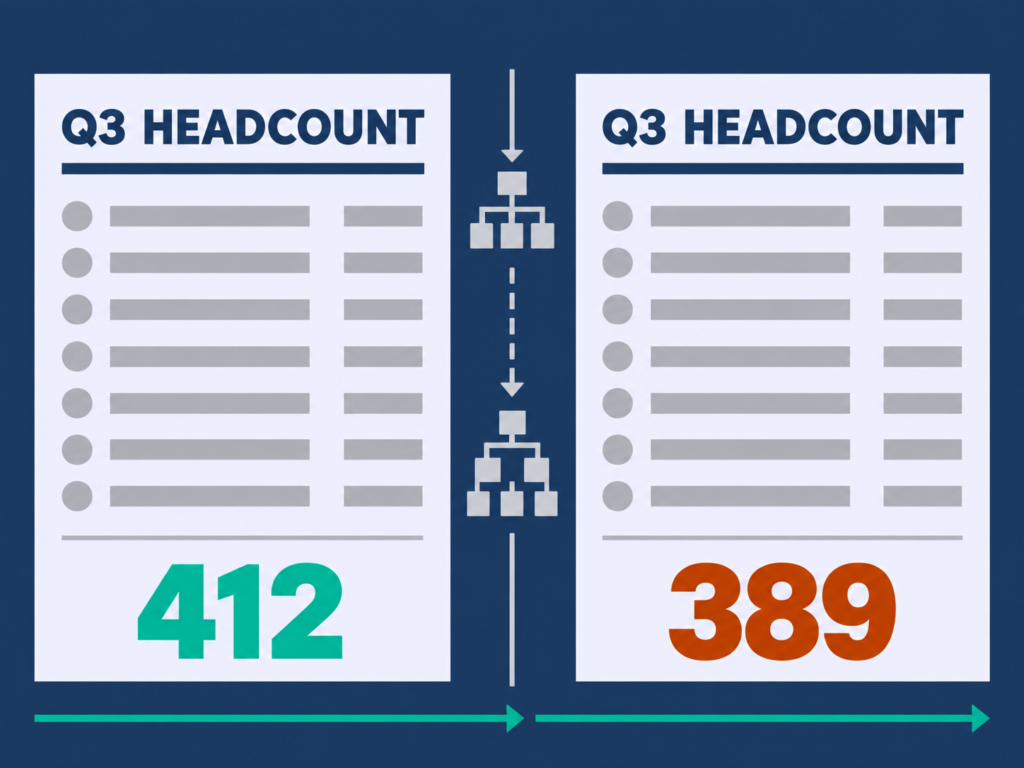
When an employee changes department on the first of the month, an effective-dated system stores both the old and the new assignment with their date ranges. A system without it replaces one value with the other and forgets the first ever existed.
The cost shows up the moment you run a report about the past. Today’s query about last quarter uses today’s org structure, so a team that has since been reorganized appears never to have existed. Last quarter’s attrition, cost, and span-of-control figures are all silently wrong.
Three reports that break without it:
- Attrition by department over time, which needs the department to have existed when the leaver left
- Compensation history for a pay-equity review, which needs every prior pay point with its own date
- Any year-over-year comparison that crosses a reorganization, which is most of them
◆ FROM THE LAB
My experience: Every Quality of Hire improvement I have ever been able to prove depended on this capability. Running competition analysis lifted quality by 12%. A talent-landscape exercise across similar industries added 14%. Building a skill-based talent pipeline off market analysis moved it 30%.
Each of those is a before-and-after claim. Each one required the system to still describe the before accurately, months after the fact. Measurement of improvement is impossible in a system that overwrites its own history, and you will not discover that until the day someone asks you to prove a result.
◆ PRO TIP
The catch: Every vendor will tell you their system handles history. Make them show you. Run a headcount report as of a date twelve months ago, then reorganize a department in the demo environment and run the identical report again. If the number changes, the system is not effective-dated, whatever the sales engineer just said.
One clarification worth holding onto. An audit trail records who changed what and when they clicked. Effective dating records when the change applied to the business. They are different mechanisms and only one of them fixes your reporting.
The HRIS Organizational Structure: Cost Centres, Reporting Lines and Legal Entities
An HRIS has to hold three hierarchies at the same time, and they do not match each other. The reporting hierarchy covers who a person reports to, changes constantly, and drives approvals and performance.
The financial hierarchy covers cost centre and legal entity. Finance owns it, and it drives payroll, tax, and statutory reporting. The functional hierarchy is how the organization describes itself for planning and analytics, and it answers to neither of the other two.
◆ FROM THE LAB
The Sofia test: In engineering and manufacturing hiring, and in anything touching global mobility, the manager a person reports to and the legal entity paying them are two different things more times than not. That is routine, not exotic. A system with one hierarchy cannot represent it, so it produces a headcount number that is correct for HR or correct for Finance, never both.
⚠ WATCH OUT
Anti-pattern: Picking whichever hierarchy the system supports and letting the other two live in Excel. One of HR, Finance, or the business then maintains a parallel spreadsheet permanently, and that spreadsheet becomes the real system of record for whatever it holds.
Write this line into the RFP verbatim: the system must hold reporting line, cost centre, and business unit as independently maintainable attributes. Take the reorganization pain once, not every month for a decade.
Core HRIS Functions: What a Human Resources Information System Actually Handles
Most function lists give you one sentence per module and leave you no better equipped to buy. Every function below gets three things: the record it owns, what it enables operationally, and the specific way it fails.
The failure modes are the part that matters. They are what you are actually buying protection against.
HRIS Employee Data Management
The record it owns:
Personal data, employment data, job and position assignment, compensation, org placement, documents, and lifecycle status. Every other module and every integrated system reads its person data from here, and none of them keeps its own copy.
How it fails:
Fields get added ad hoc over years until the same fact lives in three places with three different values. At that point no report is defensible, and nobody can say which field is authoritative. The control is simple and almost never applied: every field has a named owner and a named consuming report, or it does not get created.
At 250-plus hires a year, an unowned field becomes an unreliable field inside a single hiring cycle. The volume does the damage before anyone notices the field exists.
HRIS Payroll Data and Compensation Records
The record it owns:
Compensation records, pay-affecting changes, deductions, tax jurisdiction, and cost-centre assignment. The payroll engine consumes those and calculates, files, and pays.
Whether the engine is bundled or separate is a packaging question. The direction of authority is not negotiable. Pay-affecting changes originate in the HRIS and flow out, never the reverse.
How it fails:
Someone enters a change directly into payroll to meet a cut-off. The HRIS never learns about it. Do that a few times a month and you build a permanent, growing divergence between the record and what people are actually paid.
⚠ WATCH OUT
Common mistake: Letting payroll become the practical system of record because it is the one with a hard deadline. Close the write-back path from payroll into the employee record, run a scheduled variance report between the two, and fix the deadline problem with process. Never with a second source of truth.
HRIS Benefits Administration
The record it owns:
Eligibility rules, open enrolment and qualifying-life-event changes, dependent records, plan and cost data, and the outbound files that go to carriers and third-party administrators.
This function carries more external dependencies than any other in the US market. An error here does not stay internal. It surfaces as an employee standing at a pharmacy counter who cannot get a prescription filled.
How it fails:
Eligibility driven by a job-title field or a manually maintained group. A promotion or a transfer silently changes benefit eligibility, and nobody finds out until a claim is denied. Build eligibility rules on structured fields only, and reconcile the HRIS eligibility list against each carrier’s enrolment file every cycle.
⚠ WATCH OUT
Red flag: If your benefits team learns about eligibility errors from employees, the reconciliation is not happening. The system should find the error before the person does.
HRIS Time, Attendance and Absence Tracking
The record it owns:
Worked time, exception and overtime capture, accrual balances, leave entitlement, and absence records. This is the highest-volume transactional data in the system.
In the US, time records are the evidentiary basis for wage-and-hour compliance. Retention and integrity of this data carry weight beyond operations, which is a different standard than the rest of the system is held to.
How it fails:
Accrual rules configured once against a policy that has since changed. Balances drift in a direction nobody notices until a termination payout or an audit forces the arithmetic into the open.
◆ PRO TIP
Lab Note: Put an annual re-validation of accrual configuration against current written policy on the calendar, signed off by whoever owns the policy. Accrual rules fail silently. They throw no error, and they only surface at payout, which is the most expensive moment to discover them.
HRIS Reporting and Workforce Analytics
The record it owns:
Two different things, and separating them matters. Operational reporting covers headcount, turnover, vacancy, and compliance extracts. It is native to the HRIS and expected to be exact.
Workforce analytics covers trend, correlation, and prediction. It normally sits one layer above and reads from the HRIS. Analytics cannot be better than the record it reads.
An analytics purchase on top of an unreliable HRIS produces confident wrong answers faster.
How it fails:
A report library grows to hundreds of near-duplicate reports, because nobody trusts the existing ones and everybody builds their own. That library is the clearest diagnostic you will get that the record layer is broken. Certify a short list of reports with named owners and treat everything else as ad hoc.
I hold the same line on AI in recruitment: it is a co-pilot, not a decision-maker, with human validation at every decision point. Analytics tools follow the same rule. They accelerate the thinking, and they do not validate the data underneath.
HRIS Employee and Manager Self-Service
The record it owns:
The access layer, and behind it the permission model. Employees maintain their own personal data and reach their own records. Managers see and act on their team’s data and initiate transactions.
The permission model is the real subject here. Who can see what should derive from position and reporting line, not from a list somebody maintains by hand.
How it fails:
Permissions get granted individually as exceptions. Two years later a manager who moved teams can still see the compensation of people who no longer report to them. That is a privacy exposure, not a tidiness problem, and it will read that way to an auditor.
⚠ WATCH OUT
Anti-pattern: Granting access on request and reviewing it never. Derive access from the position record so a transfer changes visibility automatically, then audit the exception list on a schedule. If transfers create new records, permission inheritance breaks with them. The duplicate-identity failure and the access-drift failure are one failure seen from two ends.
Types of HRIS Systems: Operational, Tactical, Strategic, Comprehensive and Limited-Scope

Five categories, and every guide defines them and stops. Definitions are not the hard part. Placing your own organization on the map is, and that is what the test at the end of this section does.
Operational HRIS Systems
Built to process and store day-to-day HR transactions accurately at volume: employee records, position data, payroll inputs, time and attendance, benefits enrolment. Right for any organization whose primary need is that the record is correct and the transactions complete.
The ceiling is real and worth naming. This tier answers what is true now and what happened. It does not model what should happen next.
Nobody should call this tier basic or entry-level. For most organizations it is the correct purchase. A slow operational system is not automatically a bad system, so check whether it is failing or being asked a question outside its tier. Those two diagnoses need opposite responses.
Tactical HRIS Systems
Supports resource-allocation decisions: recruitment sourcing analysis, benefits and compensation comparison, training investment, job and skills analysis. The defining characteristic gets missed everywhere. Tactical systems pull external data alongside internal records, which is precisely why the internal record has to be clean before any comparison means anything.
Right for organizations facing questions internal data alone cannot answer. Are we paying competitively? Where does this skill actually exist?
◆ FROM THE LAB
My experience: This tier is where Talent Market Pre-Alignment lives. TMPA identifies and engages talent ahead of demand through targeted competitions, challenges, and talent pools, so capability, interest, and availability are pre-aligned before a requisition ever opens.
It only works when external market data joins cleanly to the internal record. The same is true of Intelligence-Led Sourcing, which runs continuous market mapping before vacancies arise. Both shift hiring from reactive to demand-led, and both are unrunnable on a system that cannot hold the internal half of the picture accurately.
Any organization running hris programs at this tier is buying decision support, not prediction. Conflating the two makes the next tier meaningless.
Strategic HRIS Systems
Supports long-range workforce decisions: workforce and succession planning, capability and skills modelling, scenario planning against business forecasts. Right for organizations whose constraint is capability availability two to three years out, not current administrative load.
⚠ WATCH OUT
Watch out: This tier is worthless without effective dating and position-based configuration. Every scenario model projects forward from a historical trend. A planning tool sitting on a system that overwrites its own history is projecting forward from a fiction, and it will do so with a very convincing interface.
The Talent Supply Chain framework belongs here. Treating recruitment as a circular supply chain, with predictive talent mapping and pre-warmed talent communities, is only operable once the system layer can hold it. The 30% Quality of Hire gain I measured from a skill-based talent pipeline came from working this way, and it needed a record that could still describe the starting point.
Comprehensive HRIS Systems
A single platform spanning operational, tactical, and strategic capability on one underlying data model. The genuine advantage is architectural: no integration layer between tiers, so the record is shared and never synchronized.
◆ PRO TIP
The honest downside: Every module is exactly as good as the vendor chose to make it, and a weak module cannot be swapped out without breaking the shared data model. Buy the suite for the shared record, and go in knowing which two modules you are accepting as merely adequate. Name them out loud during evaluation.
The platform trade-off is the same one I described with Avature earlier. Deep configurability is a real capability and a real obligation. It suits organizations with administrators and process maturity, and it punishes lean teams with no change-management discipline. Evaluating hris software at this tier means evaluating your own capacity as honestly as you evaluate the product.
Limited-Scope HRIS Systems
Built for depth in a single area, benefits administration or time and attendance or learning, and dependent on a core HRIS for the employee record. The advantage is depth no suite module matches.
The cost is plain once you count it properly. Every specialist tool is an integration to build, monitor, and pay for, and the integration is where the ongoing effort lives.
⚠ WATCH OUT
Common mistake: Adding a specialist tool every time a module disappoints. Your maintenance burden grows with the number of connections, not the number of tools. Count the integrations before adding one, and give each a named owner and a line in the operating budget.
The Placement Test: Which Type of HRIS System Fits Your Organization
Here’s the deal:
Three questions place you on the map. Answer them honestly before you look at a single product page.
- What is currently failing: transaction accuracy, market-relative decisions, or multi-year capability forecasting? Each one points at a different tier
- How many employees, across how many US states and legal entities? Multi-state and multi-entity structures raise the compliance floor regardless of headcount
- Who will own the system day to day, and do they have the capacity a platform demands?
Most organizations need a strong operational HRIS and are being sold a strategic one.
The more common failure is a platform nobody has the capacity to operate, not a system that lacks features. Shortlist inside the tier your answers point to and ignore everything above it.
Each of these five categories deserves more room than a pillar page can give it, and the deeper treatment of types of hris systems is where the tier-by-tier configuration detail belongs. Place yourself first, then go read the detail for your tier.
Who Owns the HRIS: HR, IT and the HRIS Analyst Role
Unowned HRIS configuration is the root cause of almost every failure described so far. Ownership is not a governance nicety. It is the thing that decides whether anyone can change the system safely.
Here’s the deal:
| Owner | Accountable For | The Decision They Make |
|---|---|---|
| HR | Process and data definitions | What a field means, who is eligible for what, which reports are certified |
| IT | The platform | Access, security, infrastructure, integration plumbing, vendor technical management |
| Finance | The financial hierarchy | Cost centres, legal entities, and reconciliation between HRIS headcount and the general ledger |
⚠ WATCH OUT
Anti-pattern: Leaving ownership undefined. Configuration decisions then get made by whoever happened to be in the room during implementation, which is why so many organizations cannot explain why their system is configured the way it is. Agree a written ownership map covering data definitions, configuration authority, access approval, and integration changes before implementation begins.
In a large organization the practical test of ownership is simple. Who can approve a change to the org structure? If the answer takes more than one sentence, the ownership map does not exist.
Treat the HRIS as shared infrastructure with three named owners and a written decision map. The configuration decisions are business decisions wearing technical clothes, and routing them through a service desk buries them.
What an HRIS Analyst Actually Does
What the role actually holds:
The HRIS analyst holds the configuration logic. They translate HR process requirements into system configuration, maintain the certified report library, and serve as the first line of defence on data integrity.
Without the role, configuration knowledge lives in a departed consultant’s memory and nobody can safely change anything. Below a certain scale the function is a portion of someone’s job. The function cannot be absent.
Here is the test of whether it exists in your organization: can any single person explain why the system is configured the way it is? Assign the function before implementation, because configuration knowledge gets created during implementation and cannot be reconstructed afterwards.
The population this role is drawn from is growing, not shrinking. The U.S. Bureau of Labor Statistics records that human resources specialists held 939,700 jobs in 2025, with a median annual wage of $75,940 as of May 2025 and projected employment growth of 6 percent from 2025 to 2035, faster than the average for all occupations. Translation: the work is moving, and it is not being automated away.
Source: U.S. Bureau of Labor Statistics, Occupational Outlook Handbook, Human Resources Specialists
The Business Case for an HRIS: What the Wrong System Costs You
Almost every HRIS business case you will read is a benefits list with no numbers attached. Finance discounts those to zero, and they are right to. The cost of a bad record layer is real, and it stacks in three layers.
The visible cost:
Manual reconciliation work, every reporting cycle, created by a record nobody trusts. Count it as recurring analyst days per month and multiply by twelve. It is the smallest of the three layers and the only one anyone ever quantifies.
The decision cost:
Choices made on wrong numbers. This is where the real money sits, and nobody can invoice for it. A role the system cannot show as vacant is a role nobody is urgently filling, which means the vacancy runs longer than anyone intended and nobody is accountable for the drift.
$30,000
Operational output drained by one senior engineering role sitting vacant for 60 days, at roughly $500 a day. Invisible to any system that cannot hold the vacancy as a record.
The exposure cost:
Compliance reporting assembled by hand is compliance reporting with no audit trail. You can produce the number. You cannot show how you produced it, and that distinction becomes the whole conversation the moment anyone asks.
Here’s what changed everything:
◆ FROM THE LAB
Real implementation: When I picked up senior engineering hiring in one of the organizations I worked with, roles were taking 70 to 80 days to fill, agency dependence was heavy, and the cost per hire was a number nobody could defend line by line. Finance was not hostile. They simply had no way to interrogate the figure, and neither did we.
We rebuilt the approach around three things: direct sourcing into named target companies, an activated internal referral route, and pre-built talent pools for the roles we knew were coming. None of that is novel. What made it work was that the requisition and headcount data underneath had become reliable enough to measure against, so every claim we made had a trail.
Cost per hire on senior engineering roles moved from roughly $7,800 to $9,000 down to $3,600 to $4,600, a reduction of 45 to 55%. Time to fill came down from 70 to 80 days to 45 to 50, which was 20 to 30 days faster on the roles that hurt most. Agency fees in that market ran 18 to 22% of total compensation, roughly $9,500 to $12,000 on a senior hire, and agency reliance dropped 60 to 70%. Four of six senior roles closed that year without an agency at all.
Take the ranges as written. They are the honest form of the data, and rounding them into single confident numbers would be the first step toward a claim I could not defend.
| Metric, senior engineering roles | Before | After |
|---|---|---|
| Cost per hire | $7,800 to $9,000 | $3,600 to $4,600 |
| Time to fill | 70 to 80 days | 45 to 50 days |
| Primary cost driver | Agency fees, long cycle time | Direct sourcing, internal referrals |
| Agency reliance | Baseline | Down 60 to 70% |
◆ PRO TIP
Real talk: The record layer did not produce those savings. The sourcing work did. What the record layer produced was proof, and proof is what keeps an initiative alive through the next budget cycle. An initiative you cannot measure is an initiative you cannot defend, and it gets cut by someone who never saw it work.
Building the HRIS Business Case for a CFO
Vendor ROI templates lose in the room. Build the paper out of your own numbers and Finance’s own categories.
- Current-state cost: reconciliation effort quantified in analyst days, plus one decision failure your organization has actually had
- Compliance exposure, stated factually and without drama, naming which reports currently have no audit trail
- Measurable outcomes the new record layer enables, each with the metric that will be reported and the date of the first report
- Three-year total cost of ownership covering implementation, data migration, integration build, and the internal capacity to operate it
⚠ WATCH OUT
Common mistake: Omitting the cost of implementation capacity you do not currently have. It is the single most common reason HRIS projects run over, and it is the line Finance will ask about anyway. Put it in yourself and you control the number.
Capacity is the line I would flag first on any HRIS paper. Platform tools succeed where change-management discipline already exists, and no business case survives the discovery that nobody was ever going to run the thing.
How to Evaluate HRIS Software: A Vendor-Neutral Scoring Rubric
Most buying guides on this topic end by recommending the publisher’s own product. HR Insights Lab has no HRIS product, no affiliate relationship, and no vendor partnership, which is why this rubric can weight architecture above features and say so plainly.
How to execute:
Score every shortlisted product against the ten rows below. Weights sum to 100 and are a starting point you should adjust to your situation.
| Requirement | Why It Matters | Weight | How to Verify It in a Demo |
|---|---|---|---|
| Persistent employee ID across transfers and rehires | Duplicate identity corrupts headcount, tenure, and attrition permanently | 15 | Transfer an employee between business units in the sandbox; confirm the ID is unchanged |
| Position-based configuration with vacancy visibility | Vacancy cost is uncalculable if the vacancy is not a record | 12 | Show a vacant approved position with its cost centre and days-open count |
| Effective dating with historical report reproducibility | Every before-and-after claim depends on the past staying accurate | 12 | Run a report as of twelve months ago, reorganize a department, re-run it |
| Three independent hierarchies | Reporting line, cost centre, and business unit do not match in any real organization | 10 | Assign a reporting manager in a different legal entity; check both hierarchies hold |
| Native US compliance reporting extracts | A report assembled by hand is a report with no audit trail | 10 | Generate each required extract from live data, not from a sample file |
| Total cost of ownership including internal operating capacity | The licence is a minority of the three-year cost | 10 | Request a three-year model covering all six cost components |
| Documented API for the employee record | Every integration you will ever build depends on it | 9 | Ask for the read and write API documentation, not a marketing integrations page |
| Role-based access derived from position | Hand-granted permissions drift into a privacy exposure | 8 | Move a manager to another team; confirm visibility changes automatically |
| Multi-state and multi-entity payroll data support | The compliance floor rises with states and entities, not headcount | 8 | Configure an employee working across two states in one entity |
| Certified report library with ownership | Prevents the hundred-near-duplicate-reports failure | 6 | Show how a report is certified and who is recorded as its owner |
Weight what cannot be retrofitted. Features arrive in a release. Data models do not.
◆ PRO TIP
Pro tip: Adjust the weights to your situation, with one constraint. The first four rows should never fall below a combined 40. Those four are the ones you cannot fix later without a migration, and every other row on the list can be addressed with money, time, or a release note.
The HRIS Demo Script: Questions That Expose the Data Model

Every vendor answers yes when you ask whether the system supports something. A meaningful number of them fail the demonstration. Ask for each of these in the sandbox while you watch.
- Transfer an employee between business units and show that the employee ID does not change
- Terminate an employee, rehire them, and show a continuous tenure history on one record
- Run a headcount report as of twelve months ago, reorganize a department, run the identical report again, and show the number unchanged
- Show a vacant approved position with its cost centre and its days-open count
- Show the API documentation for reading and writing the employee record
- Change an employee’s reporting line to a manager in a different legal entity and show both the reporting and financial hierarchies remain correct
⚠ WATCH OUT
Watch out: The gap between a verbal yes and a demonstrated yes is where implementation overruns come from. A product that can do something after a customization project is a different purchase from one that does it out of the box. That difference is the difference between a nine-month implementation and an eighteen-month one.
HRIS Reference Checks: What to Ask Existing Customers
You will be handed three reference customers chosen because they will say good things. Ask about specific past events, which is much harder to answer diplomatically than an opinion.
- What did the implementation actually take, in elapsed months and internal person-days, against what was quoted?
- What did you have to do outside the system in year one, and are you still doing it?
- What broke in your first reorganization?
- If you were starting again, which two requirements would you weight differently?
◆ PRO TIP
The catch: Ask for one reference the vendor did not supply. Find a customer independently, through your own network or a user community, and run the same four questions. The delta between that conversation and the curated ones tells you what you are actually buying.
The Total Cost of Owning HRIS Software
The quoted licence price excludes six things. Cost all of them over three years before you shortlist.
- Implementation and configuration services
- Data migration and cleansing effort, which is internal labour and not a vendor fee
- Integration build for every connected system, plus ongoing maintenance on each
- Internal operating capacity, meaning the HRIS analyst function whether or not it is a dedicated role
- Training and change management
- Annual licence escalation, which you should ask to have capped in the contract
⚠ WATCH OUT
Common mistake: The two components habitually left out are data migration and internal capacity. Both are entirely internal, which makes them invisible in the vendor quote and easy to omit from the business case. The cheapest licence carries the most expensive migration.
HRIS Implementation: The Sequence That Survives Data Migration
Most implementation guides give you five or six procedural steps: form a committee, pick the team, choose your partners. None of them mention data migration, which is where implementations actually fail.
Here’s how to build it:
1
Step 1: Define the HRIS Data Model First
The four decisions:
Settle four things on paper before a single demo: position-based or person-based; the three hierarchies and who maintains each; the persistent-ID rule through transfers and rehires; and your historical reproducibility requirement.
Order matters here. Settled first, these become non-negotiable scoring rows. Discovered during configuration, they become change requests with a price attached.
2
Step 2: Audit Your Current HRIS Data Quality
Run five queries against the current system and write down the counts. The output is a number, and that number sets your realistic timeline.
- Duplicate person records
- Records with a start date later than original hire date
- Employees with no valid position or cost centre
- Terminated employees still holding active access
- Fields where more than a defined share of records are empty
An implementation date agreed before this audit is a guess made by someone who has never seen your data.
⚠ WATCH OUT
Warning: Agreeing the go-live date at contract signature puts the biggest variable in the plan outside your control. Agree it after the audit, with the duplicate count on the table.
3
Step 3: Clean HRIS Data in the Old System
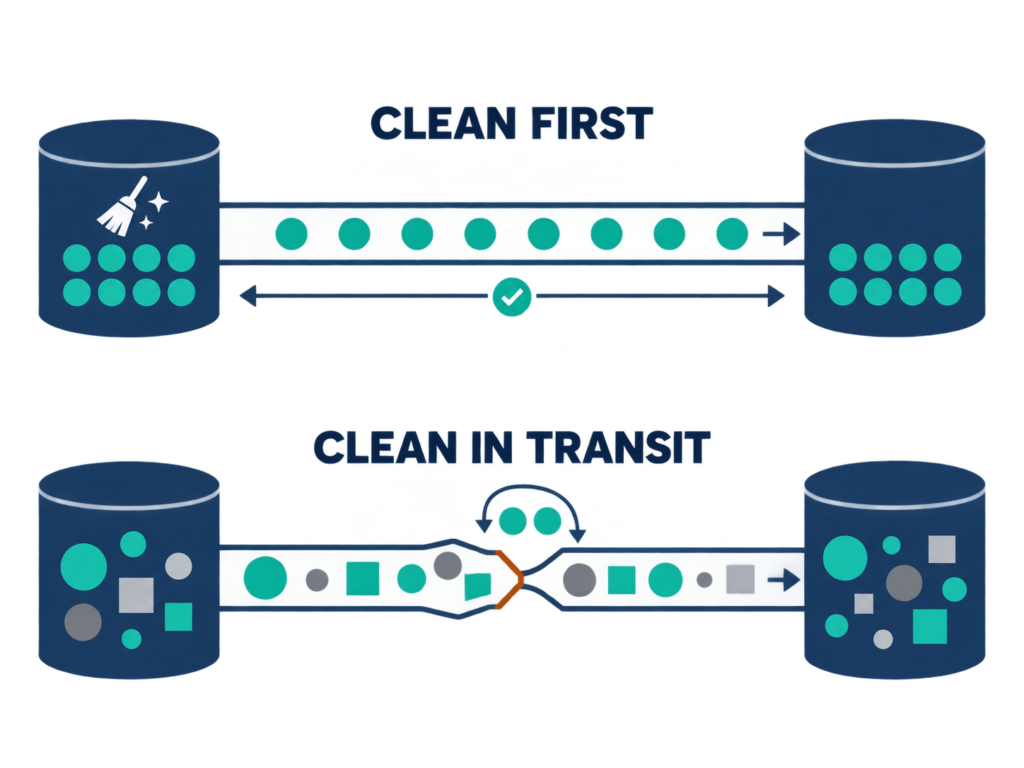
Cleanse in the source system before migration. Not during it. Your implementation partner will suggest otherwise, and this is the step readers get wrong.
Cleansing during migration means every correction gets made twice, once in the mapping logic and once again while the source keeps producing bad records up to cut-over. Neither side is ever stable, so reconciliation between old and new becomes impossible.
Clean in place and the migration becomes a comparison, not a transformation. A comparison can be verified. A failed one can be re-run.
4
Step 4: Decide the HRIS Historical Data Cut-Off
How many years of history migrate, at what level of detail, and what happens to everything older. Work backwards from the longest-range report anyone actually runs, which is usually a multi-year attrition or compensation-equity view.
Archive the remainder in a readable, dated form. Do not discard it, and do not decommission the source system until the archive has been verified.
◆ FROM THE LAB
The Sofia lens: The three Quality of Hire improvements I can evidence, 12% from competition analysis, 14% from a talent-landscape exercise, and 30% from a skill-based pipeline built on market analysis, are all before-and-after claims. Every one of them needed the baseline to survive the migration. A two-year cut-off would have destroyed my ability to prove any of them, and I would have found that out on the day I was asked.
⚠ WATCH OUT
Warning: This decision is irreversible in practice. Discovering after go-live that the board’s year-over-year comparison needs data nobody migrated is a bad day, and by then the source system has usually been switched off.
5
Step 5: Configure the HRIS and Document Every Decision
What goes in the log:
Each decision, the reason behind it, who approved it, and what it depends on. Keep the log alongside the build, written as the decisions are made.
In two years somebody will ask why eligibility is calculated a particular way. The log is the difference between a five-minute answer and a reverse-engineering project. Implementation partners leave, and undocumented configuration becomes effectively unchangeable because nobody can predict what a change will break.
6
Step 6: Test HRIS Data With Real Reconciliation
Testing an HRIS means reconciliation, not feature testing. The features almost always work. The data almost always does not.
- Total headcount by legal entity and cost centre
- Gross payroll for a full cycle
- Benefit enrolment counts by plan
- Accrual balances for a sample of employees
Compare old system against new on each, reconciled down to the individual record. Run one full payroll cycle in both systems before cut-over.
◆ PRO TIP
Lab Note: Reconcile to zero, not to tolerance. A variance that looks small in percentage terms is still a broken record somewhere, and it will be the record that surfaces in front of an auditor.
7
Step 7: Build HRIS Integrations Before Go-Live
Four integrations are go-live blockers, not fast-follows: payroll, benefits carriers, access provisioning, and the ATS employee-creation handoff. Identify which of yours are genuinely required on day one and treat those as blocking.
Any integration deferred to a later phase becomes a manual process. A manual process that runs for three months becomes the permanent process, because people build their week around it.
⚠ WATCH OUT
Anti-pattern: Accepting a phased plan that defers integrations because it sounds like risk reduction. It is risk creation. The temporary workaround outlives the project that created it, and nobody ever gets budget to remove it.
8
Step 8: Train HRIS Users on Their Own Transactions
Build training around the transactions each population performs. A manager approves a transfer and initiates a requisition. An employee updates personal data and enrols in benefits. An administrator processes a status change.
How to measure whether training worked:
Track transaction completion and error rates for the first two cycles, then re-train on whatever is failing. A system tour produces recognition, and recognition collapses the moment somebody has to complete a transaction under time pressure.
9
Step 9: Establish HRIS Data Governance After Go-Live
Data quality is an operating discipline, not a project outcome. Put the standing controls on a calendar with a named owner against each one.
- The duplicate-record query from Step 2, run monthly
- Access-exception review, quarterly
- Accrual configuration re-validated against written policy, annually
- Certified report list reviewed for ownership, twice a year
- Integration error logs monitored, with a named responder
Every failure described in this guide is what happens when these controls have no owner.
The same principle held a 420-hire campaign together in my own work: daily recruiter stand-ups and a real-time tracker dashboard, visible to everyone, every day. Recurring visible controls are what make high-volume operations hold. One-time effort is not.
A system degrades at the speed of unowned changes.
HRIS Integration: Connecting Your HRIS to Payroll, ATS and LMS
Vendors describe integrations as supported. That word covers a nightly CSV and a real-time API equally, and the difference between them decides whether a termination closes an access window in minutes or overnight.
Here’s the difference:
| Method | Data Freshness | Who Owns It | When to Use It |
|---|---|---|---|
| Flat-file transfer on a schedule | Stale between runs | Whoever monitors the file drop, which is usually nobody | Carrier files and anything batch by nature |
| API integration | Current, transactional | Someone who owns the code and watches the failure alerts | Access provisioning and anything where latency is an exposure |
| Middleware or integration platform | Depends on configuration | A named platform owner, plus a licence line | Past a threshold number of connections, overhead below it |
Choose by how stale the data is allowed to be, then by how many connections you are maintaining. The method the vendor prefers is not a factor in that decision.
◆ PRO TIP
Pro tip: Three questions turn “we integrate with that” into a real answer. Which method? At what frequency? Who owns the failure alert? Any planning around hris integration that skips the third question has no owner when it breaks, and it will break on a Friday.
In a multi-entity environment the staleness question stops being academic. A termination that propagates overnight is an open access window with a name attached to it.
The ATS-to-HRIS Handoff: Where Duplicate Records Are Born
At offer acceptance, the candidate record in the ATS has to become an employee record in the HRIS. That single transaction is the most common integration failure in HR technology, and it damages the data model described earlier in this guide.
When the handoff is manual or partial, three things happen. The employee gets created fresh with no link back to the candidate record, so source-of-hire and Time-to-Hire become unmeasurable end to end. An internal applicant gets a second employee record, breaking the persistent-ID rule. Recruiting metrics and HR metrics stop reconciling, because they are now counting different populations.
⚠ WATCH OUT
Red flag: With close to a quarter of hires arriving as internal applicants in a healthy internal mobility programme, a handoff that creates a new employee record on internal hire is manufacturing duplicates on a quarter of everything you do. The 28-day against 67-day Time-to-Productivity comparison becomes impossible to produce, and nobody will be able to tell you why.
The requirement is specific. The handoff passes a stable identifier in both directions, and an internal applicant resolves to the existing employee record.
◆ FROM THE LAB
Real implementation: One of the teams I supported needed to scale an automation engineering function faster than the market would allow through posting. We ran competitor talent mapping across twelve companies in the industrial IoT space, working outward from the skills we needed toward the organizations that already employed them.
By the time the job description existed, we had 37 qualified candidates already identified and warm. Time-to-Offer on that function came down from 68 days to 34.
Here is the part nobody puts in the case study. That 68-to-34 claim is only provable because requisition and hire data reconciled cleanly across the handoff between systems. Had the offer acceptance created a fresh employee record with no link back to the candidate, the two halves of the timeline would have lived in different systems counting different people, and the number would have been an assertion, not a measurement.
Proactive mapping beats reactive posting every time. An improvement you cannot measure is an improvement you cannot repeat, and the integration is what makes the measurement possible.
Access Provisioning and HRIS-Driven Identity
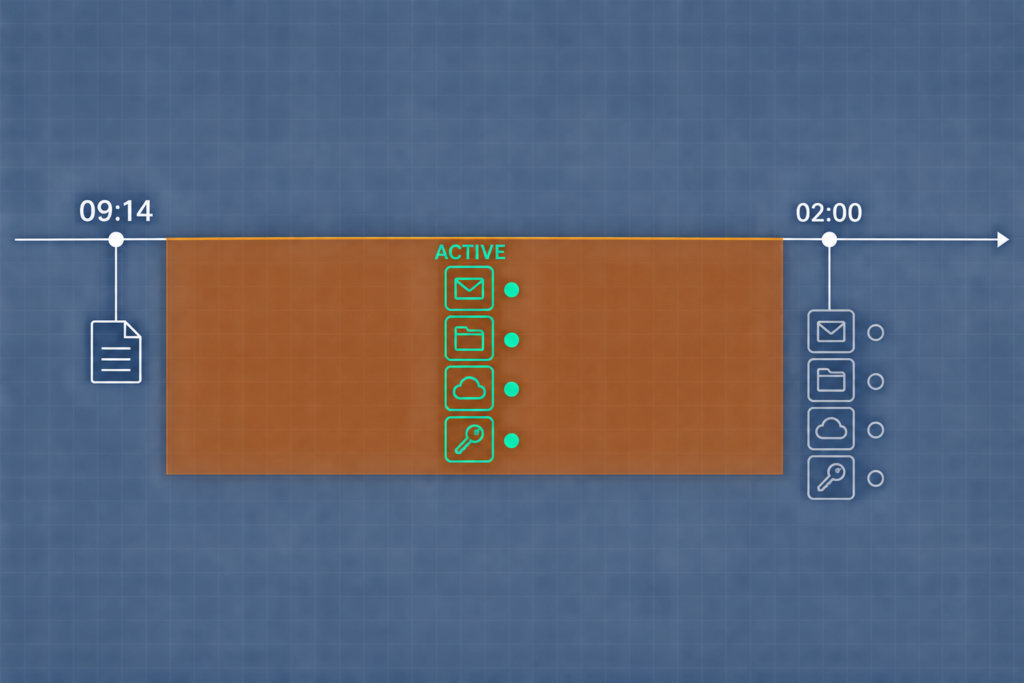
This is the integration to get right first. A hire creates accounts, a transfer changes entitlements, a termination revokes access. It is the only one where a delay is a security exposure and not a data inconvenience, and it is the one an auditor will test.
The requirement:
Termination propagates on the same day it is effective. In practice that means the termination transaction in the HRIS triggers revocation directly, with no nightly file standing between the two.
⚠ WATCH OUT
Watch out: Revoking access through a service ticket raised by HR after the termination is processed makes the control dependent on a person remembering. The ownership map from earlier has to name who is accountable when a revocation fails, because this is where HR and IT ownership genuinely meets.
HRIS Compliance in the US: What Your HRIS Is the System of Record For
No system ensures compliance, and any vendor claiming otherwise is making a statement you would not want quoted back to you. What an HRIS does is hold the data these obligations require, in a structure that can produce them.
Applicability depends on headcount, jurisdiction, contractor classification, and entity structure. Every obligation below needs employment counsel or a compliance specialist to confirm whether it reaches you.
| Obligation | What the HRIS Must Hold | Who Confirms Applicability |
|---|---|---|
| EEO-1 component reporting | Job category and demographic data as structured attributes, never derived from free-text job titles | Employment counsel |
| FLSA record retention | Time and pay records held for the defined periods, which makes your historical cut-off decision a compliance decision | Employment counsel |
| ACA reporting | Benefit eligibility and offer-of-coverage data by month, dependent on structured eligibility rules | Benefits counsel or compliance specialist |
| WARN Act notification | Accurate site-level headcount and employment status, unproducible without reliable position and location data | Employment counsel |
| State pay-transparency and pay-data reporting | Compensation reporting by category, dependent on consistent job architecture | Employment counsel, state by state |
⚠ WATCH OUT
Warning: A compliance report you assemble by hand each year is a compliance report with no audit trail. Treat each obligation as a required system output with a named owner, and make it a scoring row in your evaluation.
In a multi-state, multi-entity structure the same employee can sit in different reporting populations for different obligations. That is exactly why the three-hierarchy requirement is a compliance requirement and not an architectural preference.
Automated Employment Decision Tools and HRIS Data
Regulation of HR technology is moving toward automated decision-making, and New York City Local Law 144 is the leading example. Employers using automated employment decision tools in hiring or promotion within its scope face bias-audit and candidate-notice obligations.
The HRIS implication is direct. If a tool consumes HRIS data to score, rank, or screen candidates or employees, you need to know which tools do that, on which data, and whether an audit obligation attaches.
⚠ WATCH OUT
Red flag: You may already be inside an obligation you have not assessed, because the tool was procured by a different team and consumes HRIS data through an integration nobody in HR approved. Maintain a standing inventory of every system that reads HRIS data and makes or influences an employment decision, then take the applicability question to counsel. Several states and cities have advanced comparable requirements, so the inventory is worth holding regardless of where you operate.
The governance gap here is measured, not hypothetical. Deloitte found that 42% of workers say their organizations don’t evaluate AI’s impact on people, while 60% of executives use AI in decision-making and only 5% say they manage AI use well. Translation: AI is already inside employment decisions at scale, and the management of it is nowhere near the same scale.
Source: Deloitte, 2026 Global Human Capital Trends
◆ FROM THE LAB
My experience: I have run AI as a co-pilot in recruitment, never as a decision-maker, with human validation at every decision point. That was a design choice made for quality reasons long before it was a regulatory one.
The risk I have always named first is algorithmic bias. If the training data is flawed, the tool reinforces historical hiring prejudice at speed and with a clean interface. The design principle and the compliance requirement point in exactly the same direction, which is the most useful thing I can tell you about this.
HRIS Data Security, Retention and Access Control
You are accountable for employee data that IT operates. Three controls belong to you.
- Access control, role-based and derived from position, with the exception review running on a schedule
- Retention, with defined retention and deletion periods per data category, reconciled in writing
- Encryption at rest and in transit, and multi-factor authentication on administrative access as a minimum to confirm in any evaluation
◆ PRO TIP
The catch: Statutory retention and privacy-driven deletion pull in opposite directions, and the tension does not resolve itself. Settle it in writing with counsel and your privacy function, per data category, before anyone configures a deletion rule. Ask any vendor for their current third-party security attestation and the date of the most recent report, not a security marketing page.
HRIS for Small Business vs. Enterprise HRIS: Where Requirements Diverge
What changes between small business and enterprise is not the amount of functionality needed. It is the amount of implementation and operating capacity available.
| What Holds at Any Size | What Relaxes at Small Scale |
|---|---|
| One persistent identifier per person | Position-based configuration can be simpler where headcount is not formally budgeted in advance |
| Vacancy visibility | Multiple independent hierarchies matter less with a single legal entity |
| Historical reproducibility | The HRIS analyst function becomes a portion of a role, not a role |
| Correct multi-state payroll data where you employ across state lines | Nothing. This one does not relax |
⚠ WATCH OUT
Watch out: Vendor pricing tiers are organised by headcount band, so that is how everyone shops. The requirement that ignores headcount entirely is multi-state compliance, and shopping by band misses it completely.
A ten-person company employing across four states has a higher compliance floor than a two-hundred-person company in one.
Shop by compliance surface and operating capacity: how many states, how many entities, and who will actually run the system. Anyone evaluating an hris for small business needs less functionality than an enterprise buyer and exactly the same rigour on the four rows that hold at any size.
The deciding factor at either end is whether the team has the administrative capacity and change-management discipline the platform assumes. That is a capacity question, and it has almost nothing to do with size.
When to Upgrade From a Limited HRIS to an Enterprise HRIS
Four observable triggers, none of them a headcount number.
- A second legal entity or a second state of employment, either of which raises the compliance floor immediately
- Someone starts maintaining a parallel spreadsheet because the system cannot hold a required structure
- The first reorganization where historical reporting breaks
- The point where formal headcount approval begins, which is when position-based configuration stops being optional
◆ PRO TIP
Lab Note: That parallel spreadsheet is the requirements document for your next system. Whoever built it has already specified what the current one cannot do, in exactly the detail an RFP needs.
Start the evaluation at the trigger, not after a year of absorbing the pain. Migration effort grows with the volume of bad data accumulated in the interim, and the duplicate count from your Step 2 audit is the number that determines migration cost. It rises every month the wrong system stays in place.
The Future of HRIS: AI, Agentic Workflows and What Breaks First
The change in the last eighteen months is not that HR tools acquired AI features. It is the move from systems that provide inputs to systems that execute workflows.
◆ FROM THE LAB
My experience: I am in a pilot phase with agentic AI, and what I am watching is a shift from automation toward human and AI teaming. AI takes the high-volume logistics so recruiters can hold the high-touch relationships.
Four things are visibly changing. Screening tools have become sourcing co-pilots running semantic search across the candidate database. Interview orchestration has moved past scheduling to managing the full interview lifecycle. Skills-first evaluation is focusing on verified competencies, which cuts reliance on proxy credentials. Predictive analytics now models not only what to hire but who is likely to leave, which makes retention proactive.
Three risks come with it, and I name them every time. An automation arms race that deepens dependency. Loss of personal touch. Algorithmic bias, where flawed training data reinforces historical hiring prejudice.
Here is the consequence for the record layer, and it is the point of this section. A system that executes transactions against the employee record needs that record to be correct. An agent acting on a duplicate or stale record does the wrong thing at speed.
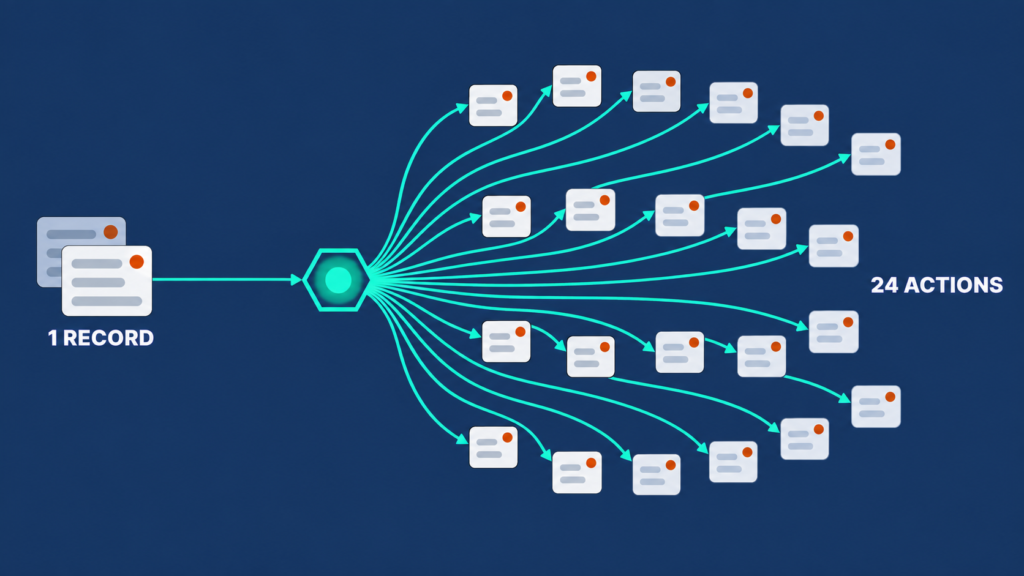
Automation does not surface a bad record. It compounds it.
The record layer becomes more load-bearing under agentic workflows, not less. Which is why 88% of HR leaders reporting no significant business value from AI tools reads less like a verdict on the tools and more like a verdict on what sits underneath them. Adding capability on top of an unreliable record is what produces that outcome at scale.
Source: Gartner, Top Future of Work Trends for CHROs in 2026
AI does not replace recruiters. It replaces the parts of the job that stopped recruiters from being effective in the first place.
What the HRIS Analyst Role Becomes
Your team will ask whether these roles survive automation. They deserve a defensible answer, not reassurance.
Josh Bersin’s analysis of more than 250 HR job titles found that 30 to 40% of existing HR jobs can be automated with relatively low effort. The same analysis records HR job postings rising 60% over five years, which makes this a shift in the work and not a contraction of the function. It sits consistently with the BLS employment data cited earlier.
Source: Josh Bersin, The Great Reinvention of Human Resources Has Begun
The Old Way
- Defend the headcount by arguing the work cannot be automated
- Measure the team by transaction volume processed
- Treat data definitions as documentation nobody reads
The Lab Way
- Concede the transactional layer is automatable
- Move the team’s value to data definitions, configuration logic, and governance
- Invest in the layer automation cannot supply for itself
The capability worth investing in is data governance and configuration ownership. Automation makes that layer more valuable, and recruiters and analysts who move into it become advisors, not process managers.
HRIS FAQs
What Does HRIS Stand For?
HRIS stands for Human Resources Information System. The acronym describes the system of record for employee data, and it gets used loosely across vendor marketing to cover products at three different capability tiers. Two systems both labelled HRIS can behave very differently, which is why the label is a poor shortlisting tool.
What Is the Difference Between HRIS, HRMS and HCM?
The three are nested: HRIS is the core employee record layer, HRMS adds transactional workforce management like payroll and scheduling execution, and HCM adds the talent lifecycle on top of both. Evaluate any platform by what it is authoritative for and what it executes, not by the category label on its website. Vendors market one tier above what they deliver, so the labels no longer partition the market.
Does an HRIS Include Payroll?
An HRIS always holds the payroll-relevant data, including compensation, deductions, tax jurisdiction and cost centre, but whether it executes payroll depends on the product. The rule that matters more than the packaging: pay-affecting changes originate in the HRIS and flow to the payroll engine, never the reverse. That holds whether the engine is bundled or separate.
What Are the Disadvantages of an HRIS?
The real disadvantages are implementation and migration effort, the internal operating capacity the system requires permanently, the cost of every integration you build, and configuration decisions made early that are expensive to reverse. Most reported HRIS failures are data and ownership failures, not software failures. The system was fine. Nobody owned the data definitions, and nobody counted the capacity the platform assumed.
How Long Does It Take to Implement an HRIS?
The timeline is driven primarily by the state of your existing data, not by the size of your organization or the product you choose. The duplicate and incomplete-record count from the Step 2 audit is the biggest single input to any estimate. A date agreed before that audit is a guess, and it is usually the vendor’s guess about data they have never seen.
Your HRIS Decisions Get Inherited for a Decade
The organizations getting value out of HR technology are not the ones with the newest platform. They are the ones whose employee record was worth building on.
The four data-model decisions in this guide get made once and inherited for ten years. Most organizations make them without noticing they made them, in a configuration workshop where the loudest person in the room had an opinion about a checkbox. The teams that execute decide them deliberately, on paper, before a single demo.
Gartner’s survey of 426 CHROs across 23 industries and four global regions found that evolving the HR operating model carries the highest predicted impact on AI productivity gains of any lever, at 29%. Translation: ownership, definitions, and governance outrank tool selection as a value lever, and they always have.
Source: Gartner, HR Trends and CHRO Priorities for 2026
Pick the four decisions from the data model section. Settle them on paper this quarter. Then run the scoring rubric against whatever is already on your shortlist and see how much of it survives.
If you are working through an HRIS selection or a migration right now, I would like to compare notes. Connect with me on LinkedIn and tell me which of the four decisions your organization got wrong, because almost every team gets at least one of them wrong and nobody writes about which.
