
I have never owned a performance management cycle. I have spent 8 years on the other side of it, hiring around the capability gaps that broken cycles leave behind.
So here is the position you are probably in. You have been handed responsibility for a process that most of your organisation privately regards as theatre, and you are expected to repair it by redesigning a form.
Most organisations call this an evaluation cycle. It is a demand-forecasting system that nobody reads.
Before you redesign anything, run the arithmetic on your own cycle. Take the hours each manager spends across planning, check-ins, evidence writing, and calibration, multiply that by your loaded manager cost, then multiply again by headcount.
Most organisations have never calculated that number. It is large, and it buys a dataset the business files and forgets.
The people who own these systems already know this.
2%
Of Fortune 500 CHROs strongly agree that their performance management system inspires employees to improve.
Source: Gallup, “2% of CHROs Think Their Performance Management System Works” (2024)
Translation: the executives who approve the design, sign the software contract, and authorise the manager hours do not believe the thing produces improvement. You are not the problem. The architecture is.
Here’s what this guide contains:
- The five components of the process, and what each one is actually for
- A seven-step operating blueprint with named owners, artefacts, and dates
- The calibration mechanics almost nobody publishes, including the bias control most organisations have never run
- An honest, vendor-neutral position on where AI belongs in the cycle and where it does not
- Five signals that tell you whether the process worked, and a four-line cost case you can take to your CFO
HR Insights Lab approach: every cycle diagram you have already scrolled past this morning is correct and useless. The diagram is the commodity. What decides whether your process works is the layer underneath it, and that layer is owners, dates, evidence standards, and what happens to the data after the forms close.
What is the Performance Management Process?
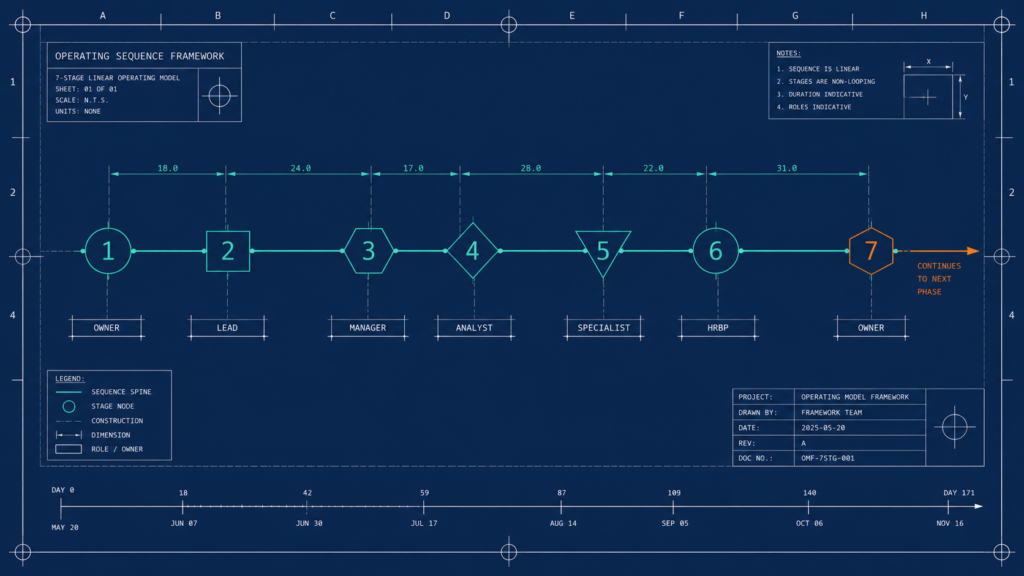
The performance management process is the continuous cycle through which an organisation sets expectations, tracks progress, develops capability, evaluates results, and allocates rewards. It runs on an annual operating rhythm but executes in weekly and monthly conversations. Its output is not a rating. It is a better-performing, better-informed workforce.
Here’s the difference:
The process is the sequence of activities. The system is the software, forms, and governance that carry it. The cycle is the calendar it runs on.
Most readers arrive confusing all three, and that confusion is why their redesigns fail. You cannot buy your way out of a process problem. A new platform will reproduce your existing weaknesses at higher resolution and better reporting.
The old way
- Define it as an ongoing conversation between manager and employee
- Treat the definition as a values statement
- Measure success by form completion
- Redesign the form when the results disappoint
The Lab Way
- Define it as an operating system with named inputs and owners
- Specify what each component must produce
- Measure success by the four outputs the cycle generates
- Diagnose which component failed before touching the design
⚠ WATCH OUT
Common mistake: treating the platform purchase as the redesign. If your managers cannot describe their team’s capability gaps without opening a document, a new module will not create that knowledge. It will only file the absence of it more neatly.
Why does this matter?
Because the process is doing three jobs at once, and almost every design optimises one of them and breaks the other two.
- Direction, which converts business priorities into individual commitments a manager can act on
- Development, which increases capability during the period rather than diagnosing it afterwards
- Differentiation, which produces a defensible signal for pay, promotion, succession, and exit decisions
Here is the design tension nobody names. A process tuned purely for differentiation, with heavy documentation and forced ranking, kills development honesty, because nobody admits a gap to the person who sets their bonus.
A process tuned purely for development produces no usable signal for compensation. The job is to hold all three, and the mechanism for holding them is separating the conversations in time rather than separating them on a form.
Employees have reached the same conclusion as their CHROs. Only one in five employees report that their performance reviews are transparent, fair, or motivating. Translation: four out of five people finish your cycle less motivated than when they started it.
Source: Gallup, “2% of CHROs Think Their Performance Management System Works” (2024)
A process that only produces a rating is a compensation mechanism wearing a development costume.
I hold an unpopular view on this, and my hiring data supports it. Retention problems are mostly systems failures, not compensation failures, and unclear career paths and manager capability drive attrition more than pay does.
Performance Management vs. Performance Appraisal: the distinction that decides your design
Performance appraisal is a single event, a periodic evaluation of past results. Performance management is the continuous process that contains it, covering goal setting, monitoring, development, evaluation, and reward. Appraisal looks backward and produces a score. Performance management looks forward and produces capability.
Here’s the difference:
| Dimension | Performance appraisal | Performance management |
|---|---|---|
| Frequency | An event, usually annual | Continuous, with an annual close |
| Owner | HR-driven and HR-chased | Manager-owned, HR-governed |
| Primary output | A rating | Changed behaviour and a rating |
| Time horizon | Backward, at what happened | Forward, at what happens next |
| Failure mode | Recency bias | Drift between check-ins |
This distinction is not academic. It is the language you need when leadership asks you to improve performance management and means a better appraisal form.
◆ PRO TIP
The Sofia test: if you deleted the year-end form tomorrow, would anything about how work gets directed in your organisation change? If the honest answer is no, you have appraisal, not performance management.
I use a version of this in hiring. I can tell inside one intake meeting whether a manager runs a performance process or a performance form. The ones with a real process describe their team’s capability gaps without opening a document.
Redesigning the form changes nothing when the other four components are missing. So before you touch anything, you need to know what the components of the process are and what each one is supposed to produce.
The 5 Components of the Performance Management Process

The components of the performance management process include planning, monitoring, developing, rating, and rewarding. You have seen this list before, drawn as a circle, on roughly every page you have opened today.
The list is not the problem. The treatment is. What follows gives each component its job, its required output, its failure mode, and the engineering fix that holds it in place.
Component 1: Planning, setting expectations
The job of planning is to convert business priorities into individual commitments that a manager and an employee both understand the same way. A completed plan is not a wish list. It is a written contract about what “met” looks like, agreed before the work starts, and retrievable by both parties eleven months later.
Here’s how to build it:
- Three to five outcome goals, never activity lists
- Explicit success criteria that separate “met” from “exceeded”
- Named behavioural expectations tied to your own competency language
- A written record both parties can retrieve without asking HR for it
Every competitor tells you to set SMART goals. None of them shows you a bad goal next to a good one, which is where the value actually sits.
The old way
- Write “improve recruitment efficiency”
- Hand managers a template and a deadline
- Accept whatever comes back
- Discover the goal is unmeasurable in December
The Lab Way
- Write “reduce average Time-to-Offer for engineering roles from 68 to under 40 days by Q3, without offer acceptance dropping below 85%”
- Give managers a goal-quality test with a baseline and a guardrail
- Reject goals that fail the test before the cycle starts
- Enforce a two-hop trace to a published business priority
The second goal works because it names five things: a metric, a baseline, a target, a deadline, and a guardrail. The guardrail matters more than practitioners expect. Without it, a manager can hit the target destructively and still be rated as having met the goal.
◆ FROM THE LAB
My experience: that goal is not illustrative. It was mine. During a period when I owned end-to-end hiring for an engineering scale-up, average Time-to-Offer sat at 68 days, and the business was losing candidates to faster competitors at the final stage.
We took it to 34 days. The guardrail was offer acceptance, because a shortened cycle achieved by chasing whoever says yes fastest is not an improvement. Acceptance held, and at its high-water mark it reached 90%.
A goal with a baseline and a guardrail is defensible in December. A goal that says “improve efficiency” is an opinion contest waiting to happen.
Cascading is the other half of planning, and it has one rule. Every individual goal must be traceable to a business priority in no more than two hops, and a goal that cannot be traced should not be in the plan.
⚠ WATCH OUT
Common mistake: allowing goals that cannot be traced upward. They are not harmless. At year-end they cannot be prioritised against anything, so the manager rates them on effort rather than contribution, and the whole distribution softens from the bottom up.
Component 2: Monitoring, tracking progress
The job of monitoring is catching drift while it is still cheap to correct. Every competitor tells you to check in regularly. That instruction has never once told a manager what to put in the calendar on Monday.
How to execute:
1
Weekly 1:1, 25 to 30 minutes
The employee sets the agenda. This slot exists for operational unblocking, not for progress reporting, and the moment a manager turns it into a status update the employee stops raising problems in it.
2
Monthly progress review, 15 minutes
Manager-led, against the written goals, documented in one line per goal. Fifteen minutes is enough because the goals are already written down and the question is only whether the trajectory has changed.
3
Formal mid-cycle review
The only slot where goals can be legitimately renegotiated, because the business moved. The agenda is fixed: what has changed since planning, which goals are now unrealistic or trivial, what the employee has learned they need, and the one thing the manager will do differently over the next six months.
Monitoring notes are the raw material for the rating conversation. That is the entire reason the documentation rule exists.
⚠ WATCH OUT
Warning: a manager who writes nothing down in month three is guaranteed to rate on recency in month twelve. Make the rule explicit and enforce it at calibration. If it was not written during the period, it cannot be cited at year-end.
◆ FROM THE LAB
Real implementation: I ran a bulk hiring campaign that delivered more than 420 hires in 10 weeks. The thing that made it controllable was not the sourcing strategy. It was the operating cadence underneath it.
Daily recruiter stand-ups. Real-time tracker dashboards. Every conversation produced a written artefact, and every artefact was visible to everyone who could act on it.
Different domain, identical principle. A cadence without a written artefact is a series of pleasant conversations that leave no evidence behind.
Component 3: Developing, building capability
The job of development is increasing a person’s capacity to perform while the performance period is still running. Diagnosing a gap in December and booking a course in February is not development. It is post-mortem with a budget line.
There are three development levers, and organisations use them in almost exactly the inverse order of their impact.
- Assignment design, meaning work deliberately chosen to stretch a specific capability. It is free, and it works.
- Exposure, meaning rooms, projects, and stakeholder relationships the person would not otherwise reach.
- Formal training, which is the most used and the least effective when it is deployed on its own.
◆ PRO TIP
Real talk: 70-20-10 is a useful heuristic, not an evidence-based law, and it gets misused in both directions. Some organisations quote it to justify underfunding learning entirely. Others treat the ratio as a compliance target and measure hours instead of capability.
Use it to argue for assignment design over course catalogues. Do not use it as arithmetic.
⚠ WATCH OUT
Common mistake: deploying the word “development” only for people who are struggling. Do that for two cycles and the entire workforce learns that a development plan is a warning shot, after which nobody engages with one voluntarily.
The fix is simple and almost nobody does it. Every employee at every rating level leaves the planning conversation with a development commitment, including your top performers.
Capability signals over credentials is a sourcing principle, and I have watched it work internally as well as externally.
◆ FROM THE LAB
The Sofia lens: earlier in my career I was asked to find a manufacturing systems analyst. Traditional sourcing, filtering on job titles and degrees, produced 14 qualified resumes. It was a thin, uninspiring pool for a role the business needed filled properly.
So I inverted the funnel and searched for capability signals instead of credentials. Evidence of PLC programming work. Lean manufacturing case studies. Project traces rather than qualification lists. That search returned 62 candidates.
The person we hired was a former factory-floor supervisor who had taught himself Python in his own time. He now leads digital transformation work.
Here is why that story belongs in a performance article rather than a sourcing one. His capability was built by assignment and self-direction, not by a course. A credential-first process would have filtered him out twice, once at hiring and again at promotion, and both times the filter would have looked entirely reasonable on paper.
Component 4: Rating, evaluating performance
The job of rating is converting a year of observed performance into a comparable, defensible signal. Most organisations pick their scale by accident, which is to say they use whatever the software defaulted to.
Three-point scales force differentiation but compress the middle, where most of your population lives. Five-point scales give nuance and attract central tendency, so managers cluster everyone in band three. Ratingless systems shift the entire burden onto the quality of the manager’s written narrative, which most organisations do not have and cannot build quickly.
Why this works:
Choose the scale your managers can apply consistently, then spend the savings on calibration. A three-point scale applied consistently produces a better signal than a five-point scale applied by 40 managers with 40 private definitions of “exceeds”.
Three biases can actually be engineered against at this step, and each has a structural fix rather than a training fix.
- Recency, fixed by the monitoring documentation rule from Component 2
- Halo and horns, fixed by rating against each goal separately before assigning an overall
- Leniency drift, fixed by calibration and by nothing else
⚠ WATCH OUT
Warning: treat the rating record as a legal artefact from day one. In most jurisdictions it becomes the evidentiary basis for any subsequent adverse action, and a file of generic praise followed by a sudden termination is close to indefensible.
Documentation standards are therefore specific, dated, behavioural, and tied to a written expectation. Retention requirements vary by jurisdiction, so review yours with employment counsel rather than assuming.
◆ FROM THE LAB
My experience: the only reason 420 hires in 10 weeks stayed assessable rather than impressionistic was standardised pre-assessment criteria and structured interview scorecards. Remove the instrument and volume turns judgement into vibes within about a fortnight.
Ratings have exactly the same design problem. Structured scorecards reduce impressionistic judgement, whether the thing being judged is a candidate in an interview or an employee across a year.
Component 5: Rewarding, recognising results
The job of rewarding is making the signal consequential. Skip it, or blunt it, and you have taught the entire organisation that the previous four components were administrative.
There are two reward channels and they run on different rules. Formal rewards, meaning merit increase, bonus, promotion, and equity, must differentiate meaningfully at the extremes or the rating exercise was pointless. Informal rewards, meaning recognition, visibility, and choice of next assignment, are free, immediate, and consistently underused.
If the gap between your top and bottom performer’s merit increase is smaller than the difference in effort required to earn it, your process has taught your best people that performance is not economically rational.
Then there is the timing problem, which competitors ignore entirely. Reward decisions typically land six to ten weeks after the rating conversation, and in that gap employees construct their own explanation for the outcome.
The explanation they construct is almost always worse than the real one. Tell people the timeline at the rating conversation, and have the manager deliver the outcome with the reasoning attached. Not HR, and not a letter.
The old way
- Spread the merit budget thinly to avoid complaints
- Send the outcome as a letter from HR
- Leave the timeline unannounced
- Wonder why high performers left in Q2
The Lab Way
- Differentiate deliberately at both extremes
- Have the manager deliver the outcome with the reasoning
- Publish the reward communication date at the start of the cycle
- Pair every formal reward with an informal one that costs nothing
◆ PRO TIP
The honest downside: real differentiation creates uncomfortable conversations, and it will not survive without leadership air cover. The first manager who differentiates properly and then gets overruled will tell every other manager, and your distribution will be flat again next cycle.
One more thing on reward, because it is where I disagree with most of the field. Retention is a systems failure, not a compensation failure, and differentiation is not an argument for paying more in aggregate.
It is an argument for paying differently. Organisations that inflate fixed cost without differentiating get the worst of both outcomes: a heavier payroll and a workforce that still cannot tell what good performance is worth.
The Performance Management Process Steps: A 7-Step Operating Blueprint
The components tell you what the parts are. The steps tell you what to do on Monday. Almost every article on this topic collapses the two and ends up describing the components twice under different headings.
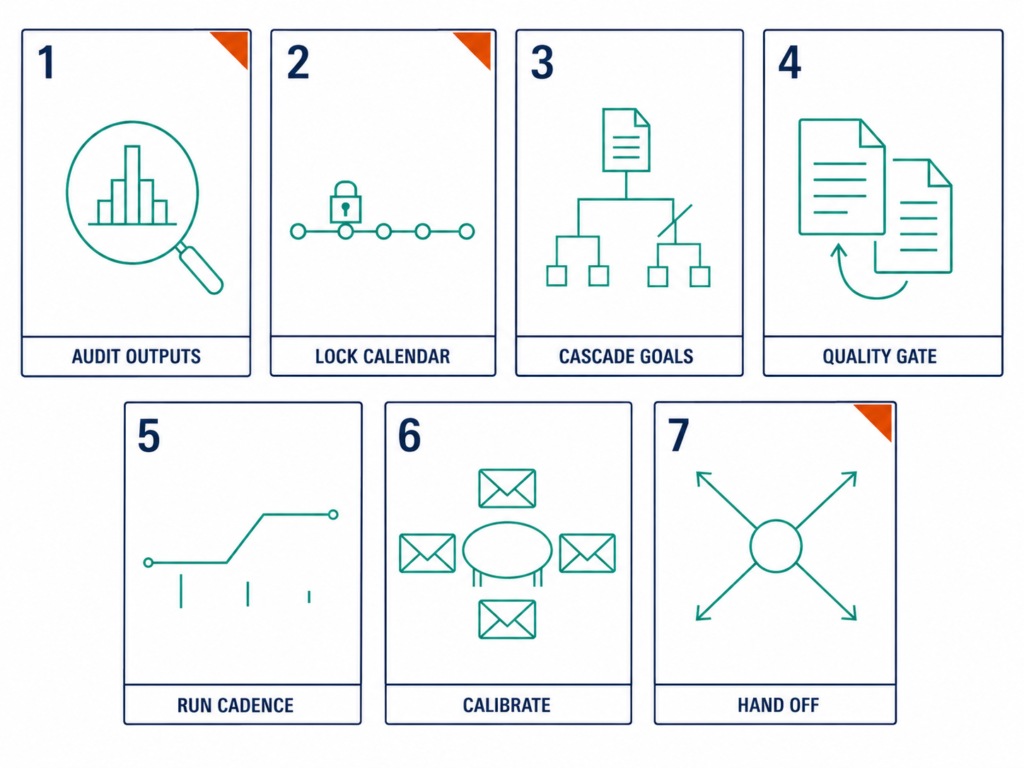
These seven are sequenced implementation actions, each with an owner, an artefact, and a deadline. Three of them, the audit, the calendar lock, and the data handoff, appear in none of the pages currently ranking for this term.
1
Step 1: Audit what your process produces
Before you design anything, measure what the existing process actually generates. You need a baseline, because without one any change you make will be indistinguishable from noise, and you will not be able to defend it in twelve months.
Run four queries against your HRIS export. Each one answers a different question about whether the process produces signal.
- Goal completion rate, split by business unit
- Rating distribution, by manager and by team
- Correlation between rating and subsequent 12-month retention
- Manager compliance with cycle deadlines, by name
Now read the results properly. A manager whose entire team rates a full band above the org average is either leading exceptional people or protecting them, and you need to know which before you walk into calibration.
A flat or negative correlation between high ratings and retention is the one that should worry you most. It means you are rating for compliance rather than contribution, and your best people are leaving with strong reviews in their file.
⚠ WATCH OUT
Warning: if 85% of your organisation sits in one rating band, the process produces no signal at all. Every downstream decision, meaning pay, promotion, and succession, is currently being made on something other than the data you spent thousands of manager hours collecting.
Measure before you redesign. I apply the same rule in hiring, where I map the market before writing a job description rather than after, and the reasoning transfers exactly. You do not design the intervention before you have the diagnosis.
2
Step 2: Lock the operating calendar
Here is the counter-intuitive part. Most redesigns open with a philosophy statement, usually some version of “we are moving to continuous performance management”, and then never resolve the calendar. Nothing changes, because a philosophy has no deadlines in it.
Here’s how to build it:
Fix five dates for the year before you agree a single principle. Everything else in the design is negotiable. These are not.
- Planning window opens
- Planning window closes, goals locked
- Mid-cycle review window
- Calibration sessions
- Reward communication date
The lock date carries more weight than it looks. Goals that can still be edited in December are not goals, they are a running commentary on what the year turned out to be.
Calibration must sit before reward communication with at least a three-week gap, so that outcomes can be revised without anyone having to un-tell an employee something. And the reward communication date goes out to employees at the start of the cycle, not discovered by them at the end.
◆ PRO TIP
The catch: publishing the reward date to employees removes your ability to slip it quietly. That is the point. A date nobody outside HR knows about is a target, and a date the whole organisation knows about is a commitment.
I build hiring plans the same way, using backward planning from the deadline. Map the business start date first, then work backward through offer, interview, screening, and sourcing capacity until you know what each week has to deliver. Set the reward communication date, then work backward to every upstream deadline.
3
Step 3: Cascade business priorities
Before any manager writes a goal, the leadership team publishes three to five business priorities in language a line manager can act on. Not a strategy deck. A one-page brief, issued before the planning window opens.
The brief has to state what the organisation is not prioritising this year. Exclusions are what make prioritisation real, and a priorities list with no exclusions is a wish list with a letterhead.
The old way
- Send the strategy deck to managers
- Hope alignment emerges from it
- Publish priorities after planning has started
- Accept goals that trace to nothing
The Lab Way
- Issue a one-page priorities brief with explicit exclusions
- Publish it before the planning window opens
- Translate strategy language into team-level outcomes
- Enforce the two-hop traceability rule at the quality gate
⚠ WATCH OUT
Common mistake: publishing priorities in strategy language that no manager can convert into a goal. “Drive customer-centric transformation” is not an input to planning. It is a slide.
Translate it before you send it. “Reduce customer-reported defects on the two highest-volume product lines by 30% before Q4” is something a team lead can build three individual goals underneath by Friday.
This is the same shift I built into Talent Market Pre-Alignment, where demand is identified and engaged ahead of the requisition rather than after it. Demand-led planning works in goal-setting for the same reason it works in hiring. The signal arrives upstream of the moment you need to act on it.
4
Step 4: Run and quality-check planning
Manager and employee draft independently, then meet to reconcile. A goal the employee did not draft is a goal the employee will not own, and you will spend the year explaining it back to them.
Then comes the quality gate, which almost nobody runs. Someone other than the manager reviews a sample of goals before the lock date, against a published test.
- Does each goal name a metric, a baseline, a target, and a deadline?
- Can it be traced upward in two hops or fewer?
- Is there a guardrail preventing it from being achieved destructively?
- Are there between three and five, rather than eleven?
Ownership of the gate is specific. HRBPs review people-manager goals, second-line managers review individual contributor goals, and the sample is large enough to be representative rather than symbolic.
⚠ WATCH OUT
Common mistake: rewriting failed goals centrally to save time. A goal that fails the test is returned to the manager, not fixed by HR. Fix it for them once and you have permanently transferred the skill back to your own team.
◆ FROM THE LAB
The Sofia test: upstream quality gates pay downstream, and I have the numbers rather than the theory. Adding a structured competition analysis step before sourcing lifted Quality of Hire by 12%. Adding a proper talent market study for comparable industries lifted it by 14%.
Building a skill-based pipeline off that market analysis moved it by 30%.
None of those gains came from working harder at the end of the funnel. Quality of Hire improves when you fix the upstream input, and goal quality behaves identically. A bad goal reviewed in January costs ten minutes. The same goal discovered in December costs a cycle.
5
Step 5: Operate the monitoring rhythm
This is where most processes die quietly. The three cadences from Component 2 run through the period, each with a named owner, a fixed length, a required artefact, and a storage location that is not somebody’s private notebook.
How to execute:
The HRBP’s job during this phase is not chasing completion. It is sampling. Pull five 1:1 documentation trails per manager per quarter and look for exactly one thing: evidence of a course correction.
⚠ WATCH OUT
Red flag: a trail that reads “on track, on track, on track” followed by a “partially met” rating. That is not a record of a good year that ended badly. It is the signature of a manager who avoided the conversation for eleven months.
An unbroken green trail is a warning, not a reassurance. Real work generates course corrections.
Mid-cycle renegotiation needs a protocol, or it becomes an escape hatch. Legitimate reasons to change a goal: the business priority changed, the role changed, or a dependency was removed. Illegitimate reason: the goal turned out to be hard.
On my 420-hire campaign the tracker dashboards existed to surface problems, not to prove activity. That distinction is the whole difference between measuring activity vs. measuring outcomes, and a dashboard that only reports completion is measuring nothing at all.
6
Step 6: Evaluate, then calibrate
The order matters, and so does the gap between them. Managers submit provisional ratings with written evidence before the calibration session, and they must not be able to see each other’s distributions beforehand.
Here’s the deal:
If managers calibrate in the room from a blank sheet, the loudest advocate wins. That is not a character flaw in your managers, it is a predictable outcome of an unstructured group decision, and it happens in interview debriefs for exactly the same reason.
Each manager brings three things: the rating, two pieces of dated behavioural evidence per goal, and a one-line statement of what would have moved the person up a band. That last item is the most useful sentence in the entire session, because it converts a judgement into a development input.
The facilitator should not be the most senior person present. Seniority in the chair turns calibration into a briefing.
⚠ WATCH OUT
Warning: when a rating changes in the room, the manager who owns the relationship must leave with the reasoning in enough detail to deliver it as their own position. A manager who says “HR changed your rating” has destroyed the process for that employee permanently, and word travels.
There is a reason to take this seriously beyond fairness. Gartner reports that 70% of managers say talent reviews are not driving the development that is needed. Translation: the room is running, the time is being spent, and the output is a ranking rather than a plan.
Source: Gartner, “Four Trends Talent Management Leaders Should Prepare for in 2026” (2025)
Structured debriefs beat persuasion contests. The scorecard discipline that stops an interview panel talking itself into a hire is the same instrument that stops a calibration room talking itself into a distribution.
7
Step 7: Close the loop and hand off
The closing sequence runs in a fixed order. Rating conversation first, manager-led, with no compensation discussion in the room. A gap of at least three weeks. Then the reward conversation, manager-delivered, with the reasoning attached.
The rating conversation must contain four things: the rating, the evidence, the one thing that would have changed it, and the first development commitment for the next cycle. An employee who leaves that room without the third item has been evaluated but not managed.
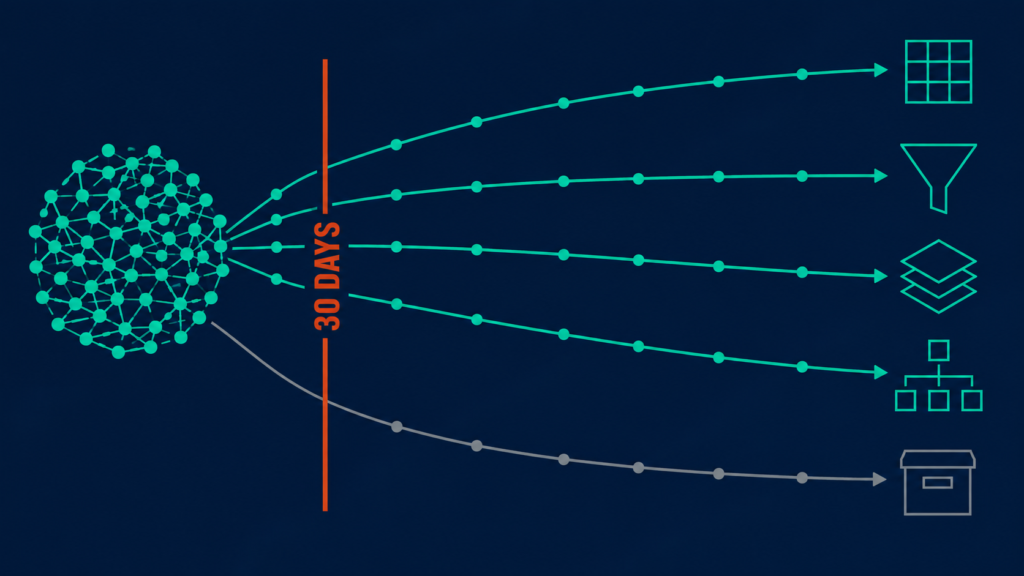
Then comes the step almost nobody documents. Your cycle has just produced four datasets that other parts of the organisation need and almost never receive.
- Capability gap map to workforce planning, within 30 days of cycle close
- High-potential and readiness list to Talent Acquisition, for internal-first sourcing
- Manager effectiveness signal to L&D, derived from distribution and team retention
- Succession bench to the leadership team, with named gaps rather than named favourites
◆ PRO TIP
The catch: a handoff with no deadline does not happen. Put the 30-day date in the calendar you locked in Step 2, name the recipient, and report on it. Goodwill is not a delivery mechanism.
◆ FROM THE LAB
My experience: in one of the organisations I worked with, external hiring cost was climbing and ramp time was slow enough that new hires were still finding their feet a full quarter in. The obvious answer was to source harder. That was the wrong answer.
We introduced a First Look policy instead. Every requisition sat internally for 48 hours before it went to market, and recruiters proactively approached internal people rather than waiting for applications. That second half is what made it work. A passive internal window is a noticeboard.
Twenty-three per cent of hires that year were internal moves. Time-to-Productivity for those moves averaged 28 days, against 67 days for external hires in comparable roles.
Here is the part that belongs in this article. The policy only worked because we already knew who was ready, and we knew because the performance cycle had told us four months earlier. Most organisations generate that same list every year and then archive it with the forms.
Treating internal mobility as a sourcing channel and letting the capability gap map drive the hiring plan are the two handoffs that pay for the entire cycle. Both get their own treatment further down.
Who Owns What: The Operating Calendar and RACI
You own performance management in name, which means you inherit every failure in it, including the ones caused by managers and leaders you cannot direct. That is an ownership problem, not a design problem, and it is fixable on paper before it is fixable in behaviour.
Why this works:
Because “performance management is everyone’s responsibility” transfers accountability to nobody. Assign each component to a named role instead.
| Role | Accountable for |
|---|---|
| Line manager | Goal quality, monitoring cadence, rating evidence, and both closing conversations |
| Employee | Drafting goals, surfacing blockers early, maintaining their own evidence record |
| HR Business Partner | The quality gate, calibration facilitation, documentation sampling, and the data handoffs at close |
| Senior leadership | Publishing priorities on time and providing air cover for genuine differentiation |
| HR operations and systems | The calendar, the tooling, and the reporting |
⚠ WATCH OUT
Watch out: in almost every RACI I have seen, nobody owns the quality of the manager’s conversation. It is the weakest link in the process and the only component with no name against it.
Assign it to the HRBP through the Step 5 sampling mechanism. Not through a satisfaction survey, which measures whether the conversation was pleasant rather than whether it was useful.
The old way
- HR owns the process end to end
- HR chases every manager for completion
- HR absorbs the blame for outcomes it cannot control
The Lab Way
- HR owns the calendar, the quality gate, and the handoffs
- Managers own the conversations and the evidence
- Leadership owns the priorities and the air cover
This is HR as business partner, not process administrator, and governance is what makes the difference. On my highest-volume campaign the mechanism was weekly war-room calls with hiring managers and SLA-based tracking against submission and shortlist ratios. Distributed processes need governance or they become one person’s problem.
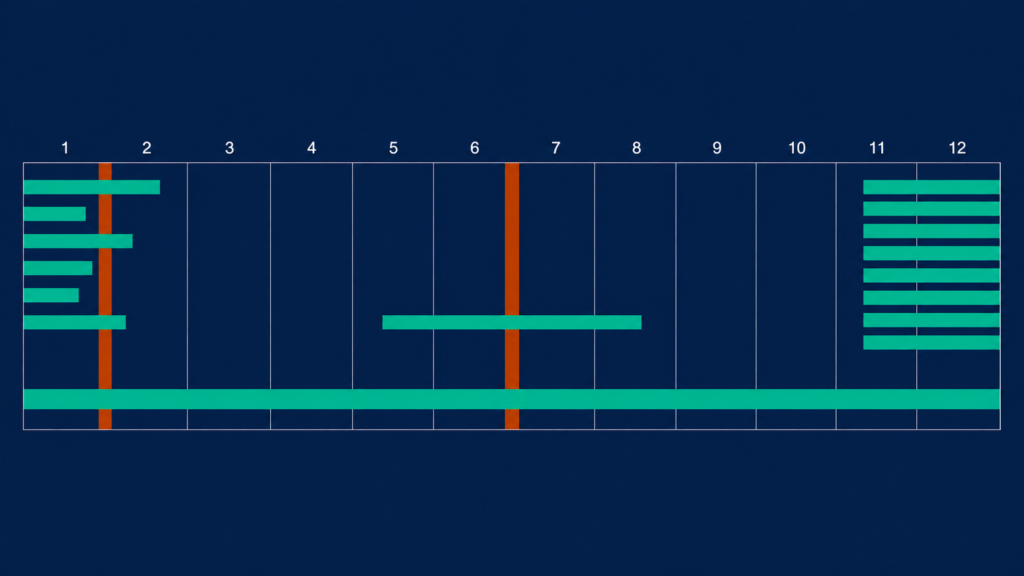
Now the calendar itself. Build it once, publish it with owners against every activity, and shift the months if your financial year starts in April or July.
| Timing | Activity | Owner |
|---|---|---|
| Month minus 1 | Business priorities published, with exclusions | Senior leadership |
| Months 1 to 2 | Planning window, four weeks | Manager and employee |
| End of month 2 | Goal lock date | HR operations |
| Month 3 | Goal quality sampling, two weeks after lock | HRBP and second-line managers |
| Months 1 to 12 | Monitoring cadence running continuously | Line manager |
| Month 6 | Mid-cycle review window | Line manager |
| Month 11 | Evidence and provisional rating submission | Line manager |
| Months 11 to 12 | Calibration sessions, minimum 3 weeks before reward communication | HRBP as facilitator |
| Month 12 | Rating conversations | Line manager |
| Month 12 plus 3 weeks | Reward communication | Line manager |
| Within 30 days of close | Four data handoffs | HRBP |
◆ PRO TIP
The catch: two collisions break most calendars, and both are predictable a year ahead. Goal-setting landing on top of year-end close in finance-heavy organisations, and the mid-cycle review landing in peak holiday season for one of your regions.
Pre-check both before you publish. This is planning around capacity constraints, and a calendar that ignores capacity is a wish list with dates on it.
The calendar tells everyone when to show up. What happens inside one specific meeting on it decides whether any of the rest was worth doing.
Calibration: Where Fairness is Won or Lost

What calibration is actually for
Calibration is a structured session where managers reconcile rating standards across teams using evidence, so that “meets expectations” means the same thing in engineering as it does in finance. That is the whole job.
Here’s the deal:
It is not a forced distribution exercise. Fitting people to a predetermined curve destroys trust quickly and carries legal exposure in several jurisdictions, which is a conversation to have with employment counsel rather than with a spreadsheet.
It is also not a budget-fitting exercise. If the merit budget is driving the ratings rather than the other way round, the process is inverted, and every manager in the room already knows it.
The tell that a session has become budget-fitting: someone says “we only have room for two exceeds.”
⚠ WATCH OUT
Anti-pattern: converting distribution guidance into a hard quota. Guidance used as a discussion prompt is useful. A quota is a decision made before anyone opened the evidence, and managers stop bringing honest ratings to a room where the outcome is already constrained.
I hold a related position on hiring that transfers directly. More applications does not equal better hiring, and the right five candidates beat 500 wrong ones. A distribution that looks statistically tidy is not evidence of a healthy process, it is evidence of measuring the wrong thing precisely.
Running the session: agenda and evidence standards
How to execute:
Group size is 6 to 10 managers with genuinely comparable populations. Calibrating a four-person specialist team against a 40-person operations team produces noise, and everyone leaves the room having learned nothing about either.
Cap the session at 90 minutes. Quality collapses after that, and a fourth hour of calibration is just fatigue with a spreadsheet open.
- The facilitator restates the rating definitions aloud, every session, without exception
- Start with the extremes, top and bottom bands, where evidence is strongest
- Work the middle only where a manager flags genuine uncertainty
- Record every change with its stated reason in the moment, never afterwards
The old way
- Work alphabetically through the roster
- Run until the time is gone
- Let whoever speaks first anchor the band
- Put the senior-most person in the chair
The Lab Way
- Extremes first, middle only on flagged uncertainty
- Hard 90-minute cap
- Fixed speaking order so the confident cannot dominate
- Neutral facilitator, never the senior-most person
⚠ WATCH OUT
Warning: three phrases are not evidence, and they should be ruled out loud at the start of every session. “Great attitude.” “Always available.” “A real team player.”
The evidence standard is dated, behavioural, and tied to a written goal. Anything else is a character reference.
Batch interviews and structured scorecards were how I kept assessment quality stable across 420 hires in 10 weeks. Structured assessment at volume is a design problem before it is a discipline problem, and calibration is the same problem wearing different clothes.
The Bias controls that change outcomes
Four controls actually move the numbers. Awareness training is not one of them, which is uncomfortable to say given how much of the budget it consumes.
- Pre-submission of ratings with evidence, blind to peers, which removes anchoring
- Rating each goal separately before assigning an overall, which removes halo and horns
- Distribution review by demographic group after the session and before finalisation
- A named challenge role, rotated each cycle, whose only job is to ask what evidence supports that
The third one is the most consequential and the least practised. The timing is the whole point: after calibration gives you the real distribution, before finalisation gives you the ability to act on it.
⚠ WATCH OUT
Warning: this analysis sits alongside adverse impact considerations in the US and equal treatment obligations in the EU, and in some jurisdictions running it creates discoverable records. That is a reason to design it properly with employment counsel, not a reason to avoid it.
Design it with your legal team before the first session, not after the first finding.
◆ FROM THE LAB
The Sofia lens: I have watched exhortation fail at diversity targets and structural change succeed at them, in the same function, within the same year.
What moved the numbers was changing the mechanics. Partnering with diverse job boards, running referral drives aimed at underrepresented groups, and rebuilding campus outreach to be genuinely inclusive. Representation in early and mid-stage pipelines rose, diverse slate ratios at interview stage rose with it, and conversion to offer improved.
Quality of Hire did not drop. That is the sentence people expect to be missing, and it was not.
Structural interventions outperform awareness campaigns, in sourcing and in calibration. The post-session distribution review is the structural version of a conversation most organisations are having in a training room instead.
The calibration agenda above took three cycles to get right, and it is the section of this article I would take to your leadership team first. If you want the next blueprint before it goes public, the Lab newsletter is where it lands first.
The Manager Capability Layer
The four conversations the process requires
A well-designed process delivered by a manager who cannot hold a direct conversation produces a worse outcome than a crude process delivered by a manager who can. The conversation is the process. Everything else is scaffolding around it.

Why this works:
Because the cycle demands four distinct conversations and each one requires a different skill. Training managers on “giving feedback” as a single general competence is why the training never transfers.
- The planning conversation, which requires negotiation and translation
- The corrective conversation, which requires specificity held under discomfort
- The rating conversation, which requires delivering an unwelcome judgement without retreating from it
- The reward conversation, which requires explaining a decision the manager may not have made
The old way
- Run one feedback skills workshop
- Track attendance
- Assume the skill transfers to all four moments
The Lab Way
- Train the four conversations separately, with different practice
- Mandate a written mid-cycle position statement
- Make sure no year-end rating is ever the first time it is heard
⚠ WATCH OUT
Common mistake: softening the corrective conversation until the message does not land, then rating honestly at year-end. The employee experiences that rating as a betrayal, and they are not wrong to.
The fix is a documented mid-cycle position statement, shared verbally and in writing. If the manager cannot write the sentence down, they have not said it.
My equivalent in hiring is intake discipline. Surfacing disagreement early, at the intake meeting rather than at offer stage, is what stops a search collapsing in week nine over a requirement nobody agreed on in week one. Same principle: state the hard position early, in writing, while it is still cheap.
Building capability without another e-learning module
Three mechanisms work. Each has an honest cost, and I would rather name it than sell you a curriculum.
1
Observed practice
The HRBP sits in on one real planning conversation per manager per cycle, with the employee’s permission, then debriefs the manager privately. Expensive in HRBP hours, and the only mechanism that reliably changes behaviour.
2
Peer calibration of narratives
Managers read each other’s written rating rationales in pairs before submission and flag anything they could not personally defend in a room. Cheap, fast, and more effective than it has any right to be.
3
A real script library
Actual language for the hard moments, not competency-framework abstractions. Managers do not freeze because they lack a model. They freeze because they cannot find the first sentence.
“I need to tell you something I should have told you two months ago, and the delay is mine. On the delivery goal, you are currently below the standard we agreed in January. Here is what I have seen, and here is what I want to do about it with you.”
◆ PRO TIP
The honest downside: none of this works if the organisation promotes people into management on technical merit and never revisits the decision. Some of your managers are excellent engineers who were given people because there was no other way to pay them more.
That is a leadership problem, not a training problem, and no module fixes it.
◆ FROM THE LAB
My experience: the best 12-month cohort retention I have delivered is 89%, and I did not buy it with compensation. It came from matching people to managers who could actually develop them, and from being honest about scope at offer stage rather than optimistic.
Manager capability as a retention lever is not a soft claim. It is the largest controllable variable I have found, and it is sitting inside a process you already run.
Handling Under performance: Rebuilding the PIP
Why the traditional PIP fails
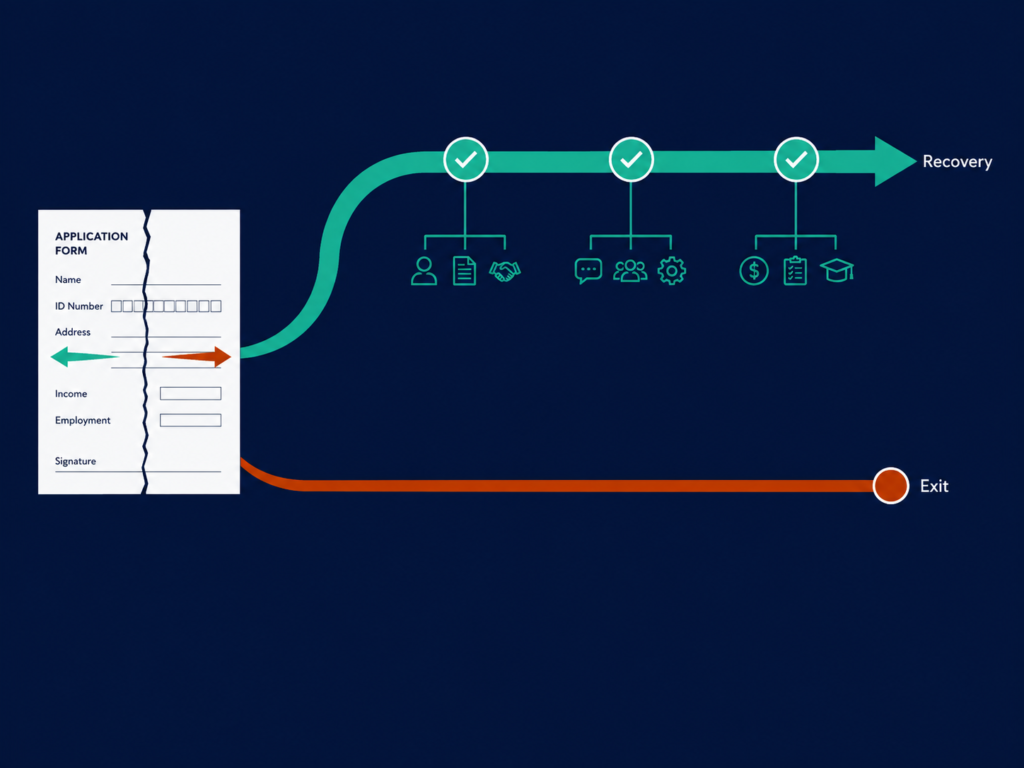
The conventional Performance Improvement Plan was designed by legal risk management, not by performance logic. It is documented to be defensible, timed to build a paper trail, and understood by everyone in the building as a termination countdown.
That shared understanding is exactly why it fails. An employee who reads the plan as a decision already made will not engage with it, and no amount of supportive language in the template changes what they know.
The old way
- Issue one document that is legally shaped
- Hope it reads as developmental
- Run 30 days and provide nothing
- Reach the foregone conclusion slowly
The Lab Way
- Separate genuine recovery from managed exit
- Resource the recovery track properly
- Handle the exit track quickly and with dignity
- Tell the person honestly which one they are in
⚠ WATCH OUT
Warning: this separation changes your documentation trail, and documentation requirements for adverse action are jurisdiction-specific. Review it with employment counsel before you implement any part of it.
I am not a lawyer, and nothing here is legal advice. It is a design position that needs legal review in your jurisdiction before it goes anywhere near a live case.
◆ PRO TIP
Real talk: a meaningful share of PIPs are hiring decisions arriving eight months late. Underperformance often starts as a selection failure, or a role-design failure, or a manager-capability failure, and the plan is where all three finally become visible.
Fixing the intake and the scorecard prevents more PIPs than any improvement template ever will.
Building a recovery plan that can work
How to execute:
A recovery plan worth running has five components. Miss any one of them and you have written a formality with a deadline on it.
- A specific capability gap named in behavioural terms, not as a performance percentage
- A resourced support mechanism: a named mentor, reduced scope, a changed assignment, or training with protected time
- A horizon proportionate to the gap, with 60 to 90 days as the working default and longer for skill gaps than behaviour gaps
- Checkpoints at two-week intervals, with written notes each time
- A stated outcome definition describing what “recovered” looks like in observable terms
⚠ WATCH OUT
Warning: ambiguity at the outset is what destroys engagement. The manager has to state plainly whether this is a genuine recovery attempt or the start of an exit process.
Employees can tell the difference regardless of what the document says. Pretending otherwise costs the manager their credibility with the whole team, not just with the person on the plan.
One structural point carries back to the previous section. A recovery plan delivered by a manager who avoided the corrective conversation for eight months is not a recovery plan. Without the mid-cycle position statement behind it, it is a documentation exercise with a person inside it.
Where AI fits in The Performance Management Process (and where it doesn’t)
Where AI genuinely helps
I led AI-driven prompt engineering work inside a recruitment function before most of the current vendor category existed, so my position here is operational rather than philosophical. Use AI as a co-pilot, not a decision-maker.
Here’s the deal:
Four tasks in this cycle earn their place, and they share one property. Each operates on evidence a human already produced, and a human validates the output before it goes anywhere.
- Drafting: turning a manager’s rough notes and dated evidence into a structured, readable narrative, which removes the writing burden that produces thin rationales
- Language review: flagging vague, gendered, or non-behavioural wording before submission, which is a genuine equity control
- Synthesis: summarising a year of check-in notes into themes for the manager to verify, which attacks recency bias directly
- Goal quality checking: testing draft goals against the four-part test from Step 4, at a scale no HRBP can sample manually
That is the boundary, and it is worth stating in one sentence to your leadership team. AI drafts. Humans decide.
AI as co-pilot in HR workflows is the position I have held through every tool cycle so far, and nothing in the current generation has moved me off it.
Where AI makes the process worse
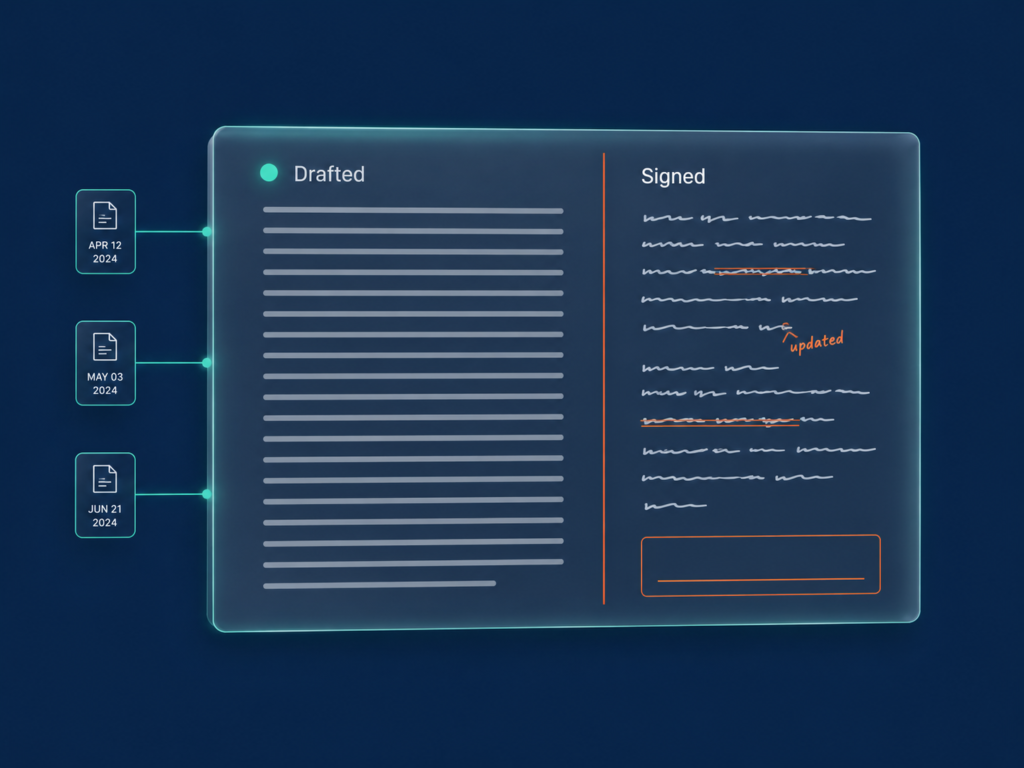
Three refusals, stated plainly. AI must not generate a rating, rank employees against each other, or produce a review narrative from data the manager has not verified.
Two risks sit behind those refusals, and you will need both in language your leadership team can hear.
⚠ WATCH OUT
Warning: algorithmic bias. If the training data encodes your historical rating patterns, the model reproduces them and scales them, and it does so with an air of authority that makes them harder to challenge than a human judgement ever was.
Warning: the automation arms race and the loss of personal touch. As AI-drafted reviews spread, employees start recognising the register, and a review that reads as machine-generated tells the reader that nobody spent time on them.
One control addresses both. Any AI-assisted narrative is edited by the manager before submission, and the manager signs it as their own words. If they will not put their name to the sentence, it does not go in the file.
◆ FROM THE LAB
The Sofia lens: my reframe on recruiters transfers cleanly to managers. AI does not replace the manager. It replaces the parts of the job that stopped managers from being effective in the first place.
Scheduling, synthesis, formatting, and the blank-page problem are where the hours go. Judgement, context, and the difficult conversation are where the value is, and no tool I have run has taken a single minute of the second category off anyone’s plate.
Here is the number worth taking into the procurement meeting. Gartner found that 88% of HR leaders say their organisations have not realised significant business value from AI tools. Translation: the tools are not the constraint. The processes they were bolted onto were.
There is a compliance dimension too. Regulators are moving toward treating automated decision-making in employment as a high-risk category, which makes the “AI drafts, humans decide” boundary a defensible position rather than only a philosophical one. An honest assessment of AI tools in HR has to account for that direction of travel.
The AI readiness test
Take this to your leadership team as a gate rather than an objection. Three conditions must hold before AI goes anywhere near your performance cycle.
- Documentation discipline exists, meaning managers already write dated behavioural evidence during the period
- The rating distribution has been reviewed by demographic group for at least two prior cycles, giving you a baseline against which to detect model-induced drift
- Managers have been trained on what the tool does and does not decide, and that training is documented
The first condition is the one that fails most often, and the reason is arithmetic rather than attitude. AI summarising nothing produces confident nothing, at speed, in a house style.
◆ PRO TIP
The catch: if any of the three is false, fix the process first and say so openly. Pair the refusal with a stated willingness to adopt once the conditions are met, because a gate reads as governance and a flat no reads as obstruction.
AI applied to a broken process produces a faster broken process.
My verdict on the general-purpose assistants has not changed either. They are a genuine productivity multiplier and not a recruiter, and knowing when to avoid AI in HR decisions matters more than knowing where to deploy it. Candidate evaluation and compliance-sensitive documentation are both on my avoid list, and a performance rating sits squarely inside both.
Feeding Performance Data into Talent Acquisition and Internal Mobility
The capability gap map
Every completed cycle contains a map of where your organisation is capable and where it is not. Which competencies rate consistently low across teams. Which roles have no successor. Which capability is held by exactly one person who has been approached twice this year.
Almost no organisation converts that into a hiring input. It sits in the HRIS, complete and unread, while Talent Acquisition receives the same information nine months later in the form of an urgent requisition.
Here’s how to build it:
Within 30 days of cycle close, each HRBP produces a one-page capability gap summary per business unit, listing the three capabilities where that unit is thinnest. That document becomes a mandatory input to the workforce plan, and the workforce plan becomes the trigger for market mapping.
The old way
- File the performance data
- Wait for a requisition to arrive
- Start sourcing from zero on the day it lands
- Explain a 68-day Time-to-Offer to a frustrated business
The Lab Way
- Produce the capability gap map within 30 days of close
- Feed it straight into workforce planning
- Map the market before the vacancy exists
- Open the requisition into a pre-identified pool
◆ FROM THE LAB
Real implementation: at one point in my career I was asked to scale an automation engineering team, and the business wanted the first hires in the door within the quarter. The internal signal had been visible for months. Two teams had rated the same capability low, and one of them had no successor for a lead role.
Rather than wait for the requisitions, I mapped the talent. Twelve competitor organisations across the industrial IoT space, role by role, team structure by team structure, including how they were compensating and where they were losing people.
By the time the first job description was written, I had 37 qualified candidates already identified and partially warmed.
Average Time-to-Offer on that programme went from 68 days to 34. Not because we screened faster, but because the search had effectively started four months before the requisition did.
This is what the Talent Supply Chain means in practice. Recruitment as a circular system that predicts demand and holds inventory, rather than a linear plan that starts when someone resigns. The performance cycle is the demand-prediction input, and most organisations throw it away every December.
The internal mobility pipeline
Your cycle also produces a candidate pool you have already paid to identify. Talent Acquisition almost never receives it.
Hand over a tiered readiness list within 30 days of close, refreshed at mid-cycle. Three tiers, and the third one is the tier nobody writes down.
- Ready for a lateral move now
- Ready for a step up within 12 months
- At flight risk without a move
Then the operational rule that makes the list real: a 48-hour internal-first posting window on every requisition, with recruiters proactively contacting anyone on the readiness list who matches. Treating internal mobility as a sourcing channel means working it like one, not opening a window and hoping.
The economics are not marginal. Internal moves reach productivity in roughly 28 days against 67 for external hires in comparable roles, and on senior engineering roles I have seen cost per hire fall from around ₹6.5 to 7.5 lakh down to ₹3 to 3.8 lakh once agency reliance dropped by 60 to 70%.
◆ PRO TIP
The catch: this only works if managers cannot block moves, and if leadership backs that rule out loud the first time a good manager loses a good person. That moment decides the policy.
Back the manager once and you have quietly cancelled internal mobility for the next three years.
The manager effectiveness signal
The third extraction is the one I would run first if I could only run one. It is straightforward arithmetic on data you already hold, and almost nobody does it.
For each manager, pull four numbers.
- Rating distribution against the org distribution
- Twelve-month retention of their direct reports
- Internal promotion rate out of their team
- The rate at which their ratings survive calibration unchanged
A manager whose ratings are consistently revised downward in calibration is either applying a different standard or protecting their team. Both are addressable, and both are completely invisible without this analysis.
⚠ WATCH OUT
Red flag: a manager with a high rating average and low retention. That is not a high-performing team, it is a manager buying peace with ratings while people quietly leave.
Retention as a manager-capability signal is the most reliable early warning the cycle produces, and it arrives months before the exit interview does.
The manager with the highest promotion-out rate is your best talent developer, and most reward systems quietly penalise them for losing good people.
Use the signal to target manager development before an escalation forces it, and over time to inform who gets promoted into management at all. My best cohort retention figure of 89% came from getting that matching right, not from a compensation intervention.
How to Measure Whether the Process is Working
The five signals that tell you it’s working
You are probably reporting cycle completion percentage to leadership, because that is what the HRIS produces on demand. It tells you nothing about whether the process worked.
Why this works:
Because these five measure output rather than activity, and four of them come from data you are already sitting on.
| Signal | What good looks like | Where the data comes from |
|---|---|---|
| Rating distribution spread | Meaningful mass outside the middle band | HRIS rating export |
| Rating-to-retention correlation | High performers retained at a higher rate than low performers | HRIS plus exit data, 12-month lag |
| Conversations with artefacts | Documented course corrections, not calendar completion | 1:1 documentation sampling |
| Goal quality gate pass rate | Rising cycle over cycle, tracked by manager | Quality gate log from Step 4 |
| Employee-reported fairness | Measured within two weeks of reward communication | Single engagement survey item |
◆ PRO TIP
The catch: the fairness measure has a two-week window and then it is gone. Perception forms and hardens immediately after the reward conversation, and a survey run six months later is measuring how people feel about their job now.
Outcome metrics over activity metrics is a hill I will happily die on, and the numbers back it. Quality of Hire moved 12% for me after adding structured competition analysis, 14% after proper market study work, and 30% after building a skill-based pipeline on top of both. Those are metrics that CFOs care about, and none of them is a completion rate.
The cost case: what a broken process is spending
You will not get investment for a redesign on engagement grounds. You will get it on arithmetic, in your own organisation’s numbers, which is why what follows is a template rather than a claim.
| Cost line | How to calculate it | Your number |
|---|---|---|
| Manager hours | Hours per employee per cycle across planning, monitoring, evaluation, and calibration, multiplied by loaded manager cost and headcount | |
| Regretted attrition | Regretted leaver count attributable to fairness perception, multiplied by your replacement cost | |
| Comp misallocation | Merit budget distributed against a signal that does not correlate with contribution | |
| Vacancy drag | Days vacant on roles whose capability gap was visible in performance data, multiplied by daily operational drain |
The first line is the one that gets leadership’s attention, because most organisations have never calculated it and the number is larger than anyone in the room expected.
For the fourth line, here is the benchmark I use.
$500
Per day of operational drain from a single unfilled senior engineering role. Across a 60-day vacancy, that is $30,000 in lost productivity on one requisition.
◆ FROM THE LAB
My experience: process changes produce financially material outcomes, and I can put figures against that rather than adjectives. On senior engineering hiring, cost per hire fell from roughly ₹6.5 to 7.5 lakh to ₹3 to 3.8 lakh.
Time to fill came down from 70 to 80 days to 45 to 50 days over the same period. The drivers were direct sourcing, internal referrals, and pre-built talent pools rather than a bigger budget.
That is roughly a 45 to 55% reduction in cost per hire. When you build the business case template for your own redesign, this is the shape of number that ends the conversation in your favour.
Three Failure Modes and the Fixes that hold
The process runs on time and changes nothing
You will recognise the symptom set. High completion rates, a compressed rating distribution, no observable change in individual behaviour, and managers describing the cycle as “an HR thing” when they think you cannot hear them.
The cause is not apathy. The process was designed for compliance measurement, so every incentive inside it points at completing forms, and your managers are responding to it accurately.
⚠ WATCH OUT
Common mistake: fixing this by adding a new step. Stop reporting completion as the headline metric first, replace it with the five signals, and move HRBP effort from chasing to sampling. What HR reports upward is what managers optimise for, and nothing else you do will outrun that.
◆ PRO TIP
The catch: this takes two full cycles to shift. Managers need to see that the reporting emphasis genuinely changed, and held, before they reallocate effort toward conversation quality. Promise leadership two cycles, not one.
More applications does not equal better hiring, and more completed forms does not equal better performance. Activity metrics vs. outcome metrics is the same argument in both functions.
Ratings inflate until the scale is meaningless
Your scale has compressed to the point where “meets expectations” now reads to employees as a poor rating. That happened for structural reasons, not characterological ones.
Managers inflate because differentiating costs them a difficult conversation and a retention risk, and because there is no consequence for inflating. Given those incentives, inflation is the correct move.
The old way
- Remind managers to rate honestly
- Call inflation an integrity problem
- Impose a quota when the reminder fails
The Lab Way
- Make calibration real first, using the mechanics above
- Publish the org-level distribution to managers each cycle
- Give managers explicit leadership air cover
- Only then consider distribution guidance, never a quota
Work that sequence in order. The calibration mechanics are the only structural check in the system, and the other three fixes depend on it holding.
Rating inflation is rational behaviour under your current incentives. Call it an integrity problem rather than a design problem and you have guaranteed it continues.
The redesign that lands on the same managers
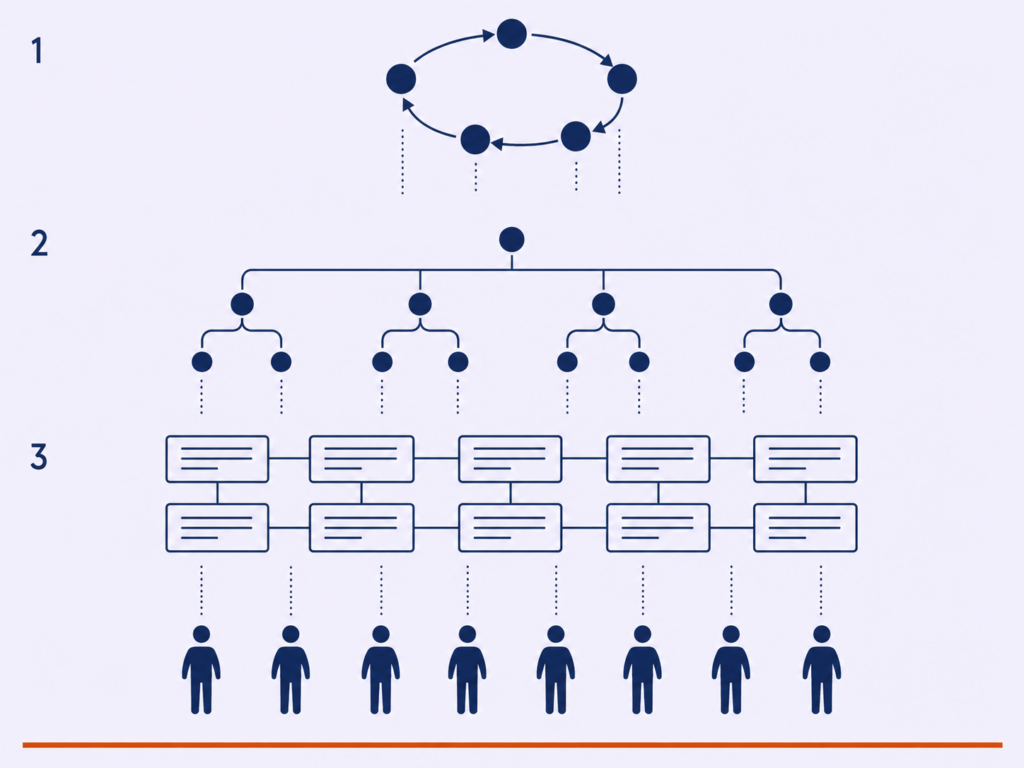
Every two or three years the model changes. Ratings to ratingless and back again. Annual to continuous. New software, new forms, new language, a launch email with a video in it.
The outcome does not move. Every version is delivered by the same managers, with the same capability, under the same competing priorities.
Here’s what changed everything:
Recognising that this is an intervention-targeting error rather than a design failure. The architecture was never the binding constraint, so replacing the architecture was never going to release it.
Run the audit from Step 1 before any redesign and identify which of the five components is actually failing. If goal quality is the failure, new software will not help. If manager conversation quality is the failure, no model will help.
◆ PRO TIP
Real talk: a modest process executed well beats an elegant process executed by managers who were never equipped for it. I have seen the second case far more often than the first, and audit before redesign is the only habit that reliably prevents it.
Start with one thing, not seven
I spent the first few years of my career on the receiving end of other people’s performance data, inheriting capability gaps that had been visible internally for months before anyone told me about them.
The results were predictable. Late requisitions. Sourcing from zero. Sixty-eight day cycles on roles the business needed yesterday. Internal candidates who were ready and never asked.
The organisations whose performance process works are not the ones with the best model. They are the ones who fixed the calendar, the calibration room, and the manager conversation, and then stopped changing the model.
What separates them from everyone else is two habits. They measure what the process produces rather than whether it completed, and they treat its output as an input to hiring, mobility, and succession rather than as a file.
The 88% of HR leaders who have seen no significant value from AI tools are the forward-looking warning here. The organisations rushing AI into a cycle that was already broken will get a faster broken cycle, and they will get it this year.
So do not attempt all seven steps. Pick three.
One from the calendar, meaning the five locked dates. One from calibration, and I would take the post-session distribution review by demographic group, because almost nobody runs it and it changes outcomes. One from the handoff, and the readiness list to Talent Acquisition is the cheapest of the four.
Run those three over the next 90 days. Then measure the change against the five signals, not against your completion rate.
The calibration agenda in this article took three cycles to get right, and the next blueprint goes out to the Lab newsletter before it goes public. If you are rebuilding your cycle this year, particularly the calibration layer, I would like to hear what you run into. Connect with me on LinkedIn and tell me which of the three you picked.
